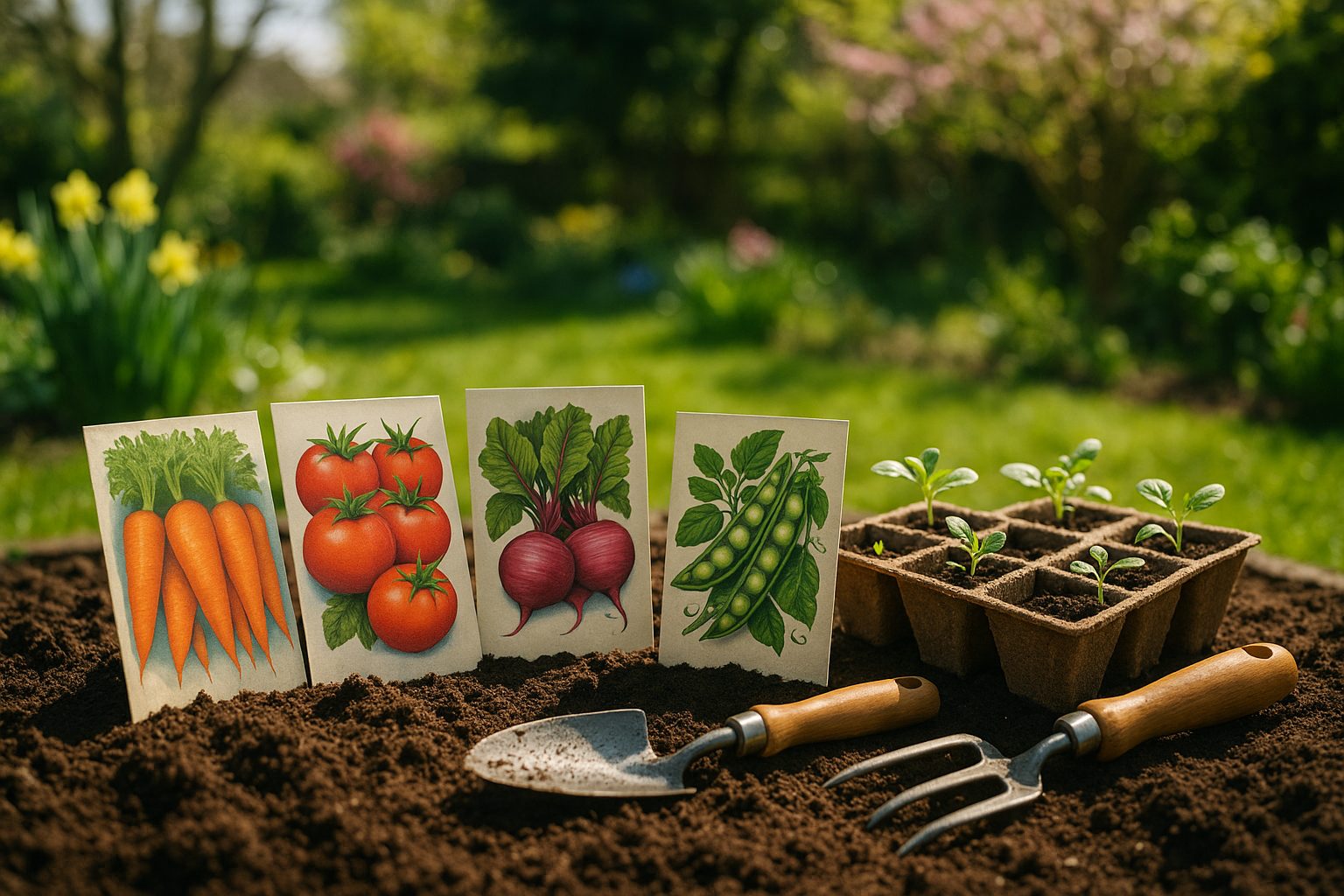
April marks the peak of outdoor vegetable sowing across the UK, with rising soil temperatures and longer daylight hours creating ideal conditions for direct sowing hardy crops. You can now plant carrots, beetroot, peas, lettuce, radish, and spinach directly into the garden. Simultaneously, you should begin warm-season vegetables such as tomatoes, courgettes, peppers, and cucumbers under glass or in a heated propagator. This is also the time to plant second early and maincrop potatoes, establish strawberry runners, and start herb and flower seeds indoors. The RHS advises that April is one of the most productive months for gardeners, with the potential to grow a wide range of crops if timing aligns with your local last frost date [RHS April Jobs].
- Direct sow outdoors: Carrots, beetroot, peas, mangetout, radish, lettuce, spinach, spring onions, turnips, chard
- Start indoors: Tomatoes, courgettes, peppers, aubergines, cucumbers, sweetcorn
- Plant out: Potatoes, strawberries, hardy herbs like rosemary, sage, and thyme
- Regional timing varies: Sowing dates depend on your last frost date—check your local climate.
Soil temperature should be at least 7°C for most vegetables. Use a thermometer pushed 5cm deep to check.
Regional Timing Guide — Know Your Last Frost Date
Your local last frost date determines the optimal timing for sowing and planting. In the UK, this varies significantly from the South West to the Scottish Highlands. The RHS provides a detailed regional guide to help you time your sowings accurately [RHS April Jobs]. Delaying planting until after the last frost avoids damage to tender crops and improves germination success. Always test soil temperature at a depth of 5cm using a soil thermometer—most vegetables require a minimum of 7°C for reliable germination.
| Region | Average Last Frost Date | Sowing Guidance |
|---|---|---|
| South West / London | 25 Mar – 10 Apr | Can sow tender crops outdoors mid-April |
| South East | 1 – 15 Apr | Safe to sow most tender crops from mid-April |
| Midlands | 10 – 25 Apr | Delay tender crops until late April |
| North West / Yorkshire | 10 Apr – 5 May | Add 7–14 days to southern dates |
| Scotland Lowlands | 25 Apr – 15 May | Outdoor sowing from late April at earliest |
| Scottish Highlands | 10 – 25 May | April sowing only under cover |
For example, if you’re in the Midlands, avoid planting tomatoes or courgettes outdoors before late May. In contrast, gardeners in the South East can begin sowing tender vegetables like cucumbers and peppers in late April under protection. Always consider microclimates—south-facing walls and raised beds warm up faster than open ground.
Vegetables to Sow Outdoors in April
Carrots
Sow ‘Flyaway’ AGM (carrot fly resistant) or ‘Sweet Candle’ AGM. These cultivars are specifically bred to resist carrot fly, a common pest in UK gardens. Plant seeds 1cm deep in well-prepared, stone-free soil. Thin seedlings to 5–7.5cm apart to prevent overcrowding and ensure straight roots. Rows should be spaced 15–30cm apart. Harvest from late July to early September, depending on the variety. ‘Flyaway’ AGM is ready in 12–16 weeks, while ‘Sweet Candle’ AGM gives a sweeter, more uniform root. Companion plant carrots with onions or leeks—these repel carrot fly and improve soil structure. Avoid planting near dill or parsley, which attract carrot fly.
Beetroot
Choose ‘Boltardy’ AGM (bolt-resistant) or ‘Pablo’ AGM for reliable yields. Sow seeds 2.5cm deep, 10cm apart in rows 30cm apart. Keep soil consistently moist during germination, which takes 7–14 days. Beetroot is ready for harvest in 10–12 weeks. ‘Boltardy’ AGM performs well in cooler soils, reducing the risk of premature flowering. Companion plant with lettuce or radish for early intercropping. Avoid planting near spinach or chard, as they compete for nutrients. Harvest when roots are 4–6cm in diameter for best texture.
Peas and Mangetout
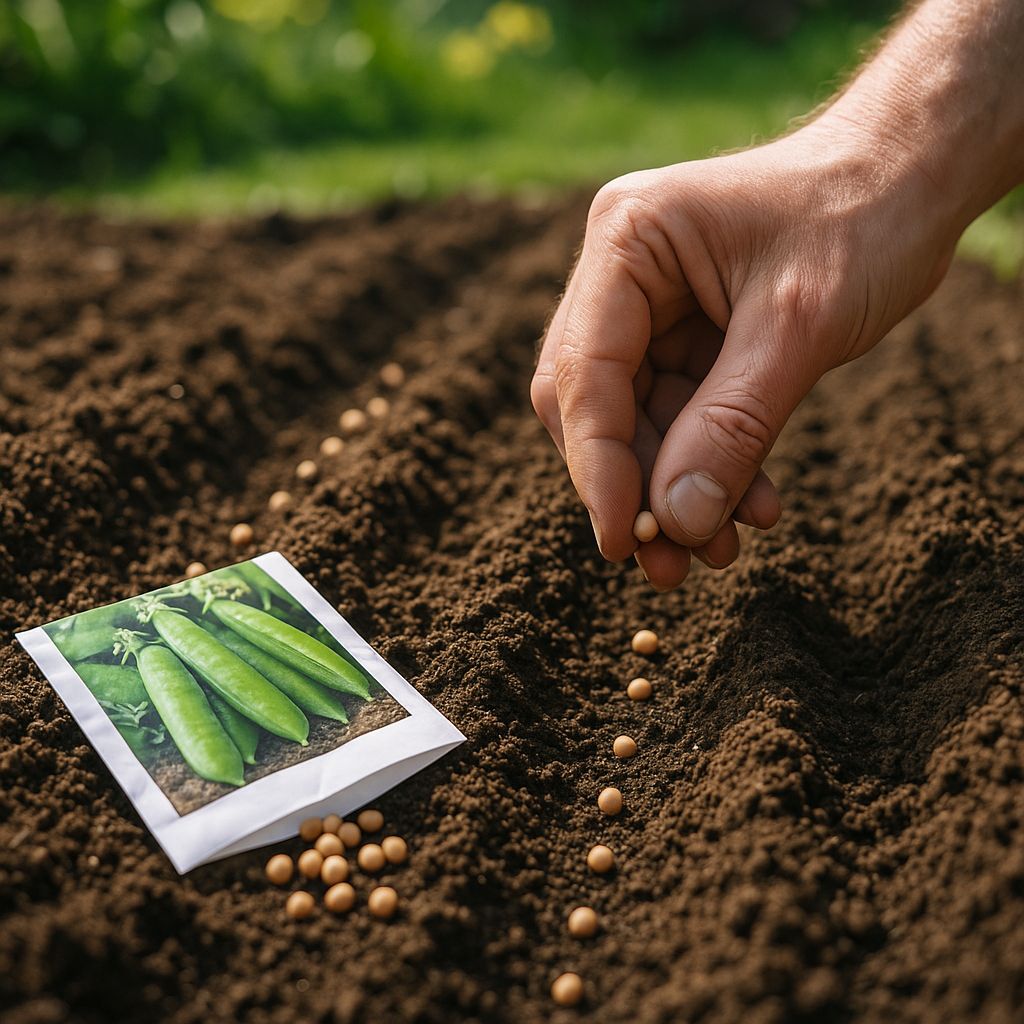
Plant ‘Kelvedon Wonder’ AGM (a classic British variety) or ‘Hurst Green Shaft’ AGM (disease-resistant). Sow in a 5cm deep trench, 7.5cm apart, with rows 30cm apart. Peas require a minimum soil temperature of 10°C for germination. Support with canes, netting, or a pea wigwam to encourage upright growth. Harvest ‘Kelvedon Wonder’ in 12–16 weeks. For mangetout, ‘Delikata’ AGM offers a sweet, tender pod. Companion plant peas with carrots and radishes — these improve soil health and reduce pests. Avoid planting near garlic or onions, as alliums can inhibit legume growth.
Lettuce and Salad Leaves
Sow ‘Little Gem’ AGM, ‘Salad Bowl’ AGM, or ‘Lollo Rossa’ for a continuous supply. Surface sow seeds and keep the soil moist. Practice cut-and-come-again harvesting by picking outer leaves, allowing the plant to regrow. ‘Little Gem’ AGM is ideal for early salads and can be harvested in 4–6 weeks. ‘Lollo Rossa’ offers a deep red, frilly leaf with a mild flavour. Succession sow every 2–3 weeks for a steady supply. Companion plant with radishes or spinach—these grow quickly and free up space. Avoid planting near dill or coriander, which attract aphids.
Radish
Plant quick-growing varieties like ‘Cherry Belle’ or ‘French Breakfast’. Sow thinly in rows 15cm apart, 1cm deep. Radishes are ready in 4–6 weeks and are perfect for early harvests. Succession sow every 3–4 weeks for a continuous supply. ‘French Breakfast’ is ideal for longer roots and better flavour. Companion plant with carrots and lettuce—these grow quickly and allow you to intercrop. Avoid planting near mustard or cabbage, which can attract flea beetles.
Spinach and Swiss Chard
These leafy greens thrive in cooler conditions. Sow ‘Lazio’ AGM (a reliable, bolt-resistant spinach) or ‘Fordhook Giant’ AGM (for chard) 2.5cm deep. Keep soil consistently moist, especially during germination. Spinach is ready in 6–10 weeks; chard can be harvested from 8 weeks onwards. ‘Lazio’ AGM has good resistance to downy mildew. Companion plant spinach with radishes or lettuce for intercropping. Avoid planting near cucumbers or tomatoes, which can increase soil-borne diseases. Harvest outer leaves first to encourage regrowth.
Spring Onions and Turnips
Sow ‘Atlantic’ turnip and spring onions directly in April. Turnips are ready in 6 weeks, while spring onions take 8–12 weeks. Plant in well-prepared, well-drained soil. Sow spring onions 1cm deep, 10cm apart in rows 15cm apart. Thin seedlings to 15cm apart. Companion plant with carrots, radishes, or lettuce. Avoid planting near garlic or onions, which can attract pests. Harvest turnips when they are 4–6cm in diameter for best texture.
Vegetables to Start Indoors in April
Tomatoes — ‘Sungold’ AGM, ‘Gardener’s Delight’, ‘Shirley’ AGM
Sow ‘Sungold’ AGM (golden cherry tomatoes), ‘Gardener’s Delight’ (cherry, reliable), or ‘Shirley’ AGM (disease-resistant) at 18°C in small pots or seed trays. Use a peat-free compost and keep the soil consistently moist. Once true leaves appear, pot on into 7.5–10cm pots. Harden off gradually over 7–10 days before planting out in late May or early June. Place in a sunny, sheltered spot with protection from wind. Avoid overwatering—let the compost dry slightly between waterings. Feed container-grown tomatoes with a balanced liquid fertiliser every 2 weeks once established. Do not plant outside until temperatures are reliably above 10°C.
Courgettes and Squash — ‘Defender’ AGM, ‘Astia’ AGM
Start ‘Defender’ AGM (CMV-resistant, British-bred) or ‘Astia’ AGM (compact, ideal for containers) in 7.5cm pots at 18–21°C. Use peat-free compost and avoid cold drafts. Keep warm and well-lit. Plant out after the last frost, spacing 90cm apart. Support with a trellis if growing vertically. Feed with a balanced liquid fertiliser every 2 weeks once established. Protect young plants from cold winds and slugs. Avoid planting in cold soil—wait until soil temperature exceeds 12°C.
Cucumbers, Peppers and Aubergines
Cucumbers, peppers, and aubergines require 18–21°C for germination. Sow cucumbers in late April under cover. Peppers and aubergines need a long growing season—start indoors now and keep them warm until planting out in late May. Use a heated propagator if necessary. Once seedlings have two true leaves, pot on into 10cm pots. Harden off gradually. Feed with a balanced liquid fertiliser every 2 weeks once established. Avoid overwatering—these crops prefer slightly drier conditions. Plant out only when soil temperature is consistently above 12°C.
Sweetcorn
Sow sweetcorn under glass in April. Use a peat-free compost and plant in blocks (not rows) for effective wind pollination. Space plants 30cm apart in each direction. Plant out at the end of May when temperatures are stable. Feed with a balanced liquid fertiliser every 2 weeks once established. Avoid planting near potatoes or tomatoes—these can attract similar pests. Harvest in 10–12 weeks when cobs are plump and tassels are brown.
Potatoes to Plant in April
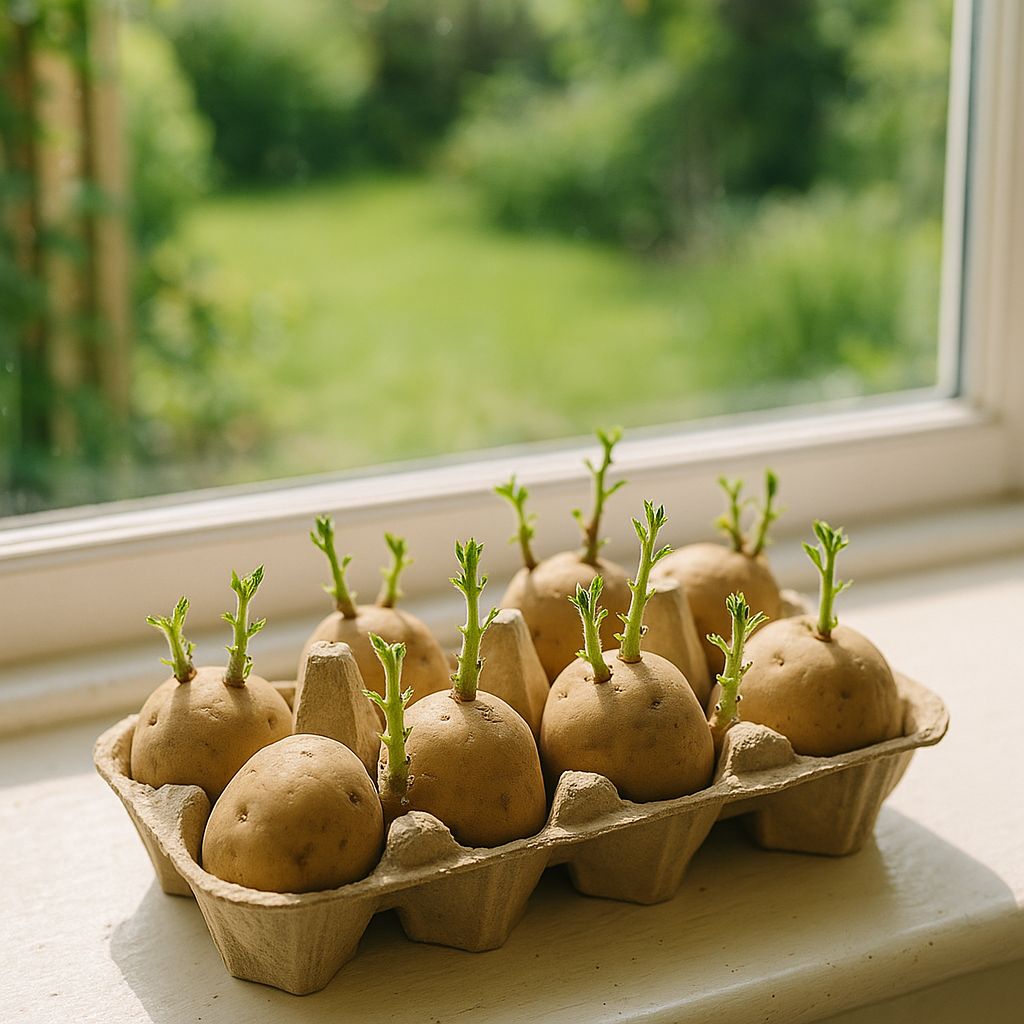
Second early potatoes (plant early to mid-April): ‘Charlotte’ AGM (excellent for salads), ‘Jazzy’ AGM (early yield, good flavour). Maincrop (plant mid-April): ‘Maris Piper’ AGM (ideal for chips), ‘Desiree’ AGM (stores well), ‘Sarpo Mira’ AGM (highly blight resistant).
| Type | Cultivar | When to Plant | Spacing | Depth |
|---|---|---|---|---|
| Second early | ‘Charlotte’ AGM | Early–mid April | 30–37cm | 15cm |
| Second early | ‘Jazzy’ AGM | Early–mid April | 30–37cm | 15cm |
| Maincrop | ‘Maris Piper’ AGM | Mid-April | 30–37cm | 15cm |
| Maincrop | ‘Desiree’ AGM | Mid-April | 30–37cm | 15cm |
| Maincrop | ‘Sarpo Mira’ AGM | Mid-April | 30–37cm | 15cm |
Plant seed potatoes in trenches 15cm deep. As shoots emerge, begin earthing up by mounding soil around the stems to protect tubers from sunlight and encourage more growth. Repeat every 2–3 weeks until the plants are 30cm tall. Keep soil consistently moist and weed-free. Feed with a high-potash fertiliser when tubers begin to form—apply every 2 weeks. Harvest second earlies in July; maincrop potatoes in September. Do not harvest before tubers are fully formed.
Herbs to Grow in April
Sow indoors: basil ‘Aroma 2’ AGM (Fusarium resistant), parsley ‘Bravour’ AGM. Use a warm spot (18–21°C) and peat-free compost. Keep soil moist but not waterlogged. Pot on when seedlings have two true leaves. Plant out after last frost. ‘Aroma 2’ AGM is ideal for cooking and pest resistance. Companion plant with tomatoes—these improve growth and deter pests.
Plant out or buy plants: rosemary ‘Miss Jessopp’s Upright’, sage ‘Purpurascens’ AGM, thyme ‘Silver Queen’ AGM. These thrive in well-drained soil and full sun. Space 30–45cm apart. Mulch with gravel or grit to improve drainage. Harvest by cutting stems in the morning—avoid cutting more than one-third of the plant at once.
Direct sow outdoors: chives, coriander. Sow in a sheltered spot, thin seedlings to 15cm apart. Chives are hardy and regrow after cutting. Coriander bolts quickly—succession sow every 3 weeks. Harvest by cutting outer leaves.
Mint: always grow in a container — it spreads aggressively and invades other plant beds. Use a 30cm pot with drainage holes. Plant in peat-free compost and keep moist. Harvest by cutting stems at the base.
Fruit to Plant in April
Strawberry runners: plant now. ‘Cambridge Favourite’, ‘Elsanta’ fruit within weeks. Lay runners on soil, peg down, and place straw underneath to deter slugs. Space runners 30cm apart. Water regularly and feed with a balanced liquid fertiliser every 2 weeks. Prune runners to encourage fruiting.
Raspberry canes: plant bare-root canes in early April while still dormant, or use container-grown plants later in the month. Plant in well-prepared soil. Keep soil moist and support with a trellis. Choose ‘Glen Ample’ AGM (high yield, disease-resistant). Space 50cm apart. Prune laterals in summer and cut old canes after fruiting.
Blueberries: must be grown in ericaceous compost. Containers are ideal—use a 45cm pot with peat-free ericaceous compost. Water with rainwater to maintain acidity. Mulch with pine bark or oak leaves. Plant bee-friendly flowers nearby to improve pollination and fruit set. Growing two different cultivars close together encourages cross-pollination and heavier crops.
Gooseberries and currants: plant bare-root bushes in a sunny or lightly shaded spot. Space 1.5m apart and mulch with well-rotted manure. Prune annually in winter to encourage fruiting. Protect from birds with netting.
Flowers to Sow and Plant in April
Hardy Annuals
Sow hardy annuals directly outdoors: calendula ‘Orange King’, California poppy, field poppy, sweet pea ‘Cupido’, cornflower, nasturtium ‘Empress of India’, sunflower ‘Sunrich’. These tolerate light frosts and germinate in cool soil. Sow 1cm deep, thin to 15–30cm apart. Harvest flowers for cutting in 8–12 weeks. Companion plant with vegetables—nasturtiums deter aphids.
Half-Hardy Flowers
Start indoors under cover: cosmos ‘Sensation Mixed’, French marigold ‘Tangerine Gem’, zinnia ‘Zahara’, nicotiana ‘Lime Green’. Sow at 18–21°C in peat-free compost. Transplant after last frost. Space 20–45cm apart. Deadhead regularly to prolong flowering. These attract pollinators and add colour to borders.
Bulbs
Plant summer bulbs now: gladioli corms (‘Sarabande’), freesia (‘Purple Queen’), anemone (‘Honorine Jobert’). Plant corms 10cm deep, 15cm apart. Water well after planting. Gladioli need staking. Freesia and anemone thrive in light shade. All bloom from June onwards.
Pollinators
Boost pollinators with borage, phacelia, calendula ‘Indian Prince’, and cornflower ‘Blue Boy’. Sow directly in borders or containers. These attract bees, hoverflies, and butterflies. Deadhead to encourage repeat flowering. Plant in groups for maximum impact.
Growing in Containers and Small Spaces
Grow salad leaves, radish, herbs, strawberries, dwarf French beans, and patio tomatoes in pots this April. Use pots of at least 20cm for salad crops, 30cm or larger for tomatoes, and grow bags for potatoes. Use quality peat-free multipurpose compost—RHS recommends brands like John Innes or those certified by the Soil Association [RHS AGM Herbs]. Ensure pots have drainage holes—add crocks or gravel at the base. Position containers in full sun for at least 6 hours daily. Water daily in warm weather—check soil moisture by fingertip. Feed container plants with a balanced liquid fertiliser every 2 weeks once established. Avoid overwatering—containers dry out faster than garden beds.
For best results, use grow bags for potatoes. Fill with compost, plant seed potatoes 15cm deep, and earth up as shoots emerge. Harvest when foliage dies back. Use self-watering containers for herbs and salad crops—these reduce maintenance.
What NOT to Plant Outdoors in April
Do not plant runner beans outdoors — they need consistent temperatures above 10°C and are at risk of frost damage. Tender bedding plants like petunias and begonias should wait until late May, as they cannot tolerate cold nights. Basil dies instantly if exposed to frost — sow indoors only. Tomatoes and peppers require a stable 15°C+ environment; planting them outside now invites stunted growth or death. Courgettes and squash are frost-sensitive and should be delayed until after the last frost. All these crops fail in cold soil or sudden temperature drops. Instead, focus on hardy crops like lettuce, radish, and spinach, which thrive in April’s mild conditions.
April Succession Sowing Calendar
| Crop | Sow Every | April | May | June | July |
|---|---|---|---|---|---|
| Lettuce | Every 2 weeks | Yes | Yes | Yes | Yes |
| Radish | Every 3 weeks | Yes | Yes | Yes | Yes |
| Spring onions | Every 3 weeks | Yes | Yes | Yes | Yes |
| Spinach | Every 3 weeks | Yes | Yes | Yes | No |
| Beetroot | Every 3 weeks | Yes | Yes | Yes | Yes |
Frequently Asked Questions
- Is it too late to plant seeds in April? No — April is ideal for sowing many vegetables and flowers.
- Can I plant tomatoes outside in April UK? No — keep them under cover until late May, when temperatures are reliably above 10°C.
- What is the easiest vegetable to grow in April? Radish — ready in just 4 weeks.
- What flowers can I plant in April for summer blooms? Cosmos, nasturtiums, calendula, sunflowers, and sweet peas.
- Do I need a greenhouse to garden in April? No — many crops can go straight outdoors; a sunny windowsill works for indoor starts.
- What should I avoid planting outdoors in April? Runner beans, tender bedding plants, basil, tomatoes, and peppers — all need warmer conditions.
What Next?
Got questions about April planting? Drop a comment below — we’d love to help.
- What to Plant in June — Continue into summer with our complete June sowing guide.
- Starting a Vegetable Garden for Beginners — UK Guide
- How to Grow Tomatoes from Seed — UK Guide
- Best Vegetables to Grow in Containers
What You’ll Need This Month
April is one of the busiest sowing months, so having the right kit ready saves time and prevents missed windows. Here’s what to gather before you start.
Seed Starting
- Seed trays and module inserts — 24-cell or 40-cell trays work well for most vegetable seeds. Modules make transplanting easier and reduce root disturbance.
- Seed compost — finer than multi-purpose, with better drainage for germination. A 20L bag covers roughly 10 standard trays.
- Propagator or cling film — keeps humidity high for germination. A heated propagator (around £20–£35) speeds up tomatoes, peppers, and aubergines significantly.
- Plant labels and a waterproof pen — you will forget what you sowed where. Label everything.
Outdoor Sowing and Planting
- Hand trowel and fork — for planting out and weeding. A decent stainless steel set costs £15–£30 and lasts years.
- Fleece or cloches — April nights can still drop below 5°C. Horticultural fleece (around £5–£10 for a 10m roll) protects tender transplants from late frosts.
- Watering can with a fine rose — gentle watering prevents washing out seeds and damaging seedlings.
- Canes and twine — for supporting peas, beans, and early-planted tomatoes.
Where to Buy Seeds and Supplies
Order seeds early in the month — popular varieties sell out fast in spring. These UK suppliers offer reliable stock and delivery.
Seeds and Plants
- Thompson & Morgan — one of the UK’s largest seed suppliers. Strong range of vegetable, herb, and flower seeds. Seed packets typically cost £2–£4, with collections offering better value at £8–£15.
- You Garden — competitive prices on seeds, plug plants, and bulbs. Good option for beginners who prefer plug plants (ready-grown seedlings you plant straight out) over starting from seed.
- Suttons — established seed house with a wide vegetable range. Particularly good for heritage and unusual varieties. Seed packets from £2–£3.50.
Tools, Pots, and Compost
- Crocus — excellent range of quality tools, containers, and composts. Hand tool sets from £15–£40, pots from £3–£20 depending on size and material.
- B&Q and local garden centres — good for compost (multi-purpose bags £5–£10 for 40–50L) and last-minute supplies you need the same day.