As an Amazon Associate I earn from qualifying purchases.
Basil thrives in pots on windowsills, balconies, and patios across the UK. With the right approach, you will harvest fresh, aromatic leaves from June through to the first frosts—and year-round if you grow indoors.
This guide covers choosing pots and compost, keeping plants bushy, and solving common problems.
Indoor or Outdoor Growing?
Basil adapts to both, though each has advantages.
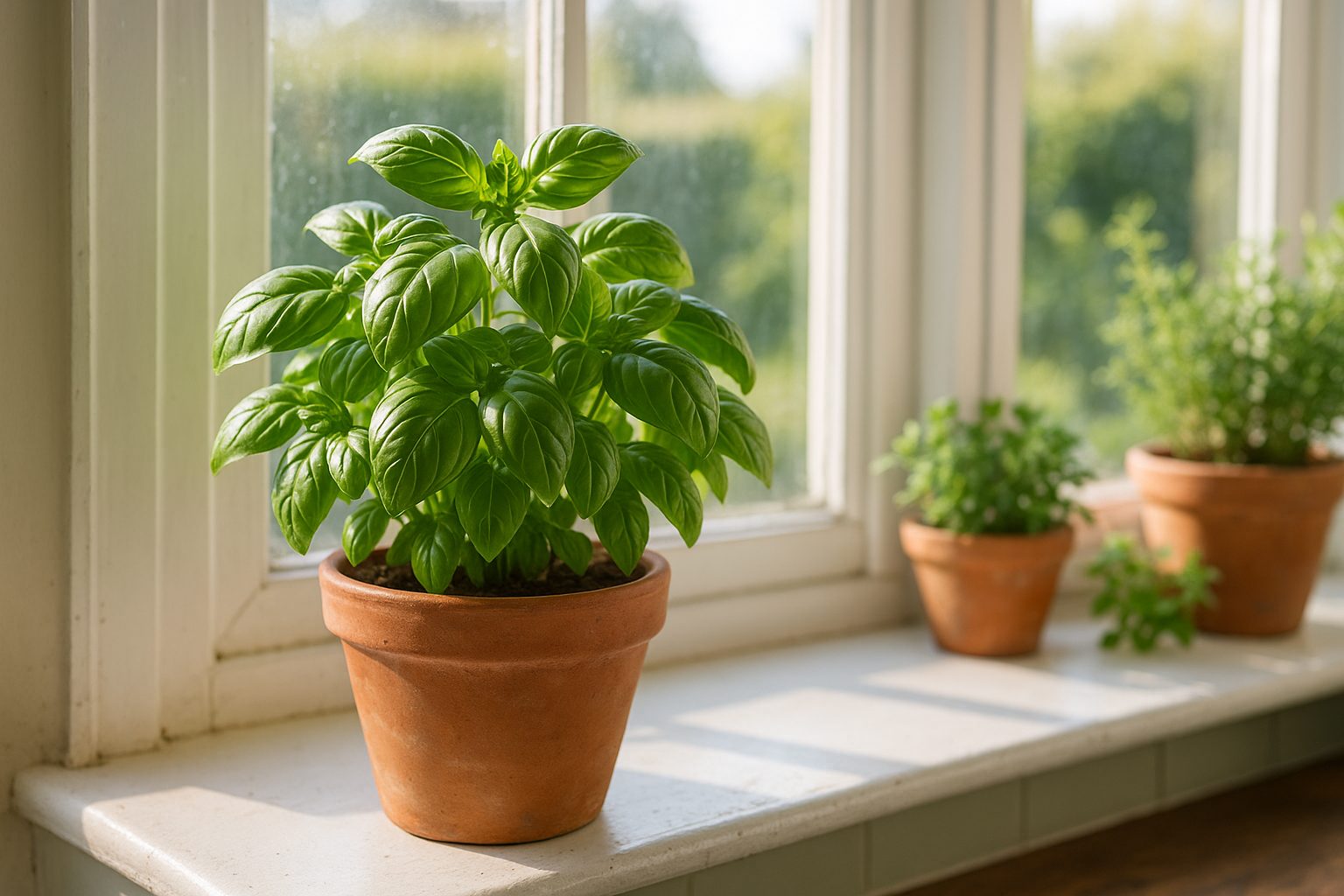
Indoor Growing (Windowsill)
A bright, south-facing windowsill suits basil perfectly. It needs warmth to thrive—minimum 10°C, ideally 15-20°C.
Best for: Year-round supply, flats without outdoor space, starting plants early
Pros:
– Protected from cold winds and frost
– Accessible by the kitchen
– Produces leaves even in winter with enough light
Cons:
– Lower winter light slows growth significantly
– Plants become leggy without strong sun
– May need an LED grow light from November to February
Outdoor Growing (Patio or Balcony)
Outdoor basil develops stronger flavour from increased sun and grows more vigorous than indoor plants. However, basil is tender and killed by frost, so timing matters.
Best for: Maximum harvests, strongest flavour, summer production
Safe timing: Late May is safe for most of the UK. Southern regions can plant in late April; northern areas should wait until early June.
Temperature needs: Frost-free conditions, ideally 15-25°C
Pros:
– More intense flavour from sun exposure
– Larger plants and bigger yields
– Natural air circulation reduces disease
Cons:
– Weather dependent
– Slugs and snails—common in damp UK conditions
The Hybrid Approach
Many UK gardeners combine both methods: start seeds on a warm windowsill in March or April, then move plants outside after hardening off in late May. Bring favourites back indoors in October to extend the harvest.
For a productive container garden, grow vegetables in pots alongside your herbs.
What You Need
Pot Size and Type
Basil roots grow vertically more than horizontally, so depth matters.
Minimum: 15cm diameter and depth for one plant
Ideal: 20-25cm diameter with at least 20cm depth
A pot holding around 9 litres gives basil room to develop a strong root system, helping it access water during hot spells.
Material: Terracotta breathes well and suits basil’s preference for good drainage. Plastic retains moisture longer if you forget to water. Drainage holes are essential—soggy compost kills basil.
Compost
Use a multi-purpose compost with added John Innes or a dedicated herb compost. See our guide to the best compost for containers. John Innes contains grit and loam that improve drainage and provide stable nutrients.
Avoid heavy garden soil (too dense) and compost with water-retentive gels.
Seeds Versus Young Plants
Seeds: Cheaper with more varieties, but add 6-8 weeks before first harvest. Sow indoors from March to August.
Young plants: Give instant results—ideal for beginners or late starters. Available from April, ready to harvest in 2-3 weeks.
Planting Your Basil
From Seed
1. Fill your pot with compost, firming gently
2. Sow thinly, 2-3cm apart
3. Cover with 5mm of compost
4. Water gently using a fine rose to avoid washing seeds away
5. Place on a warm windowsill—18-21°C is ideal
6. Seedlings emerge in 5-10 days
7. When 5cm tall, thin to strongest plants, leaving 10cm between each
From Young Plants
1. Water the plant in its original pot 30 minutes before transplanting
2. Fill the new pot with compost, leaving a hole the size of the root ball
3. Gently remove the plant and place at the same depth
4. Firm compost around the roots and water thoroughly
5. Place in final growing position
Month-by-Month Calendar (UK)
| Month | Indoor | Outdoor | Key Tasks |
|---|---|---|---|
| Jan-Feb | Possible with grow lights | Too cold | Plan; order seeds |
| Mar-Apr | Sow on warm windowsill | Prepare pots | Start early indoors |
| May | Harvest from early sowings | Sow after last frost | Late May: safe to move plants outside |
| Jun-Aug | Full production | Peak harvest | Pinch flowers weekly; feed regularly |
| Sep-Oct | Bring indoors before frost | Final harvests | Take cuttings for winter |
| Nov-Dec | Maintain on windowsill | N/A | Reduce watering; harvest lightly |
Essential Care
Watering: Check Soil, Don’t Follow Schedule
Check the soil and water when needed. Stick your finger into the compost—if the top 2cm feels dry, water.
– Indoor pots: Every 5-7 days in cooler months; every 3-4 days in summer
– Outdoor pots: Every 1-3 days in summer, depending on weather
Water at the base, not over leaves, preferably in the morning. This reduces evaporation and keeps foliage dry overnight, preventing fungal problems and slug attraction.
Signs to watch:
– Drooping leaves = underwatering. Check soil and water immediately.
– Yellowing lower leaves = overwatering
Pinching for Bushiness
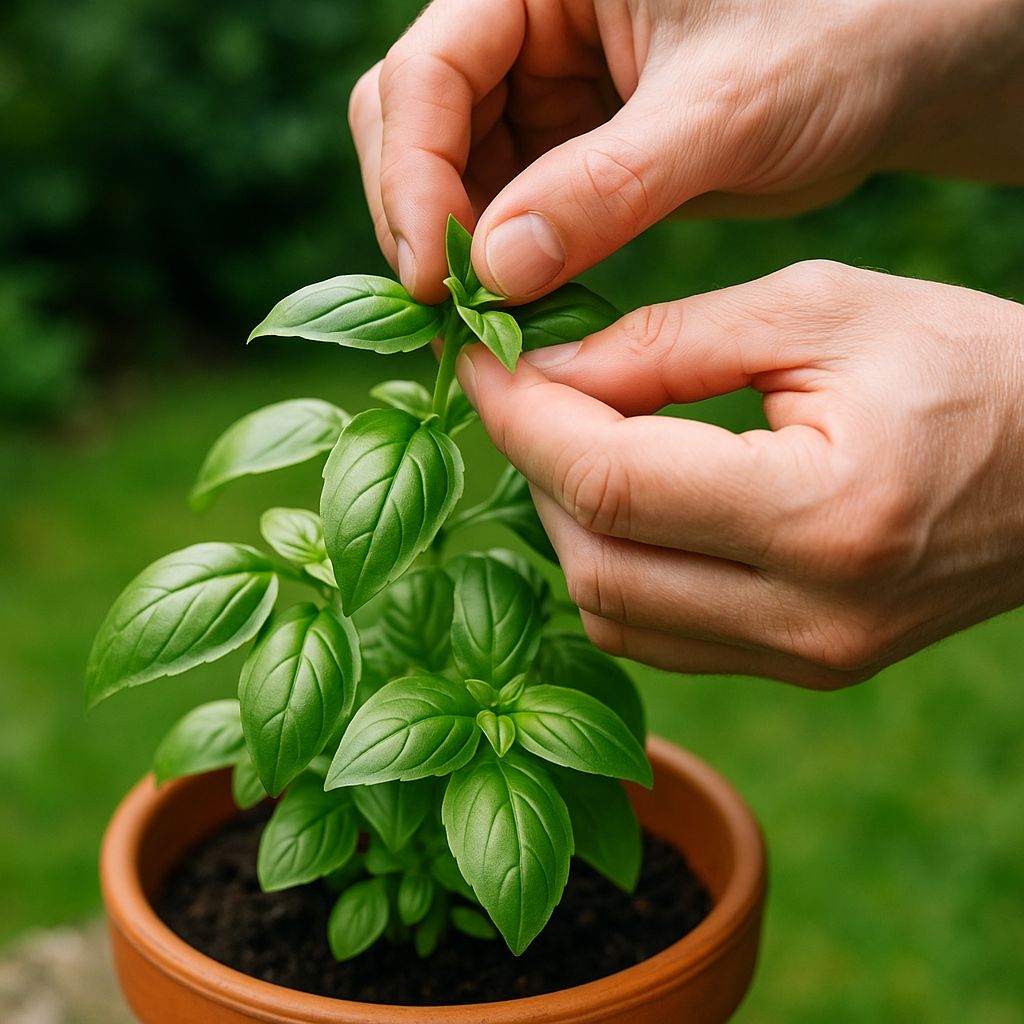
Regular pinching transforms a spindly plant into a compact, productive bush. It prevents flowering and encourages branching.
When to start: Once your plant reaches 15cm tall with several sets of leaves
How to pinch:
1. Locate the growing tip at the top of the stem
2. Pinch out just above a pair of leaves
3. The plant produces two new shoots from that point
4. Repeat every 2-3 weeks
Use pinchings immediately in cooking—this encourages regular harvesting.
Once you’ve mastered basil, try growing other herbs in containers—many respond to the same pinching technique, or read our dedicated guide on how to grow mint in containers.
Feeding
Plants in pots exhaust nutrients faster than those in the ground.
When: 6 weeks after germination, or immediately with young plants
Frequency: Every 2-4 weeks during growing season (March to September)
What: Balanced liquid fertiliser with roughly equal NPK numbers (such as 10-10-10). Avoid high-potassium tomato feeds—they encourage flowering over leaf production.
Stop feeding from October to March when growth slows.
Light
Basil needs at least 6 hours of direct sun daily, preferably 8 or more.
– Indoors: South-facing windowsill is ideal. Rotate the pot weekly to prevent leaning.
– Outdoors: Choose the sunniest, most sheltered spot.
Leggy growth (tall with sparse leaves) means your plant needs more light.
Common Problems
Leggy Growth
Cause: Insufficient light, lack of pinching, or both
Fix: Move to brighter location and pinch growing tips. New growth will be bushier.
Prevention: Choose the sunniest spot from the start and pinch regularly.
Yellow Leaves
Lower leaves yellow: Overwatering. Let compost dry more between waterings; check drainage holes.
Upper leaves yellow: Nutrient deficiency or cold stress. Feed regularly and ensure nighttime temperatures stay above 10°C.
Spotted or mottled yellow: Possible disease. Remove affected leaves and improve air circulation.
Pests
Slugs and Snails (Outdoor UK Problem)
Active in cool, damp weather.
Signs: Ragged holes, slime trails
Control:
– Check at dusk and remove by hand
– Use copper tape around pots
– Remove hiding places like debris
– Crushed eggshells or sharp grit deter them
Avoid salt (damages soil) and toxic slug pellets.
Aphids
Signs: Sticky leaves, curled young growth, ants farming for honeydew
Control:
– Tolerance is often the best first approach
– Squash small colonies between finger and thumb
– Spray with strong water jet to dislodge
– Encourage ladybirds and hoverfly larvae
– Weak castile soap solution for persistent infestations
Harvesting
When to Harvest
Start once your plant reaches 15cm tall with several leaf pairs. The more you harvest, the more it produces—provided you leave at least two-thirds of the plant intact.
Best time: Morning, after dew has dried but before heat of day
How to Harvest
Method 1: Pinch individual leaves as needed
Method 2: Cut whole stems just above a leaf node. The plant branches from that point.
Preserving Excess
– Short term: Stems in a glass of water on the counter—basil hates fridge cold
– Medium term: Wrapped loosely in damp kitchen paper, in fridge door for 2-3 days
– Long term: Pesto frozen in portions, or leaves frozen in olive oil in ice cube trays
Extending the Season
Taking Cuttings
Basil roots easily from cuttings, letting you create new plants for free.
When: June to August
Method:
1. Cut a 10cm stem tip, removing lower leaves
2. Place in a glass of water on a windowsill
3. Roots appear in 2-3 weeks
4. Pot up when roots reach 3cm
Overwintering
Bring your best plant indoors before first frost. Reduce watering significantly—winter basil grows slowly and needs minimal moisture. Expect little growth from November to February, but the plant revives strongly in spring.
Quick Reference
| Factor | Guidance |
|---|---|
| Optimal temperature | 15-25°C |
| Minimum temperature | 10°C (no frost tolerance) |
| Germination | 5-10 days at 18-21°C |
| First harvest | 6-8 weeks from seed; 2-3 weeks from young plants |
| Pot size (minimum) | 15cm diameter and depth |
| Pot size (ideal) | 20-25cm diameter, 20cm+ depth |
| Light | 6+ hours direct sun daily |
| Watering | When top 2cm of compost is dry |
| Feeding | Every 2-4 weeks with balanced liquid feed |
| Lifespan | Annual, but extendable via cuttings |
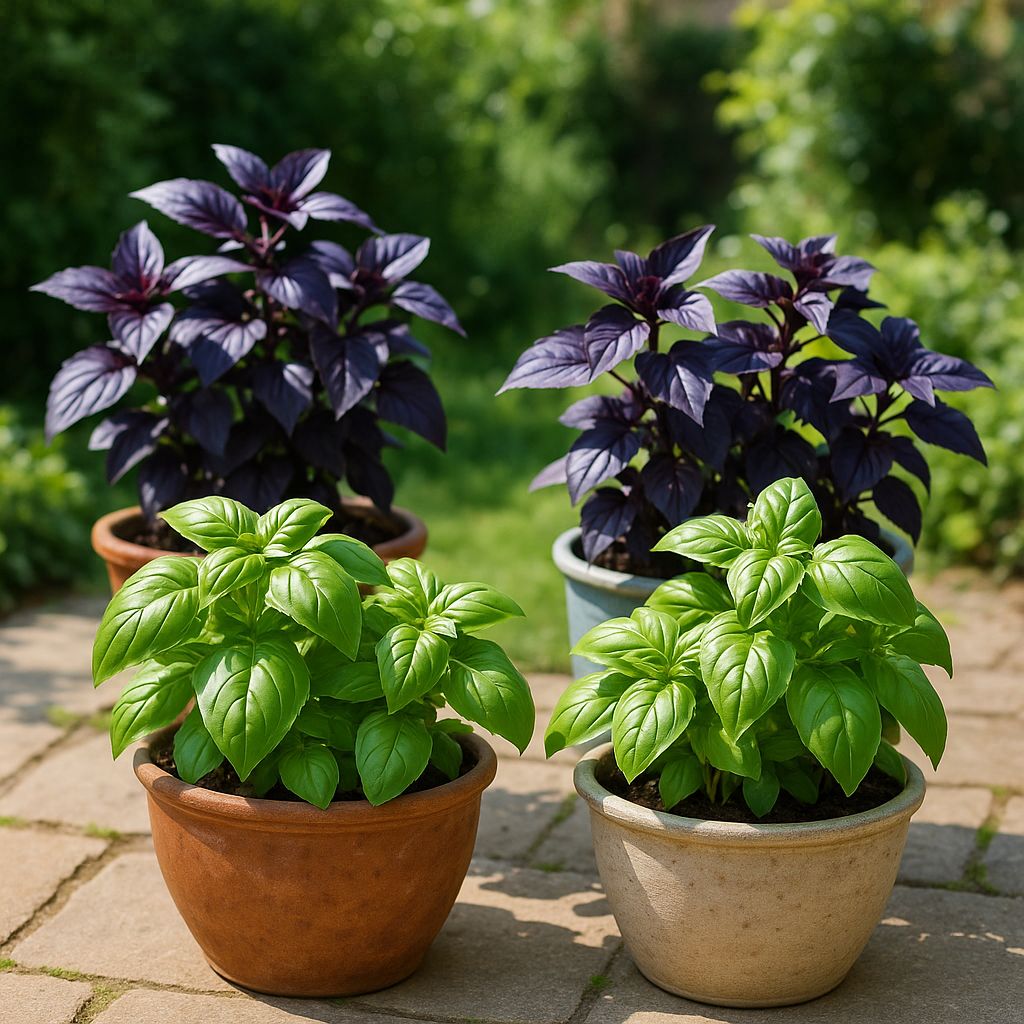
| Best UK varieties | Genovese (classic), Greek (compact), Thai (spicy), Dark Opal (purple) |
Frequently Asked Questions
Can I grow basil in the UK climate?
Yes, very successfully. Basil thrives in British summers and grows brilliantly on windowsills year-round. The key is frost protection—it has zero tolerance for freezing temperatures.
How long does basil take to grow from seed?
Seedlings emerge within 5-10 days. First usable leaves in 6-8 weeks; full harvests from 10 weeks.
Why is my basil drooping?
Almost always underwatering. Check soil immediately—if the top 2cm is dry, water thoroughly. The plant should recover within hours.
Can I grow basil indoors all year?
Yes, on a sunny south-facing windowsill. Growth slows in winter due to lower light, but the plant survives and resumes vigorous growth in spring. An LED grow light helps maintain production from November to February.
How do I make basil bushy?
Pinch out growing tips regularly, just above a pair of leaves. This forces branching, creating a compact, productive shape.
Why are my basil leaves turning yellow?
Yellow lower leaves = overwatering. Yellow upper leaves = nutrient deficiency or cold stress. Check your watering routine and feed every 2-4 weeks.
When should I plant basil outside?
Late May is safe for most of the UK. Southern regions: late April. Northern areas: early June. Always check for late frosts before moving plants outside.
How often should I water basil in pots?
Check the soil. Water when the top 2cm feels dry. In summer, outdoor pots might need water every 2-3 days; in winter, indoor pots might only need water weekly.
Can I use supermarket basil and keep it growing?
Yes, with caution. Supermarket basil is typically several overcrowded plants in one pot. Divide gently into smaller clumps, pot each into its own 15cm pot with fresh compost, and water well. Some may not survive, but with care, several usually thrive.
Should I let my basil flower?
No. Once basil flowers, leaf production slows and flavour becomes bitter. Pinch off flower stems as soon as they appear.
Final Thoughts
Growing basil in pots is one of the most satisfying projects for UK beginners. Focus on three essentials: warm location, good drainage, and regular pinching—and you will enjoy fresh basil for months.
Start with one plant on your windowsill, get comfortable checking soil and pinching tips, then expand your herb collection as confidence grows. For more ideas, read our beginner’s guide to starting a vegetable garden.