
December is the month most UK gardeners assume is over. It is not. The bare-root season is at its peak, there is still time to squeeze garlic into the ground in mild spots, indoor sowing starts for chillies and aubergines, and this is the quiet window to plan the coming year without the pressure of a backlog. If you do not plant anything else, plant a fruit tree.
Here is what to plant, sow and do in December across the UK.

Vegetables to Plant and Sow in December
Garlic (Last Chance in Most of the UK)
If you missed November, early December is still workable for garlic across southern England and in mild coastal areas. The bulbs will produce slightly smaller heads than October-November plantings, but they will crop. Stick to well-tested cultivars: ‘Solent Wight’ (RHS AGM, H4) for softneck reliability, ‘Germidour’ (RHS AGM, H4) for a consistent medium-sized crop, and ‘Cristo’ (RHS AGM, H4) for flavour.
Plant into the sunniest, best-drained bed you have. If soil is sodden, use 30cm-deep containers filled with a mix of multi-purpose compost and horticultural grit instead — garlic in waterlogged ground will rot before spring.
Broad Beans (Very Last Window)
In very mild areas of the south-west and along south-coast gardens, ‘Aquadulce Claudia’ (RHS AGM, H5) can still be sown in early December. Elsewhere, it is too late — germination becomes unreliable below 5°C soil temperature. If you have not sown yet, wait until late February.
Indoor Sowing: Chillies and Aubergines
This is the time to start the longest-season crops under heat. Chillies and aubergines need five to six months from sowing to picking, so sowing in late December gives you ripe fruit from July onwards. Both need warmth (20–25°C) to germinate — a heated propagator on a bright windowsill or in a warm greenhouse.
Reliable AGM chilli cultivars for the UK: ‘Apache’ (RHS AGM, H1c) stays compact and crops heavily in a pot, good for patios. ‘Hungarian Hot Wax’ (RHS AGM, H1c) is medium heat and ripens early. ‘Prairie Fire’ (RHS AGM, H1c) is ornamental as well as edible and good on a sunny windowsill. For aubergines, ‘Bonica’ (RHS AGM, H1c) is the dependable choice — Mediterranean-style glossy black fruits and enough productivity for a proper harvest from two plants.
Sow seeds 1cm deep in modules of fresh seed compost. Cover the propagator and bottom-water to keep humidity up. Germination takes 10–21 days. Prick out once seedlings have two true leaves.
Winter Salads Under Cover
‘Winter Density’ (RHS AGM, H2) lettuce sown in November will be ready for thinning and eating now. For a fresh sowing, oriental greens like mizuna, mibuna, and winter purslane germinate readily in an unheated greenhouse and crop within six to eight weeks.
Fruit to Plant in December
Bare-root Fruit Trees
December is peak planting time for bare-root apples, pears, plums, cherries, and quince. Nurseries are dispatching, soil is usually workable, and the trees have the longest possible dormant period to establish before spring growth. As long as the ground is not frozen solid or waterlogged, plant as soon as stock arrives.
Heel in temporarily (lean the tree at 45° in a shallow trench and cover the roots with soil) if you cannot plant immediately. Never let bare roots dry out in an open shed or garage — keep them covered and moist.
Soft Fruit Canes and Bushes
Bare-root raspberries, blackcurrants, redcurrants, gooseberries, and blackberries all establish well in December. For autumn raspberries, ‘Joan J’ (RHS AGM, H6) is thornless and produces a heavy autumn crop. ‘Glen Ample’ (RHS AGM, H6) remains the summer-fruiting standard. For blackcurrants, ‘Big Ben’ (RHS AGM, H6) produces unusually large, sweet berries good for eating fresh — not just cooking.
Rhubarb
Rhubarb crowns are cheap and widely available bare-root in December. ‘Timperley Early’ (RHS AGM, H5) is the fastest to crop and responds well to forcing under a bucket or terracotta forcer. ‘Fulton’s Strawberry Surprise’ (RHS AGM, H5) has unusually pink stems and a milder flavour. Plant crowns with the growing point just level with soil — deeper and they struggle to break through.
Forcing Rhubarb
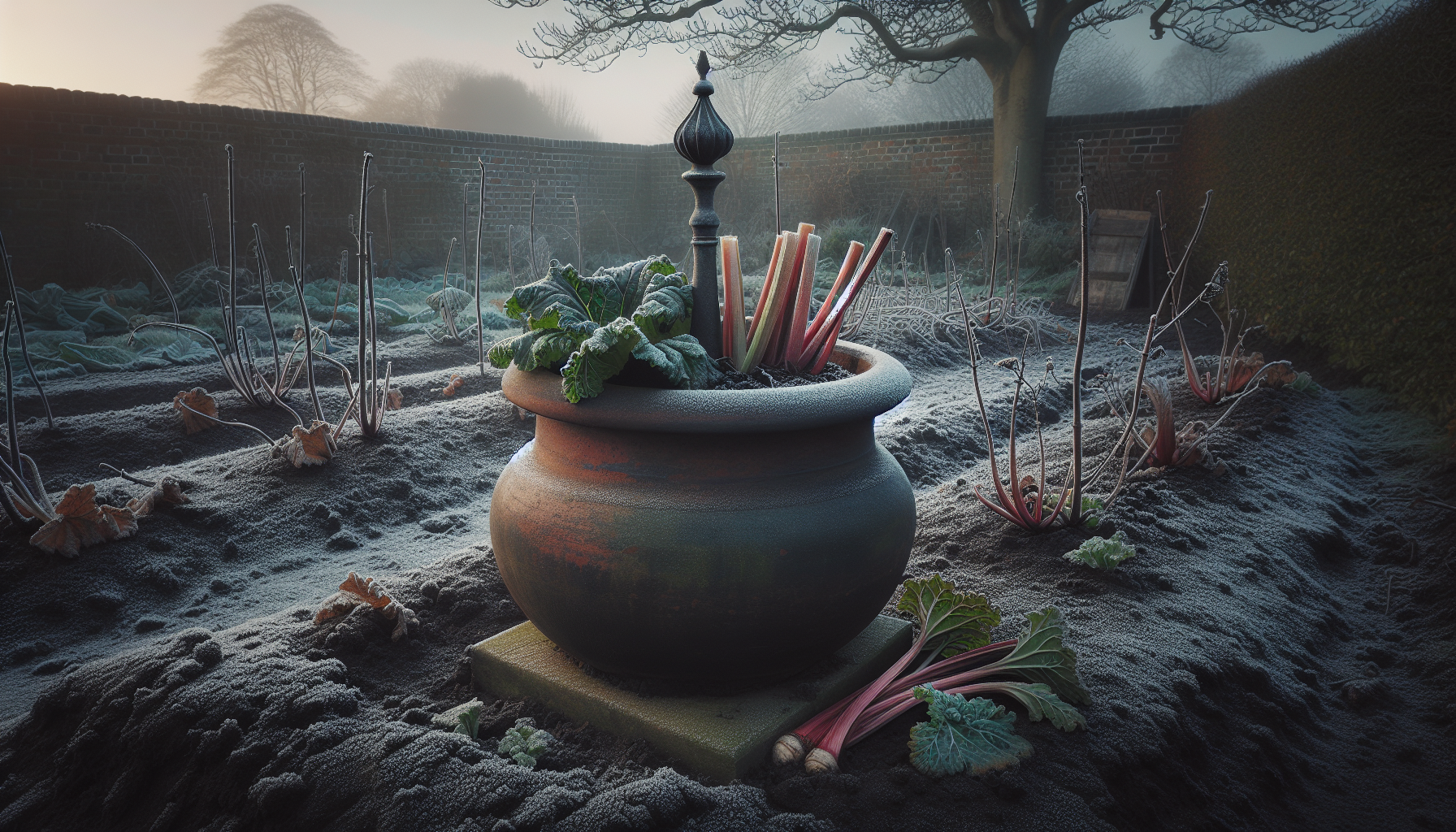
Existing rhubarb crowns can be forced now for an early harvest of pale, tender stems in February or March. Cover the crown with a large pot, bucket, or traditional terracotta forcer and block out all light. Stems drawn up in darkness are sweeter and less stringy than open-grown spring rhubarb. Do not force the same crown two years running — it exhausts the plant.
Bulbs and Ornamentals
Indoor Bulbs for Christmas
Amaryllis (Hippeastrum) bulbs planted in October or November flower for Christmas and into January. If you are planting fresh now, expect flowering in February. Plant bulbs with the top third exposed above the compost, water sparingly until the flower spike emerges, then regularly.
Paperwhite narcissi are the quickest indoor bulb — six to eight weeks from planting to flower. They need no cold period and grow in gravel with water alone, which makes them useful for gifts.
Tulips (Last Call)
Tulip bulbs can still be planted right up to Christmas if the ground is not frozen. Bulbs left too long will dry out and give poor results, so either plant or discard — do not carry them into spring. Plant three times their own depth, 10cm apart, pointed end up.
Bare-root Roses and Shrubs
Roses, clematis, and deciduous shrubs are all at their cheapest as bare-root stock in December and January. Buy from a reputable supplier — cheaper does not help if the stock is poor. Plant with the graft union at soil level for roses, and prune back to three outward-facing buds after planting.
Tasks for December
Planning and Ordering
- Order seed potatoes for delivery in January or February. First and second earlies are popular and sell out — ‘Foremost’ (RHS AGM, H2), ‘Charlotte’ (RHS AGM, H2), ‘Vivaldi’ (RHS AGM, H2) are reliable early choices.
- Draw up a rough crop plan for the coming year, noting what did well and what to replace.
- Order seeds early — popular varieties sell out from January onwards.
Pruning
- Apple and pear trees can be winter-pruned any time between leaf-fall and bud-break — December is ideal if the weather is mild.
- Autumn-fruiting raspberries should be cut right down to ground level in late December or January — they fruit on new canes.
- Avoid pruning plums, cherries, peaches, and apricots in winter — they are vulnerable to silver leaf disease.
Soil and Infrastructure
- Spread a 5–7cm layer of compost or well-rotted manure over empty vegetable beds. Worms will incorporate it by spring.
- Lime beds destined for brassicas next year if your soil is acidic. Lime takes months to work.
- Insulate outside taps and drain hosepipes before the first hard frost.
- Clean pots and seed trays now so they are ready for January and February sowings. Hot soapy water plus a cup of vinegar removes most pathogens.
Wildlife
- Keep bird feeders topped up — they draw more visitors to the garden when it is cold and improve pest control by spring.
- Leave seedheads and hollow plant stems standing until March — they overwinter ladybirds and lacewings.
- Make sure a small area of any pond is kept ice-free on very cold days. Float a ball overnight rather than breaking ice, which stresses fish.
Frequently Asked Questions
Can I still plant garlic in December?
In southern England and mild coastal areas, early December is workable. Bulbs will be slightly smaller but will still crop. Further north or inland, wait until February and plant a spring-planting variety instead.
When should I start chillies and aubergines from seed?
Late December to mid-January for the earliest possible crops. Both need warm conditions (20–25°C) and a long growing season. Sown now and grown on under lights or in a heated greenhouse, you can expect ripe fruit from late July.
Is it too late to plant tulips?
No — tulips can be planted right up to Christmas if the soil is not frozen. Waiting actually reduces the risk of tulip fire, a fungal disease that attacks bulbs in warm, damp autumn soil. Do not store bulbs into the new year though — they dry out and flower poorly.
Can I prune apple trees in December?
Yes — winter pruning (December to February, while dormant) encourages vigorous growth. Summer pruning, by contrast, restricts growth. Do not prune plums, cherries, or other stone fruit in winter.
What vegetables can I harvest in December?
Brussels sprouts, parsnips, leeks, kale, winter cabbage, Jerusalem artichokes, celeriac, and swede. All of these improve in flavour after frost. Parsnips in particular should be left in the ground until after the first hard frost to develop their full sweetness.
Should I feed the garden in December?
Not vegetables — everything is dormant or nearly so. The one exception is a generous mulch of compost or well-rotted manure on beds and around perennial plants, which feeds the soil over winter rather than the plants directly.
What Next?
Pick one job from this month’s list and actually get it done this week — bare-root stock waits for no one, and tulip bulbs still sitting in the shed will not flower next spring. If you are planning a bigger overhaul, work out your crop rotation before ordering seeds in January, and start a notebook for what worked and what flopped this season. Future-you will thank present-you.
Have a question about something on this list, or want to share what you are planting this month? Drop a comment below — we read every one and answer as many as we can.
For further reading on bare-root fruit planting and winter pruning, the Royal Horticultural Society publishes detailed month-specific guidance.
Related Guides
- What to Plant in November UK — the previous month, with full bare-root planting detail.
- What to Plant in January UK — when indoor sowing accelerates.
- Best Compost for Container Gardening — for potting up bare-root trees and starting indoor seedlings.
- Seasonal Gardening Hub — full UK planting calendar by month.