Quick Answer:
- Sow outdoors: Lettuce, spinach, chard, spring cabbage, turnips, radishes, rocket, lamb’s lettuce, spring onions
- Plant out: Strawberry runners, overwintering onion sets, garlic (late August in mild areas), prepared spring-flowering bulbs
- Harvest now: Tomatoes, courgettes, runner beans, French beans, cucumbers, sweetcorn, blueberries, autumn raspberries, herbs
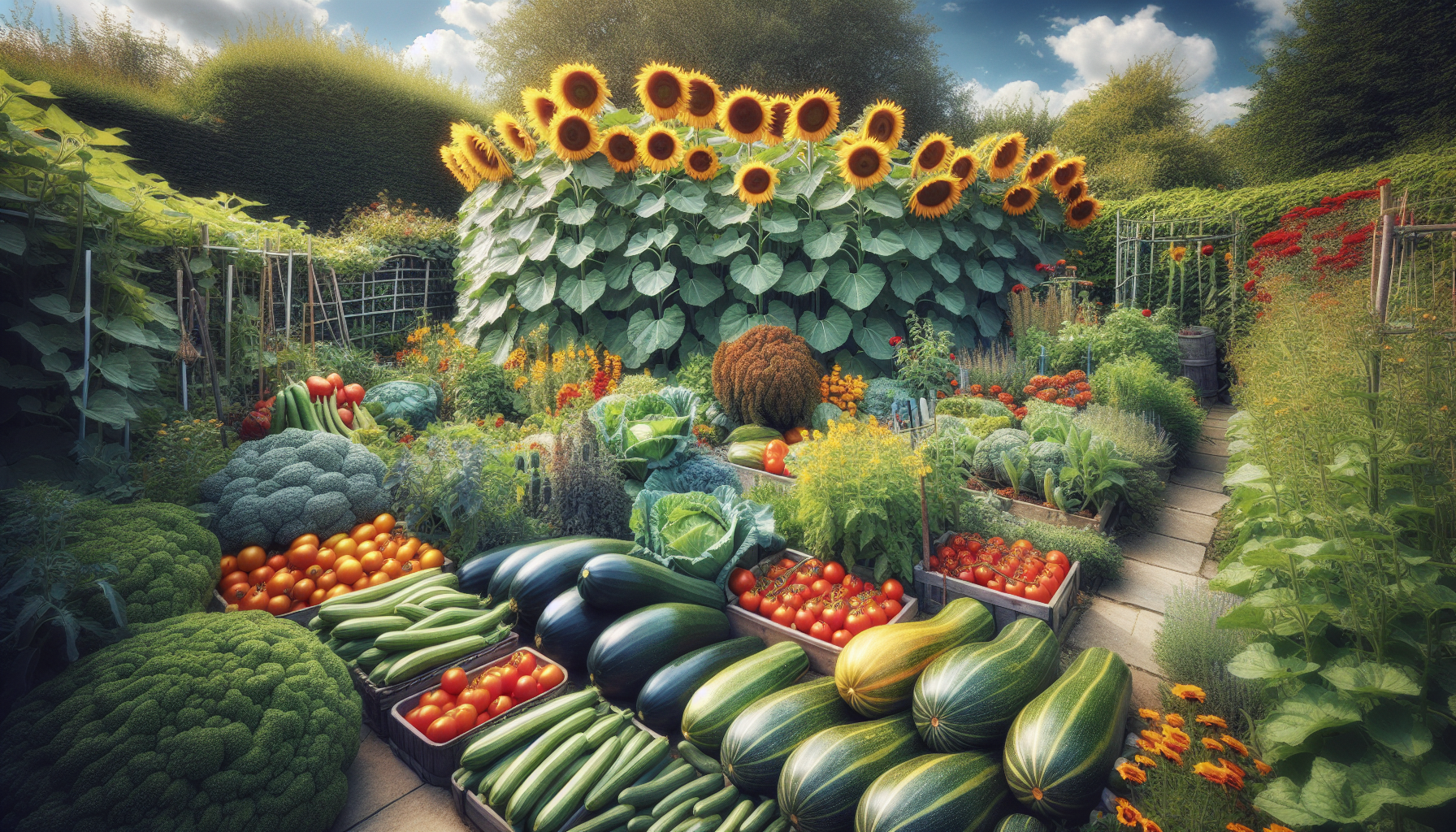
August is one of the most rewarding months in the garden — you are reaping summer’s bounty while sowing the seeds of autumn and early spring harvests.
August sits right on the hinge between summer abundance and autumn preparation. Your borders and raised beds are brimming with tomatoes, courgettes, and runner beans — yet the days are already getting noticeably shorter, and the soil is still warm enough to germinate a whole second wave of crops.
This is the month that separates productive gardeners from those who let their plots wind down too early. By sowing quick-maturing salads, planting strawberry runners, and getting overwintering alliums into the ground, you set yourself up for harvests that stretch well into November and give you a flying start next spring.
Below you will find everything you need to know about what to sow, plant, and harvest in August in the UK, along with recommended cultivars — many of them holders of the RHS Award of Garden Merit (AGM) — and practical tips to keep your garden thriving through the late-summer transition.
What to Sow Outdoors in August
The soil is warm, germination is fast, and there is still enough daylight for quick-growing crops to reach maturity before the first frosts. August outdoor sowings fall into two camps: fast crops you will eat this autumn, and overwintering varieties that hunker down through winter and crop next spring.
Autumn Salads
Lettuce, rocket, and lamb’s lettuce (corn salad) are the stars of August sowing. They germinate in days rather than weeks and will give you fresh salad leaves from late September right through to November — longer if you cover them with fleece or a cloche as temperatures drop.
- Lettuce: Sow short rows every 10–14 days for continuous picking. The AGM-holding ‘Little Gem’ is compact and bolt-resistant, ideal for tight spaces. ‘Winter Density’ (also AGM) is a cos type bred specifically for late-season growing. ‘Navara’ (AGM) adds attractive red tones to the salad bowl.
- Rocket: Both salad rocket and wild rocket germinate rapidly in warm soil. Sow thinly in rows 15 cm apart and start picking baby leaves within three to four weeks.
- Lamb’s lettuce: One of the hardiest salad crops you can grow. Sow now and it will crop through autumn and mild winter spells with no protection at all.
Spinach and Chard
August-sown spinach avoids the bolting problems of spring sowings because day length is decreasing. The AGM cultivar ‘Lazio’ is vigorous and downy-mildew resistant. ‘Medania’ (AGM) produces large, smooth leaves that are excellent for cooking and salads alike.
Chard is equally straightforward. ‘Bright Lights’ (AGM) gives you a rainbow of stem colours and is hardy enough to stand through winter in most of the UK. ‘Fordhook Giant’ (AGM) produces heavy yields of thick, white-stemmed leaves, while ‘Rhubarb Chard’ (AGM) offers deep crimson stems that look stunning in the border as well as on the plate.
Spring Cabbage
Early to mid-August is the ideal window for sowing spring cabbage. Transplant the seedlings to their final positions in September or October, spacing them about 30 cm apart. They will sit through winter as small rosettes and then heart up rapidly in March and April, filling the hungry gap when little else is ready. Choose cultivars bred for overwintering — ‘Durham Early’ and ‘April’ are popular choices.
Turnips and Radishes
Both crop quickly and are perfectly suited to filling gaps left by spent summer crops.
- Turnips: ‘Tokyo Cross’ (AGM) is the one to grow. It matures in about 35 days from sowing and produces sweet, white, golf-ball-sized roots that are delicious raw or lightly steamed.
- Radishes: ‘French Breakfast 4 Francis’ (AGM) and ‘Scarlet Globe’ (AGM) are reliable fast croppers. Sow directly where they are to grow, thin to 2–3 cm apart, and you will be pulling them within a month.
Spring Onions
An August sowing of a hardy spring onion variety such as ‘White Lisbon Winter Hardy’ will overwinter and give you an early crop next spring — well before spring-sown ones are ready. Sow in drills 1 cm deep and 10 cm apart.
What to Plant Out in August
August is not just about sowing seed. Several important crops are planted out this month, giving them time to establish roots while the soil is still warm.
Strawberry Runners
This is the prime month for planting new strawberry beds. Runners planted in August will establish strong root systems through autumn and deliver a full crop next summer. The RHS recommends planting as early in August as possible to maximise establishment time.
Top cultivars to look for:
- ‘Cambridge Favourite’ (AGM): A mid-season variety with excellent flavour and reliable cropping. Arguably the most widely grown garden strawberry in the UK.
- ‘Florence’ (AGM): Late-season, heavy-cropping, and notably disease-resistant. Ideal if you already have an early variety and want to extend the season.
- ‘Malling Centenary’ (AGM): Large, sweet berries on a vigorous plant. Bred at East Malling Research in Kent.
If you are short on bed space, strawberries grow brilliantly in containers, hanging baskets, and growing bags. Our guide to growing strawberries in pots covers everything from compost choice to feeding schedules.
Overwintering Onion Sets
From mid-August onwards, garden centres stock overwintering onion sets. These are planted in autumn, grow slowly through winter, and produce mature bulbs in June — weeks before spring-planted sets are ready.
Look for AGM holders ‘Centurion’ and ‘Sturon’ for dependable results. ‘Red Baron’ (AGM) is the pick if you want red onions. Push each set into prepared soil with the tip just showing, spacing them 10 cm apart in rows 25 cm apart.
Garlic
In mild southern areas, you can start planting garlic from late August. Most gardeners wait until October or November, but early planting gives the cloves a longer establishment period, which often results in bigger bulbs.
Choose cultivars suited to autumn planting: ‘Solent Wight’ (AGM) is a softneck type bred on the Isle of Wight and well adapted to UK conditions. ‘Germidour’ (AGM) is a French softneck with a mild flavour and excellent keeping qualities. ‘Cristo’ (AGM) is a reliable all-rounder that stores well into the following summer.
Plant individual cloves 5 cm deep and 15 cm apart, pointy end up. Garlic needs a period of cold (vernalisation) to form proper bulbs, so autumn planting is ideal in the UK climate.
Spring-Flowering Bulbs (Preparation)
While most spring bulbs go in from September onwards, August is the month to order them. Daffodils, crocuses, tulips, and alliums sell out fast — especially the more unusual varieties. Get your order in now, plant from late September, and your spring borders will reward you handsomely.
Late Summer Crops and Succession Sowing
If you have been growing vegetables this year, August is your last real chance for successional sowings and a prime opportunity to improve your soil for next season.
Successional Salad Sowings
The golden rule: sow a little, sow often. A short row of lettuce or rocket every 10 to 14 days keeps you in fresh leaves without gluts or gaps. This approach works particularly well with cut-and-come-again varieties — ‘Chatsworth’ (AGM) lettuce is excellent for repeat harvesting.
Beetroot
There is still time for a final sowing of beetroot in early August, provided you choose a quick-maturing cultivar. ‘Boltardy’ (AGM) lives up to its name and resists bolting even in challenging conditions. ‘Pablo’ (AGM) is a smooth-skinned globe type that performs consistently well in trials. Sow directly, thin to 10 cm apart, and expect to harvest baby beets from October.
Carrots
Fast-maturing carrot varieties sown in the first week of August will produce sweet, finger-sized roots by October. ‘Nairobi’ (AGM) is a Nantes type that matures quickly and has good resistance to carrot fly. ‘Flyaway’ (AGM) is specifically bred for reduced carrot fly susceptibility — a real advantage for late-season sowings when carrot fly pressure peaks.
Cover your carrot rows with fine mesh or environmesh to exclude carrot fly. The second generation of this pest is active in August and September, so protection is essential.
Green Manures
Any bed or patch that has been cleared of a spent crop should not be left bare. Bare soil is an invitation for weeds, nutrient leaching, and structural damage from heavy autumn rain.
Sow a green manure instead:
- Phacelia: Fast-growing, smothers weeds, and its purple flowers are a magnet for pollinators. Dig it in before it sets seed.
- Mustard: Germinates in days and produces a dense canopy of biomass. Dig in after six to eight weeks. Avoid if you are growing brassicas in rotation on that bed (same family).
- Field beans (winter-hardy): Sow from September and they will fix nitrogen in the soil over winter, then get dug in come spring. Ideal for heavy clay soils.
Green manures are one of the best ways to build soil fertility without buying in expensive compost or soil improvers.
What to Harvest in August
August is the month of abundance. If your earlier sowings have gone well, you will be picking more than you can eat — which is a wonderful problem to have.
Tomatoes
Greenhouse and outdoor tomatoes hit peak production this month. ‘Sungold’ (AGM) produces cascades of intensely sweet orange cherry tomatoes that rarely make it indoors — they get eaten straight off the vine. ‘Shirley’ (AGM) is a dependable slicer for salads and sandwiches.
Keep feeding with a high-potash tomato feed every week and remove sideshoots on cordon varieties to direct energy into ripening fruit. By mid-August, pinch out the growing tip of outdoor cordons — any flowers that form now will not have time to produce ripe fruit before autumn. For more detail, see our complete guide to growing tomatoes.
Courgettes and Summer Squash
‘Defender’ (AGM) is still going strong this month. Pick courgettes regularly when they are 10–15 cm long; leaving them to become marrows diverts the plant’s energy from producing new fruit. If you are drowning in courgettes, slice and freeze them for soups and stews later in the year.
Runner Beans and French Beans
Runner beans such as ‘Enorma’ (AGM) and ‘White Lady’ (AGM) are at their most prolific in August. Pick every two to three days to keep the plants producing — any pods you miss will become tough and stringy, and the plant will start to shut down.
French beans are equally productive. Harvest while the pods still snap cleanly. Surplus beans freeze well: blanch for two minutes, plunge into iced water, then bag and freeze flat.
Soft Fruit
Autumn-fruiting raspberries start cropping from mid-August. ‘Joan J’ (AGM) is a spine-free variety with large, dark red berries and excellent flavour. ‘Polka’ (AGM) fruits heavily and copes well in containers. ‘All Gold’ (AGM) produces golden-yellow berries that are striking in fruit salads and desserts.
Late-season blueberries such as ‘Duke’ (AGM) and ‘Spartan’ (AGM) are also ready for picking now. They need ericaceous (acidic) soil, so container growing in ericaceous compost is often the easiest option.
Herbs
Basil, parsley, mint, rosemary, and chives are all at their best. Harvest basil regularly to prevent flowering — once it bolts, leaf production drops sharply. ‘Aroma 2’ (AGM) is the basil cultivar to grow if you want large, fragrant leaves. Parsley keeps producing if you cut from the outside of the plant; ‘Bravour’ (AGM) is a flat-leaf type with strong flavour.
If you are growing mint in pots or rosemary in containers, both benefit from a trim now to encourage fresh, bushy growth heading into autumn.
Managing the Glut
When the harvest overwhelms you, keep these options in mind:
- Freeze: Beans, courgettes (sliced), herbs (in ice-cube trays with oil or water), raspberries (open-freeze on a tray first)
- Preserve: Green tomato chutney, runner bean chutney, courgette relish, raspberry jam
- Share: Neighbours, colleagues, local food banks, and community fridges are always glad of fresh produce
- Compost: Anything you genuinely cannot use goes on the compost heap rather than to waste
Container Growing in August
No garden? No problem. August is an excellent month for container growing, though you need to stay on top of watering as pots dry out fast in warm weather.
What to Sow and Plant in Pots
- Lettuce and salad leaves: A 30 cm pot or window box is all you need. Sow ‘Little Gem’ (AGM) or a cut-and-come-again mix and you will be harvesting within four weeks.
- Radishes: Perfect for shallow containers. ‘Scarlet Globe’ (AGM) matures fast and needs only 15 cm of compost depth.
- Spinach: ‘Lazio’ (AGM) grows well in pots. Keep the compost consistently moist to prevent bolting.
- Herbs: Basil, parsley, coriander, and chives all thrive in pots on a sunny windowsill or patio. Group them together for easy watering.
- Strawberry runners: Plant into 25–30 cm pots or a strawberry planter for fruiting next summer.
Watering and Feeding
In hot weather, containers may need watering twice a day — once in the morning and again in the evening. The RHS recommends watering in the early morning or late evening to reduce evaporation. Mulching the surface of the compost with gravel or bark chippings also helps retain moisture.
Feed fruiting crops (tomatoes, strawberries, peppers) weekly with a high-potash liquid feed. Leafy crops and herbs benefit from a balanced liquid feed every fortnight. For advice on choosing the right growing medium, see our guide to compost for container gardening.
What NOT to Plant in August
Knowing when it is too late to sow is just as important as knowing what to sow. These crops are off the table for August:
- Main-crop potatoes: They need 15–20 weeks to reach maturity. An August planting would be trying to bulk up in the cold and dark of December — it simply will not work outdoors in the UK. If you want a late crop, plant a few ‘Charlotte’ tubers in bags in June for harvesting in October.
- Sweetcorn: Sweetcorn needs sustained warmth and long days to form and fill cobs. Sowing now would give you tall plants with empty cobs at best.
- Tender squash and pumpkins from seed: Butternut squash, courgettes from seed, and pumpkins all need months of warm growing weather. Any seedlings started now would be killed by the first frost well before fruiting.
- Parsnips: They require a full growing season (120–170 days). The sowing window for parsnips closed in May. Mark it in the calendar for next February or March.
- French and runner beans from seed: Germination would be fine, but the plants would not have time to flower and set pods before autumn frosts. Enjoy the ones you already have growing instead.
August Gardening Tasks Checklist
Beyond sowing and harvesting, August has a full roster of maintenance tasks. Tick these off through the month:
- Water deeply and consistently — especially newly planted crops, containers, and anything under glass. Water at the base of plants, not over the foliage, to reduce disease risk.
- Feed tomatoes weekly with a high-potash fertiliser. Remove yellowing lower leaves to improve air circulation and reduce blight risk.
- Deadhead flowering plants (dahlias, roses, sweet peas) to prolong blooming well into September.
- Prune summer-fruiting raspberries — cut the canes that fruited this year down to ground level, and tie in the new green canes that will fruit next summer.
- Order spring-flowering bulbs — daffodils, crocuses, tulips, and alliums. The best selection is available now; plant from late September.
- Take semi-ripe cuttings of shrubs such as lavender, rosemary, box, and hydrangea. Insert into gritty compost and keep moist.
- Clear spent crops — remove bolted lettuce, finished pea plants, and any other exhausted vegetables. Add them to the compost heap and sow green manures in the gaps.
- Turn and water the compost heap — August warmth accelerates decomposition. Keep the heap moist but not waterlogged.
- Net brassicas — cabbage white butterflies are at peak activity this month. Cover all brassicas with fine mesh to prevent egg-laying.
- Top up wildlife ponds — water levels drop in warm weather. Use rainwater from a butt if possible, as tap water contains chemicals that encourage algae growth.
Frequently Asked Questions
Can I still sow carrots in August?
Yes, but only fast-maturing varieties. ‘Nairobi’ (AGM) and ‘Flyaway’ (AGM) are good choices for an August sowing. Expect to harvest sweet, finger-sized roots in October. Cover with fine mesh to protect against carrot fly, which is especially active in late summer.
Is it too late to plant strawberries in August?
Not at all — August is actually the ideal month. Runners planted now will establish strong roots through autumn and deliver a full crop next summer. Choose AGM-holding varieties like ‘Cambridge Favourite’, ‘Florence’, or ‘Malling Centenary’ for the best results.
What is the latest I can sow lettuce outdoors?
In most parts of the UK, you can sow lettuce outdoors until mid-September, though August sowings are more reliable. After September, move sowings under cover — a cold frame, cloche, or unheated greenhouse will extend the season significantly. Hardy varieties such as ‘Winter Density’ (AGM) cope best with shortening days and cooler temperatures.
Should I pinch out my tomato plants in August?
Yes. By mid-August, remove the growing tip of outdoor cordon tomatoes (cut just above the truss that is currently setting fruit). This stops the plant producing new flowers that will never ripen and redirects energy into swelling and ripening the existing fruit. Greenhouse tomatoes can continue a little longer, but should be stopped by early September.
Can I plant garlic in August?
In the milder south of England, you can plant garlic from late August. In cooler northern regions, most gardeners wait until October or November. Early planting gives cloves more time to establish roots, which can result in larger bulbs. Choose autumn-planting cultivars such as ‘Solent Wight’ (AGM) or ‘Germidour’ (AGM).
What green manure should I sow on empty beds?
For beds cleared in August, phacelia and mustard are both fast-growing and effective. Phacelia produces attractive purple flowers that benefit pollinators, while mustard creates dense ground cover in weeks. For beds you will not use until spring, sow field beans from September — they fix nitrogen in the soil over winter. Avoid mustard on beds earmarked for brassicas, as they are in the same plant family.
What to Do Next
August is a pivotal month, but it is just one chapter in the year-round gardening calendar. If you are building a planting plan or want to see what you should have been doing earlier (and what is coming next), explore our other monthly guides:
- What to Plant in April — the busiest sowing month of the year
- What to Plant in May — tender crops go outdoors after the last frost
- What to Plant in June — successional sowing and planting out
- Seasonal Gardening Hub — all our monthly and seasonal guides in one place
For more hands-on growing advice, these guides cover some of August’s key crops in detail:
- How to Grow Tomatoes from Seed (UK Guide)
- How to Grow Strawberries in Pots
- Best Vegetables to Grow in Containers
- Starting a Vegetable Garden: UK Beginner’s Guide
Affiliate Disclosure: Some links on this page are affiliate links. If you purchase a product through one of these links, plantsandgardening.com may earn a small commission at no extra cost to you. We only recommend products we genuinely believe will help your garden thrive. This does not influence our editorial content or cultivar recommendations.