As an Amazon Associate I earn from qualifying purchases.
Starting seeds indoors extends your growing season by months. But British winters and dull springs leave seedlings leggy and weak without supplemental light. The right LED grow light transforms a dim windowsill into a propagation powerhouse.
This guide covers everything you need to choose LED grow lights for seedlings — from understanding PAR and Kelvin ratings to specific product recommendations for UK gardeners.
—
Quick Comparison: Top LED Grow Lights for Seedlings
| Light | Wattage | Coverage | Best For | |
|---|---|---|---|---|
| led-barrina-t5 Barrina T5 Full Spectrum | 20W | 60×30cm | Budget propagation | £ |
| led-roleadro-75w Roleadro 75W Panel | 75W | 60×60cm | Single large tray | ££ |
| led-spider-farmer-sf1000 Spider Farmer SF1000 | 100W | 90×90cm | Serious seedlings | £££ |
| led-mars-hydro-ts600 Mars Hydro TS600 | 100W | 75×75cm | Value performance | ££ |
| led-viparspectra-p600 ViparSpectra P600 | 65W | 60×60cm | Adjustable height | ££ |
—
Why LED Grow Lights Beat Fluorescent for Seedlings
Old technology: T5 fluorescent tubes served gardeners for decades. They work, but waste energy as heat and require bulb replacement every 12 months.
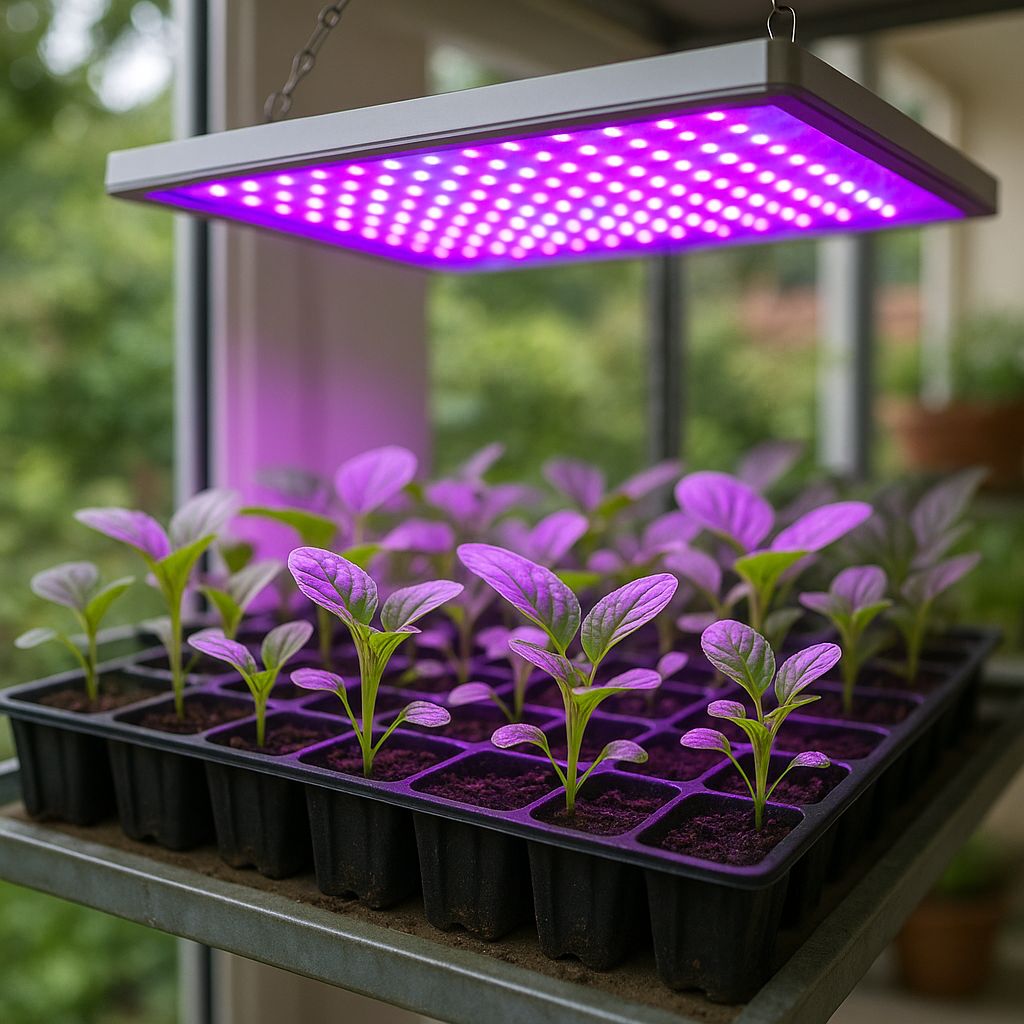
LED advantages:
– electricity for equivalent light output
– 5+ year lifespan — no annual bulb changes
– Adjustable spectrum — seedling mode vs flowering mode
– Less heat — position closer to plants without scorching
– Compact size — fit under kitchen cabinets and shelves
For starting tomatoes, peppers, and annual flowers from seed, LED pays for itself in electricity savings within two growing seasons.
—
Understanding the Numbers: What Specifications Actually Mean
Wattage: Power Draw, Not Output
A “75W” LED grow light typically draws 75 watts from the wall. Actual light output depends on diode efficiency.
Seedling guideline: 20–40 watts per square foot of growing area
| Tray Size | Minimum Wattage | Recommended |
|---|---|---|
| Single seed tray (30×20cm) | 15W | 20–30W |
| Two seed trays | 30W | 40–50W |
| Four seed trays or shelving unit | 50W | 75–100W |
Kelvin Rating: Light Colour Temperature
| Kelvin | Light Type | Best For |
|---|---|---|
| 3000K | Warm white | Flowering plants |
| 4000K | Neutral white | General vegetative |
| 6500K | Cool white | Seedlings and leafy greens |
| Full spectrum | Mixed diodes | All growth stages |
For seedlings: Choose 6500K (daylight) or full spectrum. This blue-dominant light promotes compact, leafy growth rather than stretching.
PPFD and Coverage Area
PPFD (Photosynthetic Photon Flux Density) measures usable light reaching the plant surface.
Seedling targets:
– Germination: 100–200 μmol/m²/s
– Seedling growth: 200–400 μmol/m²/s
Most manufacturers overstate coverage area. Halve their claims for seedling intensity.
—
Product Deep Dives
Barrina T5 Full Spectrum LED Grow Light
Best for: Budget-conscious gardeners, beginners, small-scale propagation
Specifications:
– Power: 20W per 60cm strip
– Coverage: 60×30cm at seedling height
– Kelvin: 6500K daylight
– Lifespan: 50,000 hours
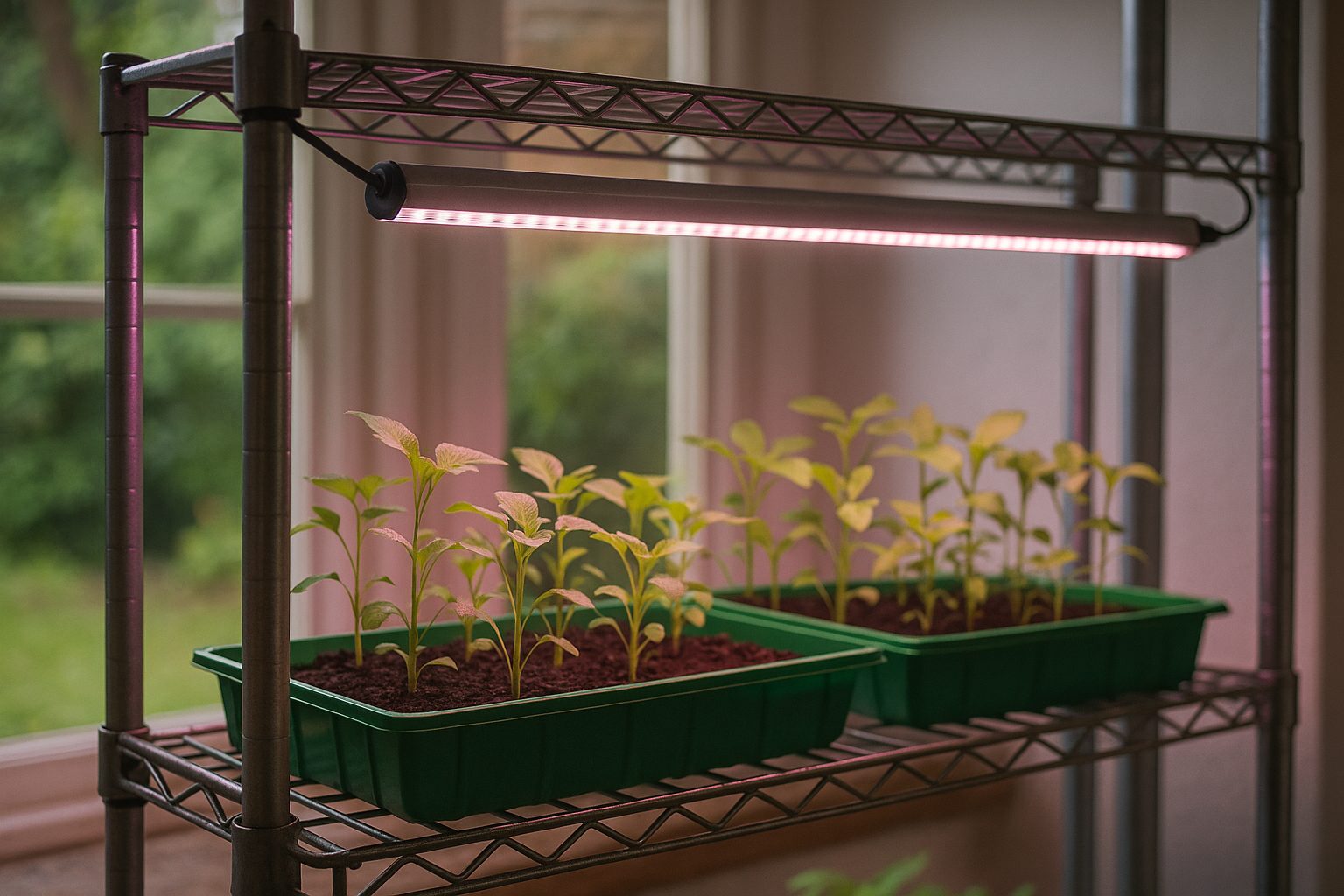
Why it works: These strip lights mount under standard kitchen cabinets or shelving. Link multiple strips together for larger setups. The T5 form factor fits where boxy panel lights won’t.
Limitations: Fixed spectrum — no veg/flower switch. Lower intensity means keeping lights 15–20cm from seedlings rather than 30cm+.
led-barrina-t5 Check latest price →
—
Roleadro 75W LED Grow Light Panel
Best for: Single large seed tray, compact spaces
Specifications:
– Power: 75W actual draw
– Coverage: 60×60cm
– Spectrum: Full spectrum (red + blue + white)
– Hanging height: 30–60cm
Why it works: The classic “panel” design provides even light distribution across a standard seed tray. Red/blue spectrum promotes stocky growth — seedlings don’t stretch searching for light.
Limitations: Fixed spectrum not ideal for flowering stage. Smaller coverage than claimed — use for one tray, not four.
led-roleadro-75w Check latest price →
—
Spider Farmer SF1000
Best for: Serious propagation, multiple trays, long-term investment
Specifications:
– Power: 100W Samsung LM301B diodes
– Coverage: 90×90cm veg / 60×60cm flower
– Efficacy: 2.7 μmol/J (excellent efficiency)
– Dimmable: 0–100%
Why it works: Samsung diodes are the gold standard for horticultural lighting. This light grows seedlings into productive plants without upgrade. Dimmable function lets you start intense for seedlings, then reduce for hardening off.
The investment: Higher upfront cost than budget options, but efficiency saves + annually in electricity versus older LED designs.
led-spider-farmer-sf1000 Check latest price →
—
Mars Hydro TS600
Best for: Value-conscious growers wanting quality
Specifications:
– Power: 100W actual draw
– Coverage: 75×75cm
– Spectrum: Full spectrum white + red
– Passive cooling (no fan noise)
Why it works: Mars Hydro revolutionised budget grow lights. The TS600 delivers premium light performance at the price. Passive cooling means no fan failure risk and silent operation.
Best setup: Hang 45cm above seed trays. Raise as seedlings grow to maintain intensity.
led-mars-hydro-ts600 Check latest price →
—
ViparSpectra P600
Best for: Adjustable setups, learning growers
Specifications:
– Power: 65W (variable)
– Coverage: 60×60cm
– Dimmable: Yes
– Daisy chain: Connect multiple units
Why it works: Dimming matters for seedlings. Start at 50% intensity for germination, increase to 100% as true leaves emerge. The P600 grows with your skills.
Bonus feature: Daisy chain capability means one timer controls multiple lights — essential for shelving units with multiple trays.
led-viparspectra-p600 Check latest price →
—
Setup Guide: Positioning Your LED Grow Light
Hanging Height
| Growth Stage | Height Above Plants | Duration |
|---|---|---|
| Germination | 30–45cm | Until sprouts emerge |
| Seedlings | 20–30cm | 14–16 hours daily |
| Hardening off | 45–60cm | Reduce to 12 hours |
Signs of too close: Purple leaf edges, bleached spots, curling leaves
Signs of too far: Leggy growth, pale leaves, slow development
Light Duration
Standard schedule: 16 hours on, 8 hours off
Use a plug-timer-digital digital timer — consistency matters more than exact timing. Some growers run 18 hours for faster growth; others 14 hours for stockier plants.
Never run 24 hours: Seedlings need darkness for proper respiration and root development.
Reflective Surroundings
Maximise efficiency by reflecting light back to plants:
– Line seedling area with reflective-mylar white mylar or aluminium foil
– White walls and ceilings help significantly
– Avoid dark backgrounds that absorb light
—
Common LED Grow Light Mistakes
Mistake 1: Too Much Light Too Soon
Seedlings evolved to germinate in soil, not under intense light. Start at 50% intensity or greater distance, then increase gradually.
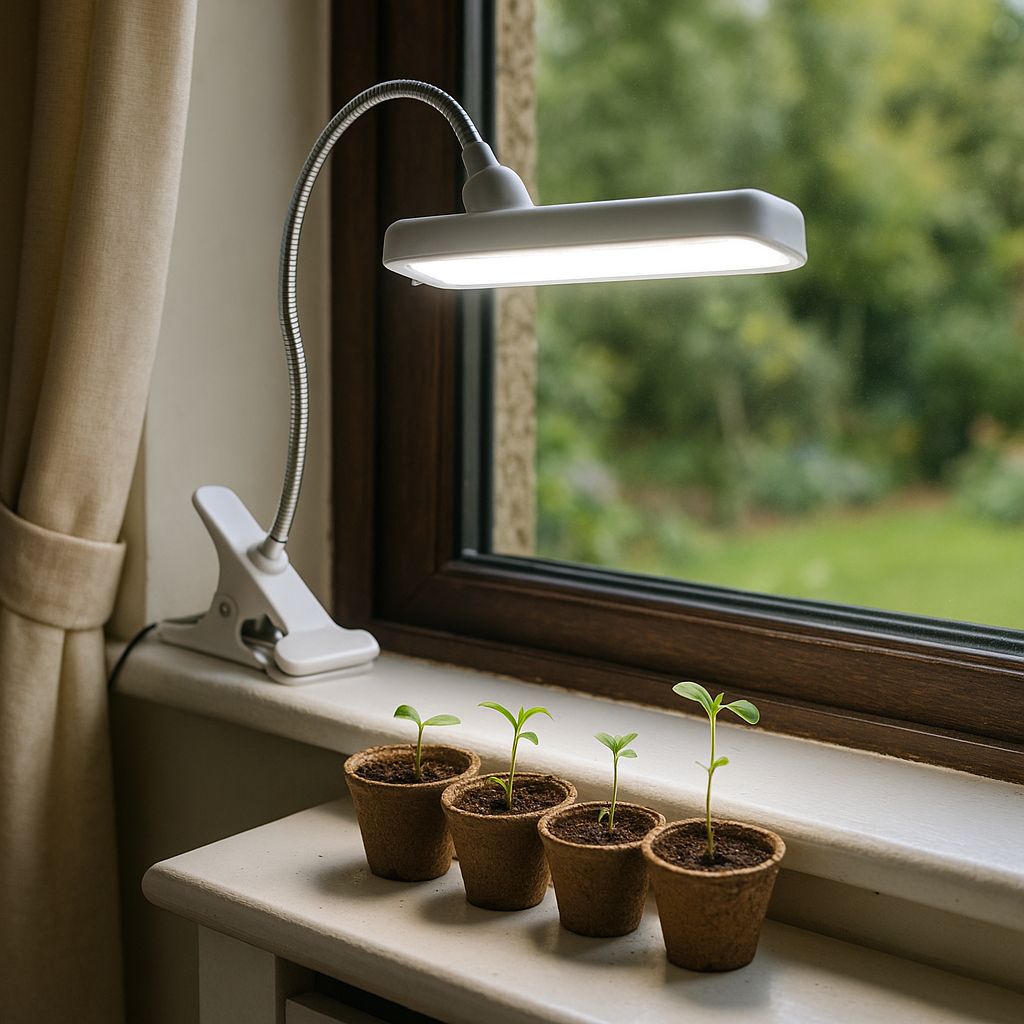
Solution: Begin 45cm away, lower 5cm weekly as plants establish.
Mistake 2: Inconsistent Timing
Random light schedules stress plants more than shorter consistent periods.
Solution: plug-timer-digital Digital timer. Set and forget.
Mistake 3: Wrong Spectrum for Stage
Red-heavy lights (3000K) make seedlings stretch and weaken.
Solution: Use 6500K or full spectrum for vegetative growth. Switch to warmer spectrum only when flowering.
Mistake 4: Ignoring Heat Build-Up
While LEDs run cooler than HPS, enclosed spaces still accumulate heat.
Solution: Small clip-fan-usb USB clip fan improves air circulation and strengthens seedling stems.
—
Running Costs: What You’ll Actually Pay
| Light | Wattage | 16 hrs/day | Monthly Cost* |
|---|---|---|---|
| Barrina T5 (20W) | 20W | 9.6 kWh | |
| Roleadro 75W | 75W | 36 kWh | |
| Spider Farmer SF1000 | 100W | 48 kWh | |
| Mars Hydro TS600 | 100W | 48 kWh | |
| ViparSpectra P600 | 65W | 31.2 kWh |
*Based on UK average 25p/kWh. Actual costs vary by tariff.
Annual seedling season (March–May): – depending on light choice.
—
Your LED Grow Light Buying Checklist
Before purchasing, confirm:
– [ ] Coverage area matches your seedling trays
– [ ] 6500K or full spectrum for vegetative growth
– [ ] Wattage sufficient (20W minimum per tray)
– [ ] Dimmable feature (ideal but not essential)
– [ ] Includes hanging kit or mounting hardware
– [ ] Warranty period (2+ years preferred)
– [ ] UK plug or adapter included
—
Frequently Asked Questions
Q: Can I use any LED bulb for seedlings?
A: Standard household LEDs lack the intensity and spectrum plants need. Horticultural grow lights provide 2–3× the usable light per watt.
Q: How long do LED grow lights last?
A: Quality units last 50,000+ hours (5+ years at 16 hours daily). Budget options may degrade after 20,000 hours.
Q: Do seedlings need darkness?
A: Yes. Plants respire during darkness, and hormonal processes require dark periods. Never run lights 24 hours.
Q: Will LED lights increase my electricity bill significantly?
A: A 75W LED running 16 hours daily costs approximately /month. For a 3-month seedling season, that’s total — less than buying two mature tomato plants from a garden centre.
Q: Can LED grow lights replace a greenhouse?
A: For seedlings, yes. LED lights provide sufficient intensity for healthy starts. However, mature fruiting plants still benefit from natural sun.
—
Recommended Complete Setup
Budget starter kit (–60):
– led-barrina-t5 Barrina T5 strip light (2× 60cm)
– seed-tray-propagator Propagator with seed trays
– plug-timer-digital Digital timer
– Reflective backing (white card or foil)
Serious propagator kit (–180):
– led-spider-farmer-sf1000 Spider Farmer SF1000
– shelving-unit-wire Wire shelving unit (adjustable)
– clip-fan-usb USB circulation fan
– heat-mat-seedling Seedling heat mat (for peppers/tomatoes)
—
Starting your vegetable garden? See our guides to best vegetables to grow in containers and starting your first vegetable garden for what to plant under your new lights.
—
Sources: RHS Growing from Seed, University of Florida IFAS Extension (light requirements), Which? LED Grow Light Reviews, Gardening Which? You might also like our guide to growing tomatoes from seed.
Leave a Reply