
The right container transforms gardening from struggle to success. Too small and plants suffocate. Wrong material and compost dries in hours or waterlogs in minutes. This guide matches container types to your plants, budget, and gardening style.
Whether you’re filling a patio with tomatoes or starting a windowsill herb collection, these recommendations come from years of UK container gardening experience.
As an Amazon Associate I earn from qualifying purchases.
—
Quick Comparison: Which Plant Pots Are Best for Beginners
| Container | Size | Material | Best For | Price |
|---|---|---|---|---|
| Classic Terracotta | 20–30cm | Clay | Herbs, Mediterranean plants | ££ |
| Stewart Garden Plastic | Various | Plastic | Vegetables, annuals | £ |
| Timber Raised Bed | 60×60cm | Wood | Deep-rooted vegetables | £££ |
| Smart Pot Fabric | 15–30L | Geotextile | Air-pruning, portability | ££ |
| Glazed Ceramic | 20–40cm | Ceramic | Ornamentals, patios | £££ |
—
Understanding Container Materials
Terracotta (Clay)
The classic. Porous, breathable, beautiful.

Pros:
– Breathes — roots get oxygen, hard to overwater
– Insulates — protects roots from temperature swings
– Beautiful — ages gracefully, traditional garden aesthetic
– Stable — heavy enough not to blow over
Cons:
– Heavy — difficult to move, unsuitable for balconies with weight limits
– Fragile — cracks in frost if poor quality
– Expensive — –40 for medium pots
– Dries quickly — needs more frequent watering
Best for: Mediterranean herbs (thyme, rosemary, sage), permanent plantings, traditional gardens
Winter care: Raise on feet to prevent frost damage. Soak thoroughly before hard frosts — dry terracotta cracks more easily.
—
Plastic
The practical choice. Lightweight, affordable, versatile.
Pros:
– Lightweight — easy to move, balcony-friendly
– Affordable — –8 for equivalent terracotta sizes
– Retains moisture — less frequent watering
– Frost-resistant — won’t crack in UK winters
– Variety — every colour, shape, and size
Cons:
– Can overheat — black pots cook roots in full sun
– Less breathable — easier to overwater
– Aesthetic — looks “cheap” to some gardeners
– UV degradation — becomes brittle after 5+ years
Best for: Vegetables, annuals, temporary plantings, balconies, renters
Quality markers: Look for “UV-stabilised” and thick walls (3mm+). Cheap thin plastic cracks within a season.
—
Wood
The natural choice. Attractive, insulating, traditional.
Pros:
– Insulating — keeps roots cool in summer, warm in winter
– Attractive — natural look improves gardens
– Customisable — build any size or shape
– Sustainable — if FSC-certified timber used
Cons:
– Maintenance — needs treating every 2–3 years
– Expensive — –200 for raised beds
– Heavy — permanent installations
– Rot risk — untreated wood lasts 3–5 years only
Best for: Raised beds, vegetable gardens, permanent features
Timber treatment: Use wood-preserver-non-toxic non-toxic wood preserver on interior only — keep outside untreated for weathered look.
—
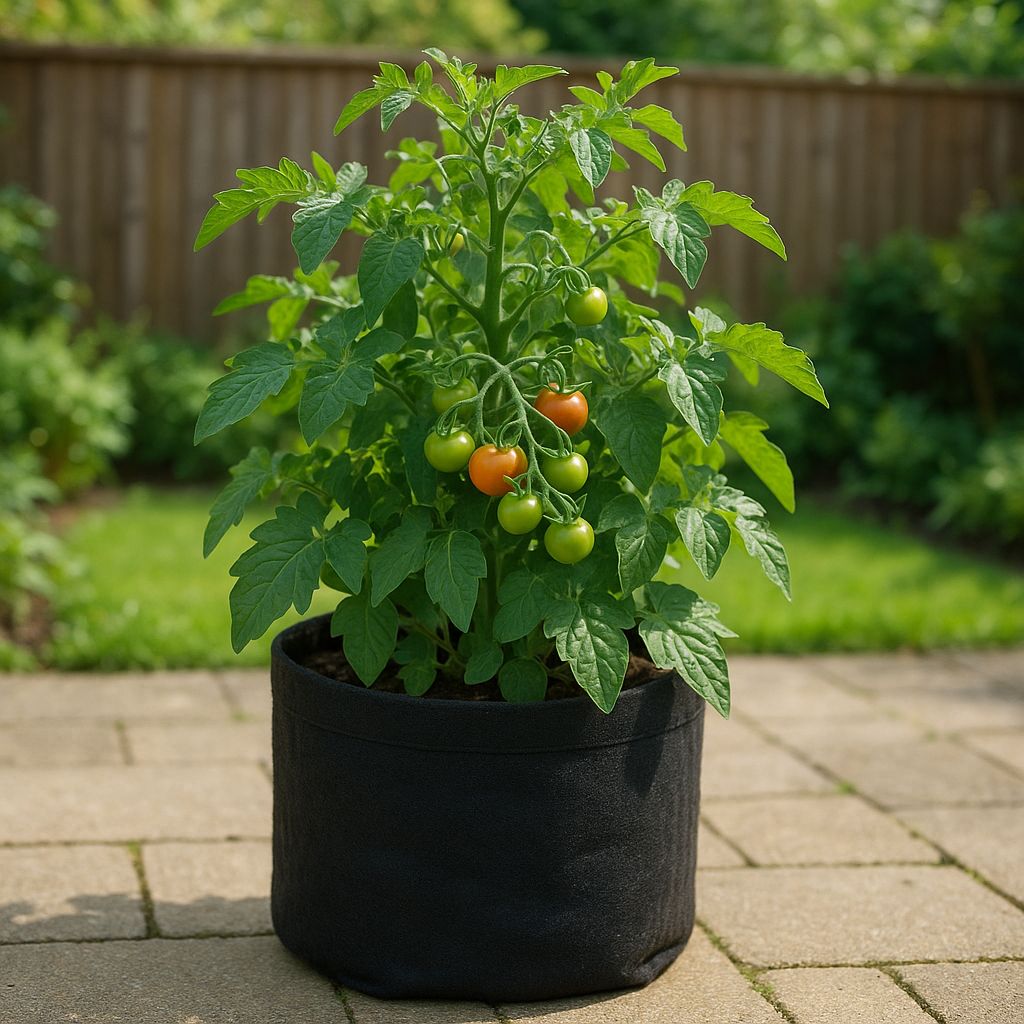
Fabric (Geotextile)
The modern choice. Air-pruning, lightweight, foldable.
Pros:
– Air-pruning — prevents root circling, better plant health
– Lightweight — move filled containers easily
– Foldable — stores flat when not in use
– Breathable — excellent drainage, hard to overwater
Cons:
– Aesthetic — industrial look not for everyone
– Dries quickly — needs more frequent watering
– Limited lifespan — 3–5 seasons for quality brands
– Supports needed — fabric bags sag when filled
Best for: Vegetables, air-pruning benefits, portable gardens, storage concerns
—
Glazed Ceramic
The decorative choice. Colourful, finished, statement pieces.
Pros:
– Beautiful — colours and glazes enhance gardens
– Non-porous — retains moisture well
– Frost-resistant — quality glazes survive UK winters
– Stable — heavy enough for top-heavy plants
Cons:
– Expensive — –60+ per pot
– Heavy — permanent placement
– Limited drainage — one hole often insufficient
– Risk — poor quality glazes crack in frost
Best for: Ornamentals, statement plants, patios where appearance matters
—
Product Deep Dives
Classic Terracotta Pot
Best for: Mediterranean herbs, traditional gardens, long-term plantings
Specifications:
– Material: Fired clay
– Wall thickness: 15–20mm
– Drainage: Single hole (enlarge if needed)
– Sizes: 10cm to 50cm+ diameter
Why it works: The porous walls create perfect conditions for herbs that hate wet feet. Rosemary, thyme, and sage thrive where they’d rot in plastic.
The frost factor: UK frost will crack cheap imported terracotta. Buy from reputable UK garden centres with frost-proof guarantees.
Best setup: Add crocks-pottery crocks or pot-feet pot feet to base. Mix horticultural-grit grit into compost (30% by volume) for drainage.
—
Stewart Garden Essential Plastic Pots
Best for: Vegetables, beginners, budget-conscious
Specifications:
– Material: UV-stabilised polypropylene
– Durability: 5+ years
– Range: 9cm to 40cm diameter
– Price: –8 per pot
Why it works: Stewart has supplied UK gardeners for decades. Their plastic doesn’t go brittle in UV light — the common failure point in cheap rivals.
The vegetable advantage: Standard sizes (20cm, 25cm, 30cm) match seed packet recommendations exactly. No guessing if your pot is large enough.
Colour tip: Choose light colours (terracotta-effect, green) over black. Black plastic absorbs heat, stressing roots on hot days.
—
Timber Raised Bed Kit
Best for: Serious vegetable growing, permanent installations
Specifications:
– Material: FSC-certified timber
– Typical size: 60×60×30cm or 120×60×30cm
– Assembly: Slot-together or screw-fixed
– Lining: Often includes membrane
Why it works: Raised beds solve poor soil, drainage, and back pain in one. The 30cm depth handles tomatoes, carrots, and even dwarf fruit trees.
The instant garden: One 120×60cm raised bed provides space for 4 tomato plants or 12 lettuce plants. Productive space in hours, not years.
Site preparation: Place on level ground. Line base with weed-membrane weed membrane to prevent grass intrusion.
Fill calculation: 120×60×30cm = 216 litres. Buy 3× 70L bags for one bed.
—
Smart Pot Fabric Container
Best for: Air-pruning benefits, vegetables, portability
Specifications:
– Material: Dense geotextile fabric
– Sizes: 3.8L to 113L (1 to 30 US gallons)
– Handles: Reinforced sewn handles
– Durability: 5+ seasons
Why it works: When roots reach the fabric edge, they stop (air-pruning) instead of circling. This creates a dense, fibrous root ball that absorbs nutrients efficiently.
The result: Plants establish faster, grow larger, resist drought better than plastic-potted equivalents.
Best for: Tomatoes, peppers, any container vegetable where maximum yield matters.
Watering note: Fabric dries faster than plastic — check daily in summer.
—
Glazed Ceramic Statement Pot
Best for: Ornamentals, patios, design-conscious gardeners
Specifications:
– Material: Clay with coloured glaze
– Frost resistance: Check rating (must say “frost-proof”)
– Drainage: Usually one hole
– Sizes: 15cm to 50cm+
Why it works: Transforms functional container gardening into designed outdoor rooms. A glazed pot elevates a geranium to garden centre display quality.
Quality check: Tap the pot — should ring, not thud. Thud indicates cracks or poor firing.
The drainage fix: One hole is rarely enough. Drill 3–4 additional 10mm holes with ceramic drill bit before planting.
Best for: Permanent displays where appearance matters as much as function.
—
Container Sizes by Plant Type
Herbs
| Herb | Minimum Pot | Ideal Pot | Notes |
|---|---|---|---|
| Basil | 15cm | 20cm | Moisture-loving — plastic acceptable |
| Rosemary | 20cm | 30cm | Deep roots — terracotta preferred |
| Mint | 25cm | 30cm | Invasive — dedicated pot essential |
| Parsley | 15cm | 20cm | Biennial — replace annually |
| Thyme | 10cm | 15cm | Shallow roots — terracotta ideal |
Vegetables
| Vegetable | Minimum Pot | Ideal Pot | Depth |
|---|---|---|---|
| Lettuce | 15cm | 20cm | 15cm |
| Tomatoes | 25cm | 30cm | 25cm |
| Peppers | 20cm | 25cm | 20cm |
| Carrots | 20cm | 25cm | 25cm+ |
| Potatoes | 30cm | 40cm | 30cm |
| Courgettes | 30cm | 45cm | 30cm |
Ornamentals
| Plant | Minimum Pot | Ideal Pot | Notes |
|---|---|---|---|
| Bedding annuals | 15cm | 20cm | Plastic fine |
| Perennials | 20cm | 25cm | Terracotta for permanence |
| Shrubs | 30cm | 40cm | Heavy pot for stability |
| Small trees | 40cm | 50cm | Drainage critical |
—
Essential Container Accessories
Pot Feet
Why: Prevents waterlogging, reduces frost damage, improves drainage
Options:
– Ceramic (decorative, expensive)
– Plastic (cheap, functional)
– Cork (natural, insulating)
Use: One pot per foot, minimum 3 feet per pot. More for large containers.
Crocks
Why: Prevents compost washing out drainage holes, improves drainage
Materials: Broken terracotta pots, gravel, purpose-made clay crocks
Modern alternative: pot-mesh Plastic mesh — lighter, effective
Saucers
Why: Catches drainage water, protects surfaces
Caution: Remove saucers in wet weather — sitting water causes root rot
Plant Trolleys
Why: Move heavy containers easily
Best for: Large pots on patios, following sun seasonally, winter protection
—
Container Buying Mistakes to Avoid
Mistake 1: Pots Too Small
Root-bound plants stop growing, become stressed, produce poorly.
Solution: Go one size larger than minimum recommendations. A 30cm tomato pot beats a struggling 20cm pot.
Mistake 2: No Drainage Holes
Decorative pots often lack drainage. Water sits, roots rot, plants die.
Solution: Drill holes with appropriate bit, or use as cachepot (decorative outer) with plastic pot inside.
Mistake 3: Dark Colours on Hot Patios
Black pots absorb heat, cooking roots on summer days.
Solution: Choose light colours for full sun positions. Wrap black pots in hessian-wrap hessian to reflect heat.
Mistake 4: Forgetting Weight Limits
Balconies have weight restrictions. A 40cm terracotta pot weighs 15kg empty, 25kg+ filled.
Solution: Check balcony limits. Use plastic or fabric for elevated spaces.
—
Budget Container Setup for Beginners
Starter kit (–50):
– 4× 20cm plastic pots —
– 2× 30cm plastic pots —
– 6× pot-feet Pot feet —
– 2× 70L compost —
– horticultural-grit Horticultural grit —
This kit starts: 4 herb plants + 2 tomato plants, with room to expand.
—
Frequently Asked Questions
Q: Can I grow vegetables in any container?
A: Yes, if it has drainage holes and sufficient volume. A 2L yoghurt pot grows one lettuce. A 30cm pot grows a productive tomato.
Q: Do containers need saucers underneath?
A: Optional. Useful for patios (prevents staining) but remove in wet weather to prevent waterlogging.
Q: How do I know if my pot is big enough?
A: Check roots at drainage holes — if visible, pot on. Stunted growth despite feeding indicates root congestion.
Q: Can I leave terracotta pots outside in winter?
A: Quality UK frost-proof terracotta, yes. Cheap imported terracotta will crack. Raise on feet and soak before hard frosts.
Q: What’s the best material for beginners?
A: Plastic — affordable, forgiving, lightweight. Upgrade to terracotta for herbs once you’re confident.
—
Your Container Buying Checklist
– [ ] List what you want to grow (check size requirements)
– [ ] Measure your space and check weight limits (balconies)
– [ ] Choose material: Plastic (budget), terracotta (herbs), wood (vegetables), fabric (portable)
– [ ] Count drainage holes — minimum 1, ideally 3–4
– [ ] Buy pot feet — essential for all containers
– [ ] Purchase compost: Calculate 70L per large pot
– [ ] Add drainage: horticultural-grit Grit for terracotta, essential for all
—
Ready to fill your pots? See our guides to best compost for container gardening and best herbs to grow in containers for what to plant.
—
Sources: RHS Container Gardening, Which? Garden Product Reviews, Gardening Which?, Garden Design Magazine You might also like our guide to the best vegetables to grow in containers.
Leave a Reply