As an Amazon Associate I earn from qualifying purchases.
“Grow bag” can mean a bag already filled with compost or an empty reusable fabric container, so choose the type before comparing capacities and cost.
Our examples are researched product choices rather than the results of a Plants and Gardening growing trial.
Compost-Filled or Reusable?
Prefilled compost bags have a stated volume and their own planting and feeding instructions, which decide how many suitable plants to add.
Empty fabric containers need a separate potting-compost purchase and a stable position where drainage will not cause a problem.
Material alone does not guarantee higher yield, fewer pests or several years of use, so compare the exact construction and care instructions.
Researched Examples
Some product links earn a commission, as described in the Affiliate Disclosure.
Levington Tomorite Peat-Free Deep Planter
Levington’s Tomorite Deep Planter is a 46L compost-filled product (View on Amazon UK), with planting count and feeding determined by the current bag’s directions.
Haxnicks Vigoroot
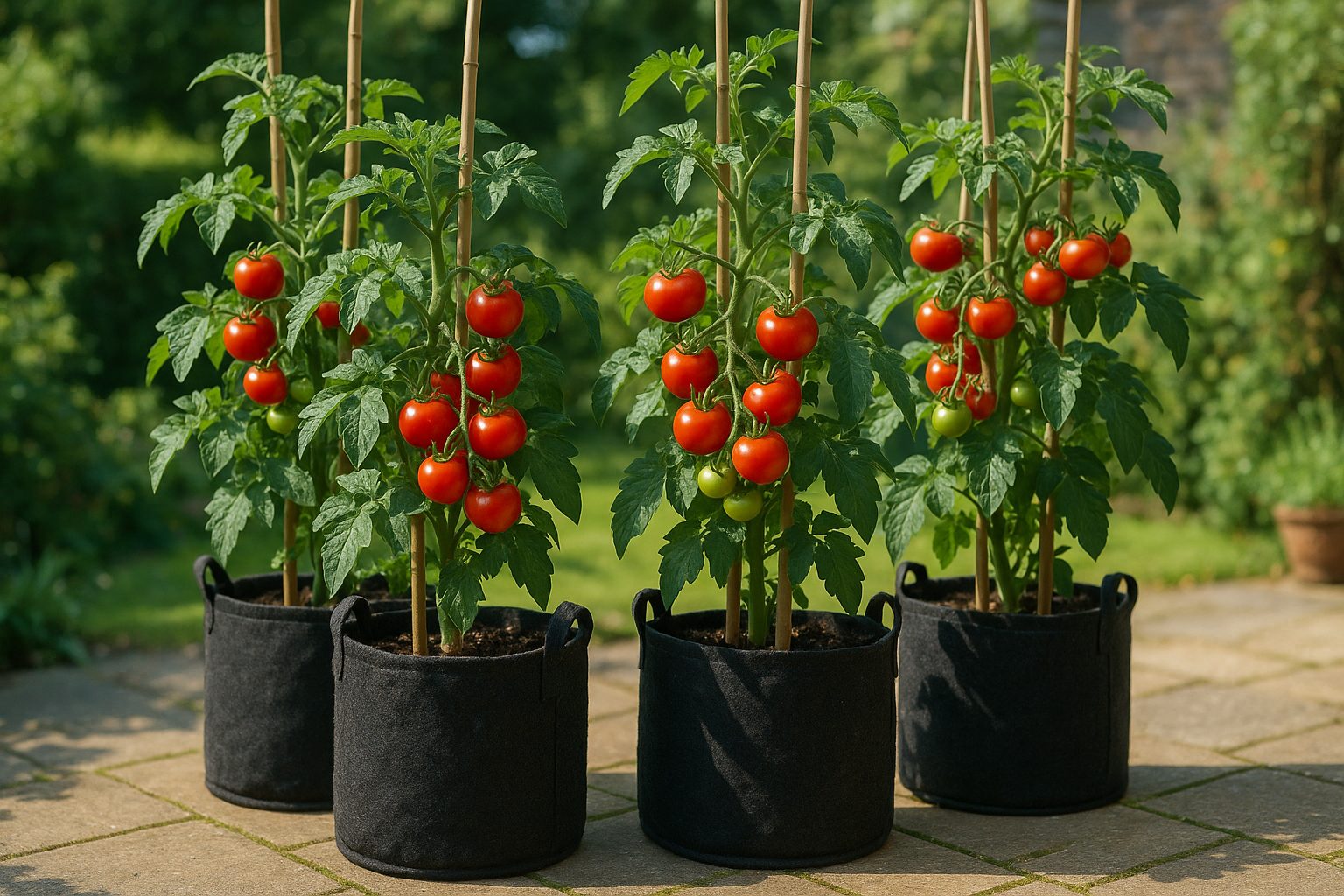
Haxnicks’ large Vigoroot container is listed at 20L (View on Amazon UK), a capacity to match to an individual crop rather than automatically allocating two tomatoes to it.
Smart Pot
The 15-US-gallon Smart Pot (View on Amazon UK) is an empty fabric container, so include its separate compost requirement when planning the space and spend.
Choose Capacity by Crop
Allow the usable root volume required by the variety, using our tomato container guide for mature watering, feeding and training.
For potatoes, protect all developing tubers from light with adequate compost cover, following the RHS potato method; fabric and root growth do not remove this requirement.
Carrots need enough depth for the chosen roots, while salads and herbs still need room and a watering plan despite their smaller size.
Filling and Care
Calculate compost from the empty container’s actual capacity, leaving a watering gap below the rim and any settling allowance given by the maker.
Position a filled container before planting, since moving wet compost and plants can strain handles and seams.
Check moisture frequently in warm weather and feed according to the crop, compost allowance and product label.
Clean and store reusable containers as the maker directs, checking for damaged seams before another season.
Before Buying
Compare exact size, material, pack quantity and included compost, excluding unsupported price tiers and lifespan promises from the decision.
Reuse a suitable draining pot if it already meets the crop’s needs, or use the equipment hub to plan a small addition.
Leave a Reply