Quick Answer: Which spring bulbs to plant in September
September is the month to plant daffodils, crocus, hyacinths, alliums and most other spring-flowering bulbs. Get them in while the soil is still warm so roots establish before winter. The one bulb to hold back is the tulip — those wait until November. Plant most bulbs at roughly two to three times their own height deep, in free-draining soil or peat-free compost, pointed end up.
Plant your spring bulbs in September and you set up the whole of next spring in an afternoon. Daffodils, crocus, hyacinths and alliums all go in from this month, and the earlier you plant them the better they establish. The soil is still warm from summer, autumn rain does the watering for you, and the bulbs put down roots before the cold arrives.
This guide covers exactly which bulbs to plant in September, how deep and how far apart to set them, and how to plant them in borders, pots and lawns. It also explains the one important exception — tulips — and the handful of mistakes that catch people out. It sits alongside our wider guide to what to plant in September, which covers the vegetables, fruit and maintenance jobs for the month.
Why September is the month for spring bulbs
Spring-flowering bulbs need a long, cool establishment period before they flower. Plant them in early autumn and the roots grow steadily through September and October while the soil holds its summer warmth, typically 12-15 °C at planting depth. By the time hard frosts arrive, the bulb is anchored and ready to sit out winter.
The RHS advises planting most spring bulbs — daffodils, crocus and hyacinths — by the end of September, and daffodils ideally in early autumn. Leave it until the soil is cold and wet and the bulbs root more slowly, flower less reliably, and are more likely to rot. There is no advantage to waiting, so once the bulbs arrive, get them in.
The exception, covered in full below, is the tulip. Tulips are planted later, from November, to reduce the risk of a fungal disease called tulip fire.
The best spring bulbs to plant now
Daffodils (Narcissus)
Daffodils are the most forgiving spring bulb and the best starting point for beginners. Plant them as early as you can in autumn — September is ideal — in a sunny or lightly shaded spot in fertile, well-drained soil. They naturalise happily in grass and under deciduous trees, coming back and multiplying year after year.
For pots and the front of borders, the compact Narcissus ‘Tête-à-tête’ is one of the most reliable and widely sold choices in the UK, flowering early with several small yellow blooms per stem. For naturalising in grass, ‘February Gold’ is a tough, early dwarf daffodil that spreads well. Both are popular, reliable garden performers.
Crocus
Crocus give you the first real splash of colour in late winter, often pushing through in February. Species crocus such as Crocus tommasinianus ‘Ruby Giant’ are superb for naturalising in lawns and gravel, where they seed around gently over time. The larger Dutch hybrids (‘Flower Record’, ‘Jeanne d’Arc’) give bigger, showier goblets for borders and pots.
Plant species crocus 7-10 cm deep and the larger Dutch hybrids a little deeper, around 10-12 cm. They are cheap, plant in minutes, and bees emerging on mild late-winter days rely on their early pollen.
Hyacinths
Hyacinths are grown for their scent as much as their colour, so plant them where you will brush past them — beside a path, in a pot by the door, or in a window box. ‘Delft Blue’ and ‘City of Haarlem’ (soft yellow) are long-established, reliable varieties. Plant 10-12 cm deep. Always wear gloves when handling hyacinth bulbs, as the bulb sap can irritate skin.
Alliums
Ornamental alliums produce dramatic spherical flower heads on tall stems in late spring and early summer, bridging the gap between the spring bulbs and the summer borders. Allium ‘Purple Sensation’ is the classic deep-violet variety, while Allium hollandicum and the larger-headed Allium cristophii are also widely grown. Plant in early autumn in free-draining soil and full sun, in a spot sheltered from strong wind so the tall stems do not get blown over.
Others worth planting in September
Muscari (grape hyacinth): Low, intense-blue spikes that naturalise readily. Excellent edging and good in pots. Plant 7-8 cm deep.
Snowdrops (Galanthus): Best planted “in the green” (as growing plants in late winter) rather than as dry bulbs, but dry bulbs planted early in autumn and kept moist can still establish.
Iris reticulata: Tiny, jewel-like dwarf irises for pots and the front of borders, flowering with the crocus. Plant 10 cm deep.
Planting depth and spacing (quick reference)
The single most common reason bulbs fail is planting them too shallow. As a rule of thumb, plant a bulb at two to three times its own height deep, and roughly two to three bulb-widths apart. Use the table below for the popular spring bulbs.
Bulb
Planting depth
Spacing
Best for
Daffodil (Narcissus)
3× bulb height (≈10-15 cm)
10-15 cm apart
Borders, grass, under trees
Crocus (species)
7-10 cm
5-8 cm apart
Lawns, gravel, pots
Crocus (Dutch hybrid)
10-12 cm
8-10 cm apart
Borders, pots
Hyacinth
10-12 cm
8-10 cm apart
Pots, window boxes, border fronts
Allium (large)
4× bulb diameter (≈15-20 cm)
20 cm apart
Borders
Muscari
7-8 cm
5 cm apart
Edging, pots
If you are ever unsure, deeper is safer than shallower. Bulbs set too near the surface are vulnerable to frost, drought and being turned up by squirrels.
How to plant bulbs in borders
Bulbs look most natural planted in generous, informal drifts rather than tidy rows. For the best effect, plant at least 10-15 bulbs of a single variety together.
Choose the spot: Most spring bulbs want sun or light shade and soil that drains freely. If your soil is heavy clay, add a handful of horticultural grit to each planting hole.
Dig to the right depth: Use a trowel or a bulb planter for individual holes, or lift a whole area of soil for a drift. Check the depth against the table above.
Set the bulb pointed end up: The pointed tip is the shoot; the flatter, often rooty base goes down. If you genuinely cannot tell, plant the bulb on its side — it will right itself.
Backfill and firm gently: Cover with soil, firm lightly to remove air pockets, and water in if the ground is dry.
Label or mark: Mark the area so you do not accidentally dig through the bulbs while they are dormant.
How to plant bulbs in pots and containers
Bulbs are made for containers. A single pot by the door delivers a hit of scent and colour exactly where you will see it, and you can grow several layers in one pot for a long, overlapping display. Containers are also the simplest way to start if you garden on a patio or balcony — our guide to the best containers and pots for beginners covers choosing the right size and material.
For pots, use a peat-free, multipurpose compost with some added grit for drainage; our guide to the best compost for container gardening explains the options. Make sure the container has drainage holes — waterlogged compost is the quickest way to rot bulbs over winter.
The “bulb lasagne” method. Plant bulbs in layers, largest and latest-flowering at the bottom, smallest and earliest at the top:
Add a layer of compost to a deep pot, then set the largest bulbs (daffodils, large alliums) near the base, around 15-20 cm down.
Cover with compost, then add a middle layer of hyacinths or Dutch crocus.
Cover again and finish with a top layer of the smallest bulbs (muscari, species crocus, Iris reticulata).
Top off with compost, water once, and stand the pot in a sheltered spot. The shoots thread past each other and flower in succession from late winter into spring.
Naturalising bulbs in grass
Daffodils and crocus are perfect for naturalising — planting in grass so they come back and spread each year for a meadow effect. The RHS recommends scattering bulbs by hand and planting them where they fall, which avoids a regimented look.
Throw a handful of bulbs gently across the area and plant each where it lands.
For daffodils, use a bulb planter to take out a plug of turf, drop the bulb in pointed end up, and replace the plug. For small crocus, lift a flap of turf with a spade, push the bulbs in, and fold the turf back.
The golden rule: do not mow the area until the bulb foliage has died down naturally, about six weeks after flowering. The leaves feed next year’s flowers, so cutting them early weakens the display.
What to wait on: tulips until November
Tulips are the one spring bulb you should not plant in September. Plant them too early, into warm autumn soil, and you increase the risk of tulip fire (Botrytis tulipae), a fungal disease that scorches leaves and flowers and can ruin a whole planting.
Wait until November, when soil temperatures have dropped below about 10 °C. Tulips cope perfectly well with late planting — even December is fine — so there is no rush. Store the dry bulbs somewhere cool and dry in the meantime, and plant them once the rest of the garden has been put to bed. If you want the detail on timing, our September planting guide and the October guide that follows it set the bulbs in their wider seasonal context.
Common mistakes to avoid
Planting too shallow
Why it happens: People underestimate how deep bulbs go. How to fix it: Use the depth table above and err on the deeper side — most spring bulbs want two to three times their height of soil over the top.
Planting tulips with everything else in September
Why it happens: It feels efficient to do all the bulbs at once. How to fix it: Keep tulips aside and plant them in November to dodge tulip fire.
Letting bulbs sit in waterlogged soil
Why it happens: Heavy clay or pots without drainage holes hold water. How to fix it: Add grit to planting holes and compost, and only ever use containers with drainage.
Cutting the leaves down too soon
Why it happens: The dying foliage looks untidy. How to fix it: Leave it for at least six weeks after flowering so the bulb can build up reserves for next year.
Where to buy spring bulbs in the UK
Buy bulbs as soon as they appear in late summer, while the choice is widest and the bulbs are freshest. For our pick of the best varieties to buy and where to find the best value, see the buyer’s guide to spring-flowering bulbs. Look for firm, plump bulbs with no soft patches, mould or signs of sprouting. Bigger bulbs of a given variety generally give bigger, more reliable flowers.
Specialist mail-order suppliers such as Suttons, Thompson & Morgan and You Garden carry the widest range of varieties and despatch at the right planting time, while Crocus stocks bulbs alongside the peat-free compost and bulb planters you will need. For a few packets to get started, the bulb stands in garden centres, B&Q and supermarkets in September are perfectly good — just buy early before they dry out on the shelf. A simple long-handled bulb planter makes light work of naturalising in grass and is worth having if you are planting more than a handful.
Frequently Asked Questions
When is it too late to plant spring bulbs?
Daffodils, crocus and hyacinths are best in by the end of September, but you can keep planting into October and even November if you run late — they will simply flower a little later or less strongly. Tulips are the exception and are deliberately planted from November. As long as the ground is not frozen or waterlogged, get bulbs in rather than storing them.
How deep should I plant daffodil bulbs?
Plant daffodils at about three times the height of the bulb, which usually works out at 10-15 cm deep. In light, sandy soil go towards the deeper end; in heavy clay, slightly shallower with grit underneath for drainage. Too shallow is the main reason daffodils come up “blind” with leaves but no flowers.
Can I plant bulbs in pots in September?
Yes — September is ideal for planting bulbs in pots. Use a peat-free multipurpose compost with added grit, make sure the pot has drainage holes, and try the “bulb lasagne” method of layering different bulbs for a long display. Stand the pots in a sheltered spot and water sparingly over winter.
Why can’t I plant tulips in September?
Planting tulips in warm September soil increases the risk of tulip fire, a fungal disease that thrives in warmth. Waiting until November, when the soil has cooled below about 10 °C, greatly reduces that risk. Tulips tolerate late planting, so there is no benefit to planting them early.
Do I need to feed spring bulbs?
Bulbs contain most of the food they need to flower the first spring, so feeding at planting is optional. To build up strong flowering for following years, apply a balanced or high-potassium feed as the leaves appear in spring and let the foliage die back naturally. Bulbs naturalised in grass rarely need feeding at all.
What next
Plant the bulbs, then plan the rest of the month. Spring bulbs are one job on a busy September list. These guides cover what else to plant, sow and tidy now:
As an Amazon Associate I earn from qualifying purchases.
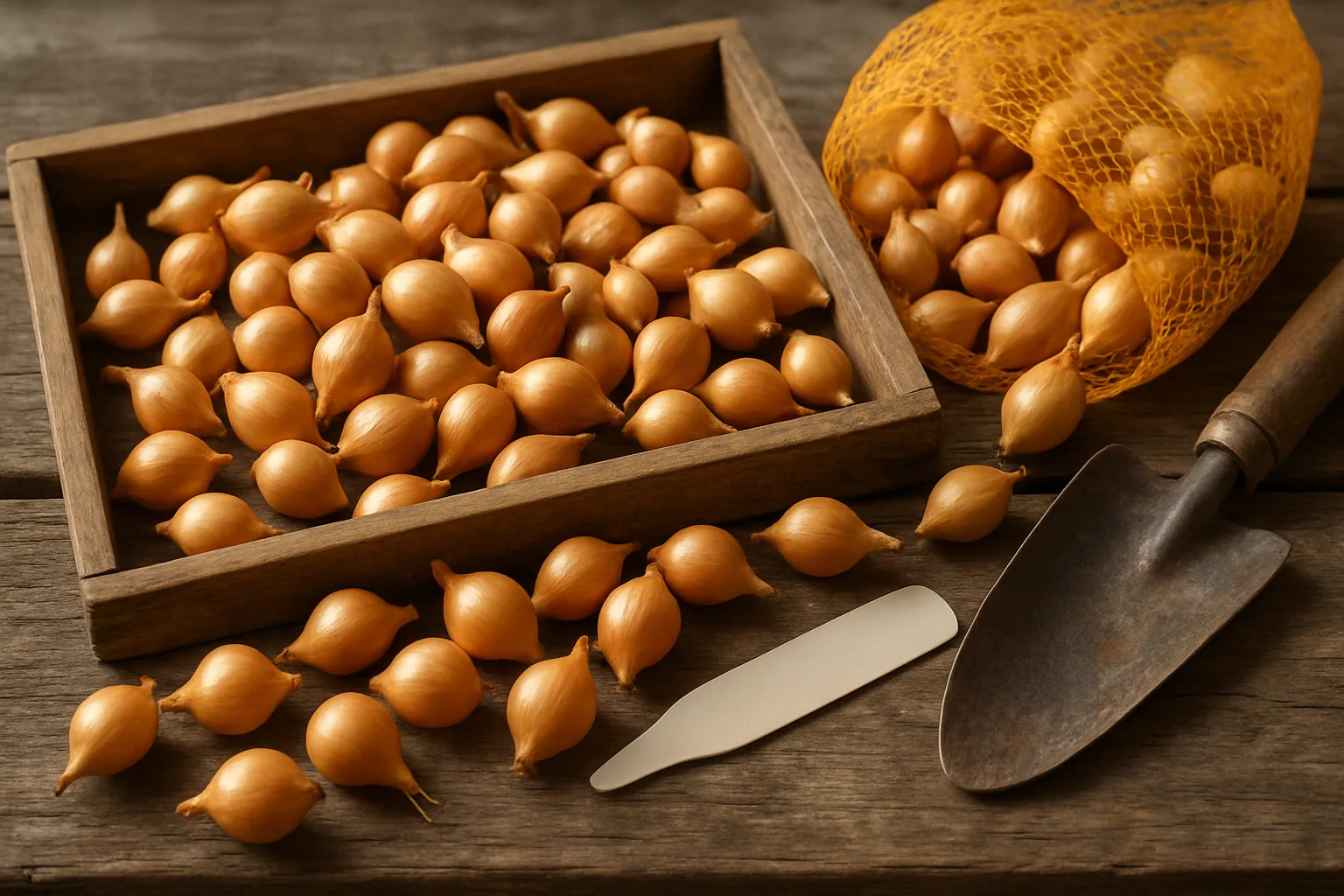
Planting onion sets in the autumn is a proven strategy for securing an early summer harvest in UK gardens. By sowing from September to November, gardeners allow onions to establish over winter and begin bulbing in spring, giving them a 6–8 week advantage over spring-planted varieties. This approach suits those aiming to enjoy fresh onions earlier in the season, particularly in regions with mild winters.
When to Plant Onion Sets in the UK
Autumn onion sets should be planted between September and November, depending on your region’s climate. In southern and central UK zones (H4–H5), planting can extend into early November. In colder areas like the Scottish Highlands (H6–H7), aim to complete planting by mid-October to avoid frost heave and ensure good root development before winter sets in. Late planting after mid-November increases the risk of poor establishment, especially where ground freezes. The key is to allow sets to develop a strong root system before the ground hardens, enabling them to overwinter as small plants and resume growth in spring. This timing ensures a harvest in June—typically 6–8 weeks earlier than onions planted in spring.
Autumn vs Spring Onion Sets: Key Differences
Autumn-planted onion sets are sown in the autumn and overwinter as small, dormant plants before bulbing in spring. In contrast, spring sets are planted from March to April and mature later, usually from late summer into autumn. Due to their earlier start, autumn sets produce a smaller bulb but are ready for harvest in early summer, making them ideal for gardeners seeking fresh onions sooner. Spring-planted onions, however, develop larger bulbs and are better suited to long-term storage—up to 6–9 months when properly dried. Autumn-planted onions, by comparison, are best used within 3–4 months of harvest due to their thinner skins and less dense structure. While autumn sets offer a seasonal advantage, spring sets provide greater storage longevity and are better for those planning winter cooking or preserving.
Top UK-Adapted Onion Varieties for Autumn Planting
Choosing the right variety is essential for success with autumn onion sets. ‘Senshyu Yellow’ is a Japanese overwintering onion that has proven reliable in UK gardens. Its semi-flat yellow bulbs are crisp and mild, with a harvest time in early summer. This variety handles cold well and maintains productivity even in cooler soils. ‘Electric’ (RHS AGM) stands out with its deep purple-red bulbs and bold, slightly sweet flavour. Despite its vibrant colour, it is surprisingly hardy and performs well under UK conditions, making it a top pick for both taste and performance. ‘Troy’ is a newer autumn-planted variety gaining popularity at Thompson & Morgan. It features strong disease resistance, particularly to downy mildew and rust, and delivers consistent yields even in marginal soils. These varieties are all suited to the UK’s variable climate and offer gardeners a range of flavours, colours, and resilience.
Recommended Varieties: Top Picks from UK Suppliers
For gardeners seeking proven results, several UK suppliers offer top-tier autumn onion sets. ‘Radar’ (RHS AGM) is widely available from Suttons and Marshalls. This fast-bulbing yellow onion is known for its early summer harvest and consistent performance in UK gardens. Its compact size and reliable yield make it ideal for small plots and container growing. ‘Shakespeare’ (Thompson & Morgan) is specifically developed to resist early bolting—a common issue in colder UK regions. It thrives in northern and coastal gardens where spring temperatures fluctuate, ensuring it doesn’t send up a flower stalk prematurely. ‘Electric’ (available from Suttons and You Garden) combines striking visual appeal with robust overwintering ability. Its deep purple-red bulbs are not only eye-catching but also deliver excellent flavour and good shelf life after drying. These suppliers offer quality-tested stock, ensuring gardeners get healthy sets with strong germination potential.
How to prepare the ground for autumn onion sets
A little ground preparation before you plant onion sets in autumn pays off in firmer, healthier bulbs the following summer. Choose an open, sunny spot with free-draining soil — onions hate sitting in cold, wet ground over winter. Clear the area of weeds, then loosen the soil to about a spade’s depth and rake it to a reasonably fine, level tilth so the sets sit snugly.
Work in some well-rotted garden compost a few weeks beforehand if your soil is poor, but avoid fresh manure: too much nitrogen produces soft, leafy growth and bulbs that store badly. A light dressing of general-purpose fertiliser raked in before planting is plenty. Firm the bed gently with the back of a rake before you start — onions root better in soil that is settled rather than fluffy.
On heavy clay or anywhere prone to winter waterlogging, start the sets in modules or small pots of multipurpose compost instead, keep them in a cold frame or sheltered spot, and transplant them out once they have rooted and the worst of the wet has passed. Raised beds are another reliable way to give autumn onions the sharp drainage they need.
How to Plant Onion Sets: Spacing, Depth & Timing
Plant onion sets with the tip just visible above the soil surface. Burying them too deeply invites birds and increases the risk of rot. Use a trowel or hand fork to create a shallow hole, place the set upright, and gently firm the soil around it. Space sets 10cm apart in rows, with 30cm between rows to allow for air circulation, weeding, and root development. Proper spacing prevents overcrowding, which can lead to smaller bulbs and increased disease pressure. After planting, water lightly to settle the soil, but avoid overwatering—excess moisture promotes rot. For the first 2–3 weeks, use bird netting to protect new plantings from predators such as starlings and crows, which are drawn to fresh sets. Remove the netting once the plants are established and growing steadily.
Equipment & What You Need for Autumn Onion Sets
Basic garden tools are sufficient for planting onion sets. A trowel or hand fork helps create precise planting holes, while a garden line or string ensures straight rows. For larger plots, a spade or garden hoe can aid in soil preparation. If growing in containers, use pots at least 20cm deep with drainage holes to prevent waterlogging. Fill with multipurpose compost or a soil-based mix suitable for vegetables. Water lightly after planting, then reduce irrigation once bulbs begin to swell in May. Avoid watering during dry spells unless the soil is visibly dry—overwatering encourages rot. Keep the area free of weeds and monitor for slugs, especially in spring. Proper equipment ensures accurate spacing and healthy root development, leading to a successful harvest.
Winter Care & Protection for Overwintered Onions
Most UK gardeners do not need to provide extra protection for autumn-planted onion sets, as they are generally hardy and well-adapted to winter conditions. However, in exposed or frost-prone areas—such as coastal regions or high ground—mulching with a thin layer of straw (2–3cm) can help insulate the soil and reduce frost heave. Avoid heavy mulch or wet soil, as this increases the risk of rot. Keep the soil well-drained and airy, and remove mulch in early spring to allow bulbs to warm and resume growth. Monitor regularly for slugs, which can damage young shoots, and use barriers or organic slug pellets if needed. Bird netting should remain in place for the first 2–3 weeks after planting, especially in open gardens.
When to Harvest Autumn-Planted Onions
Harvest autumn-planted onions when the tops have naturally fallen over and the bulbs are fully formed—typically in June. This indicates that the plant has completed its growth cycle and is ready for harvest. Stop watering 2 weeks before harvesting to encourage skin formation and reduce the risk of rot during storage. Gently lift bulbs using a fork, taking care not to damage the outer layers. Allow onions to dry in a dry, shaded, and well-ventilated area for 1–2 weeks. This process, known as curing, helps toughen the skins and prolongs storage life. Once cured, store in a cool, dry, dark place with good airflow—such as a mesh bag or ventilated crate. Use within 3–4 months for best quality, as autumn-planted onions do not store as long as spring-planted varieties.
FAQs: Autumn Onion Sets in the UK
When should I plant autumn onion sets in the UK? Plant from September to November, ideally by mid-October in colder regions (H6–H7) and up to early November in milder zones (H4–H5).
What’s the difference between autumn and spring onion sets? Autumn sets overwinter and harvest in early summer (June), 6–8 weeks earlier than spring-planted onions. They are smaller and store for only 3–4 months, while spring sets mature later and can store 6–9 months when properly dried.
Which onion varieties grow best in the UK? Top choices include ‘Senshyu Yellow’, ‘Electric’ (RHS AGM), ‘Radar’ (RHS AGM), ‘Troy’, and ‘Shakespeare’. All are proven performers in UK gardens.
How deep and far apart should onion sets be planted? Plant with the tip just visible above soil. Space sets 10cm apart in rows, with 30cm between rows for airflow and ease of maintenance.
Do onion sets need protection over winter? In most UK regions, no extra protection is needed. However, use bird netting for the first 2–3 weeks post-planting to deter predators. Mulch only in exposed or frost-prone areas with a thin layer of straw.
When are autumn-planted onions ready to harvest? Harvest when the tops fall over and bulbs are fully formed, usually in June. Stop watering 2 weeks before harvest to aid curing.
Common Mistakes and Troubleshooting
Planting Too Deeply
A common error is burying onion sets too deeply, which can lead to rot and poor emergence. Always plant with just the tip of the set visible above soil. If planted too deep, the sets may struggle to push through and can decay in damp conditions. This is especially risky in heavy clay soils common in parts of the UK, where poor drainage compounds the problem.
Overwatering After Planting
Excess moisture shortly after planting is a frequent cause of failed crops. While it’s important to settle the soil, overwatering—particularly in poorly drained beds—can cause sets to rot before they establish. Stick to a light watering only if the soil is dry, and avoid watering again until spring growth begins.
Ignoring Slug Activity in Spring
Slugs are a major threat to young onion shoots in spring, particularly in damp, sheltered areas. Even with good winter protection, newly emerged leaves are vulnerable. Use organic slug pellets from suppliers like Mr Fothergill’s or install copper barriers around beds to reduce damage. Regular evening checks can help catch infestations early.
Skipping the Curing Process
Many gardeners rush to store onions immediately after lifting, but skipping the curing phase leads to poor storage life. After harvesting, dry onions in a dry, shaded, and well-ventilated area—such as a greenhouse or porch—for 1–2 weeks. This toughens the outer layers and prevents mould. The Garlic Farm recommends using a mesh tray to ensure airflow and avoid damp spots.
Using Old or Poor-Quality Sets
Buying onion sets that are shrivelled, soft, or discoloured reduces success rates. Always inspect sets before planting and source from reputable UK suppliers like J. Parkers, who offer certified, disease-free stock. Avoid sets that have already sprouted, as they are more prone to bolting and stress in cold soil.
What Next?
Have you tried growing onion sets in the autumn? Share your experiences, challenges, and tips in the comments below—your insights could help fellow gardeners across the UK. For more seasonal guidance, explore these essential reads: What to Plant in October UK—perfect for extending your growing season; How to Grow Runner Beans UK—ideal for summer harvests and vertical gardening; and Starting a Vegetable Garden for Beginners UK—a step-by-step guide for new growers building their first beds.
Spring bulbs: Daffodils, crocuses, hyacinths, and alliums (but NOT tulips yet)
Bare-root trees: Fruit trees, roses, and hedging — the planting season begins
Last updated: April 2026
October is when the garden shifts gear from harvesting to planning ahead. The summer crops are finishing, the first frosts are arriving in northern regions, and the soil is still warm enough for roots to establish before winter. This is the month to plant garlic, sow overwintering beans, get spring bulbs in the ground, and take advantage of the bare-root planting season that runs through to March.
If you only do one thing this month, plant garlic. Everything else is a bonus.
Regional Timing Guide
First frosts change everything. By October, northern gardens and those at altitude are already experiencing overnight frosts, while southern coastal areas may not see their first frost until November.
Region
First Frost (typical)
October Priority
South England & South Wales
Late October–mid November
Plant garlic, sow broad beans, final outdoor salads
Midlands & East Anglia
Mid–late October
Plant garlic early, protect salads with cloches
North England & North Wales
Early–mid October
Most outdoor sowing finished; focus on garlic and bulbs
Scotland
Late September–early October
All salads under cover; garlic, broad beans, bare-root planting
Garlic — The Essential October Job
Plant garlic now and you will harvest fat, flavourful bulbs next July. Garlic needs a cold spell (vernalisation) to develop properly, which is why autumn planting produces far better results than spring planting in the UK.
Best Varieties for Autumn Planting
‘Solent Wight’ — The most reliable softneck for UK conditions. Stores well, produces large bulbs. The RHS recommends it as the best all-round choice for home growers.
‘Lautrec Wight’ — Pink-skinned hardneck with excellent flavour. Slightly smaller bulbs but outstanding taste.
‘Picardy Wight’ — Softneck type, good for plaiting. Strong flavour, stores through to January.
‘Elephant Garlic’ — Technically a leek, but produces enormous mild-flavoured cloves. Plant deeper (10cm) than standard garlic.
How to Plant
Choose a sunny, well-drained spot. Garlic rots in waterlogged soil.
Break the bulb into individual cloves. Use only the largest outer cloves — the small inner ones produce disappointing bulbs.
Plant each clove pointed end up, 2–3cm below the soil surface, 15cm apart in rows 30cm apart.
On heavy clay, add grit to the planting hole to improve drainage.
Cover and firm down. No need to water unless the soil is bone dry.
Tip: Buy certified virus-free seed garlic from a reputable supplier (Thompson & Morgan, Suttons, or your local garden centre). Supermarket garlic is often treated to prevent sprouting and may carry disease.
Broad Beans for Overwintering
Sowing broad beans in October or November gives you a crop 4–6 weeks earlier than spring-sown plants. The seedlings overwinter as small, hardy plants and burst into growth in early spring.
Best Autumn-Sowing Varieties
‘Aquadulce Claudia’ AGM — The classic overwintering variety. Extremely hardy, tall plants producing long pods of large beans. Sow October–November for harvest in late May–June.
‘The Sutton’ AGM — Dwarf variety (30–45cm tall), perfect for containers, raised beds, and exposed or windy sites. Compact habit means no staking needed.
‘Imperial Green Longpod’ AGM — Heavy cropping with excellent flavour. Good for freezing.
Alternatively, sow in deep pots or root trainers under cover and plant out in February.
In very cold areas (Scotland, northern hills), delay sowing until early November or sow under cloches.
The plants will emerge within 2–3 weeks and grow slowly through winter. They are hardy to around −10°C once established, though a severe frost after germination can damage young seedlings. Cover with fleece if temperatures drop sharply in late autumn.
Autumn Onion Sets
Autumn-planted onion sets establish roots before winter and produce an earlier harvest (June–July) than spring-planted sets.
Best Autumn Varieties
‘Radar’ — The most popular autumn-planting onion in the UK. Japanese-type, extremely hardy, produces medium-sized golden bulbs.
‘Senshyu Yellow’ — Flattened shape, mild flavour, very cold-tolerant. Harvest in June.
‘Electric Red’ — Red-skinned autumn variety. Stores less well but excellent sliced raw in salads.
How to Plant
Push sets into well-drained soil so the tip just shows above the surface.
Space 10cm apart in rows 25cm apart.
Firm the soil around each set. Birds love pulling them out — cover with fleece netting for the first few weeks.
Avoid planting onion sets where you grew onions, garlic, or leeks in the previous two years. Rotating your allium crops helps prevent white rot and onion fly.
Winter Salads Under Cover
With a cold frame, cloche, or unheated greenhouse, you can keep harvesting salad leaves through the winter months.
What to Sow Now
‘Winter Density’ AGM lettuce — The gold-standard winter lettuce. Semi-cos type, incredibly cold-tolerant, sweet and crisp. Sow now for cuts from December onward.
‘Chartwell’ AGM lettuce — Butterhead type, very hardy, slow to bolt even in fluctuating winter temperatures.
Lamb’s lettuce (corn salad) — One of the hardiest salad crops. Will crop outdoors without cover in all but the coldest areas.
Winter purslane (claytonia) — Mild, slightly succulent leaves. Thrives in cold, damp conditions that would kill most salads.
Pak choi and mizuna — Fast-growing oriental greens. Sow under cover for baby-leaf harvests in 4–6 weeks.
Spinach — Autumn-sown spinach is hardier than spring-sown. Protect with fleece or a cloche and pick leaves through winter.
Sow into modules under cover and transplant, or direct-sow into beds protected by cloches. Water sparingly — winter salads suffer more from damp and rot than from cold.
Spring Bulb Planting
October is the ideal month for planting most spring-flowering bulbs. The soil is still warm enough for roots to develop before winter dormancy.
Plant Now
Daffodils (Narcissus) — Plant at three times the bulb depth (roughly 10–15cm). Early varieties include ‘February Gold’ and ‘Tête-à-Tête’.
Crocuses — Plant 8–10cm deep in drifts for a natural look. ‘Pickwick’ and ‘Remembrance’ are popular choices.
Hyacinths — Plant 10cm deep, 15cm apart. Excellent for pots and window boxes as well as borders.
Alliums — Large ornamental alliums (‘Purple Sensation’, ‘Globemaster’) need planting now for a May display. Plant 15cm deep.
Muscari (grape hyacinths) — Naturalise well in grass or borders. Plant 8cm deep.
NOT Yet: Tulips
Wait until November to plant tulips. Planting too early increases the risk of tulip fire (Botrytis tulipae), a fungal disease that thrives when soil temperatures are above 10°C. Late planting avoids this. Mark your calendar for mid-November.
Bare-Root Trees and Shrubs
The bare-root planting season runs from October to March. Trees and shrubs sold without pots (bare-root) are cheaper, establish faster, and offer a far wider choice of varieties than containerised plants.
What to Plant
Fruit trees — Apple, pear, plum, cherry, and damson trees are all available bare-root from specialist nurseries. October planting gives roots the longest possible time to establish before spring growth.
Roses — Bare-root roses from reputable growers (David Austin, Peter Beales) are significantly cheaper than potted roses and often establish better.
Hedging — Beech, hawthorn, privet, and hornbeam hedging is most cost-effective bought bare-root in bundles. October–November is the ideal planting window.
Soft fruit — Currant bushes (black, red, white), gooseberries, and grape vines are all available bare-root.
Planting Tips
Soak bare roots in a bucket of water for 2–4 hours before planting.
Dig a hole wider than the root spread, not deeper.
Spread roots out in the hole. The graft union (swollen point on the trunk) should sit just above soil level for fruit trees.
Backfill with a mix of excavated soil and compost. Firm gently.
Stake fruit trees securely — use a short stake at 45° with a rubber tree tie.
Fruit Planting and Maintenance
New Strawberry Beds
October is a good time to establish new strawberry plants from runners or cold-stored plants. They will root in before winter and fruit well next summer.
‘Cambridge Favourite’ AGM — Reliable cropper with good flavour. The standard choice for most UK gardens.
‘Florence’ AGM — Late-season variety, extends your picking season into August. Large, firm berries with excellent flavour.
‘Hapil’ AGM — Heavy-cropping mid-season variety. Tolerates heavier soils better than most strawberries.
Raspberry Canes
Autumn is the ideal time to plant new raspberry canes. They establish well over winter.
‘Glen Ample’ AGM — Spine-free canes, heavy crops of large berries. Summer-fruiting (July).
‘Joan J’ AGM — Spine-free autumn-fruiting variety. Fruits from August until the first frosts.
‘Polka’ AGM — Autumn-fruiting with excellent flavour. Good disease resistance.
For autumn-fruiting varieties already in the ground, leave the canes standing until February, then cut all canes to ground level.
Blueberry Bushes
Plant in ericaceous (lime-free) compost in a large container or raised bed. October planting allows root establishment before spring.
‘Duke’ AGM — Early season, reliable cropper. Self-fertile but fruits better with a second variety nearby.
‘Spartan’ AGM — Large, flavourful berries. Good autumn leaf colour as a bonus.
Green Manures
Bare soil over winter loses nutrients through leaching, develops a crust, and encourages weeds. Green manures solve all three problems at once.
Best October Choices
Winter field beans — Fix nitrogen in the soil. Very hardy, thick growth suppresses weeds. Dig in during March.
Crimson clover — Nitrogen-fixing legume with attractive red flowers. Hardy through most UK winters.
Phacelia — Fast-growing, excellent for bees if it flowers before being dug in. Less hardy — killed off by hard frosts, leaving a natural mulch.
Winter tare (vetch) — Vigorous nitrogen-fixer. Good for heavy soils. Cut and incorporate in early spring.
Grazing rye — Extremely hardy grass that prevents soil erosion and suppresses weeds. Dig in 4 weeks before planting.
Broadcast seed thickly over cleared beds, rake in lightly, and water if the soil is dry. No other care needed until you dig them in next spring.
Scarify to remove thatch (dead grass and moss build-up)
Aerate compacted areas with a garden fork or hollow-tine aerator
Overseed bare patches while the soil is still warm enough for germination
Apply an autumn lawn feed (high potassium, low nitrogen) to toughen grass before winter
Compost and Leaf Mould
Rake fallen leaves and pile them into a wire-mesh bin or black bags (punch a few holes) to make leaf mould. It takes 1–2 years but produces the finest soil conditioner available.
Turn your compost heap to speed decomposition. Add a mix of fallen leaves (carbon) and spent crop material (nitrogen).
Greenhouse Maintenance
Clean glass or polycarbonate panels inside and out to maximise winter light
Check door and vent seals for gaps
Install a minimum-maximum thermometer to monitor conditions
Move tender plants (citrus, pelargoniums, fuchsias) under cover before the first hard frost
General Tasks
Lift and store dahlia tubers after the first frost blackens the foliage. Dry upside down, then store in just-damp compost in a frost-free place.
Divide herbaceous perennials — October is ideal for splitting overcrowded clumps of hostas, hemerocallis, and sedums.
Net fruit bushes to prevent birds stripping buds over winter.
Insulate outdoor taps and drain hoses to prevent frost damage.
Plant up containers with winter bedding — pansies, violas, heathers, and ornamental cabbages provide colour through winter.
What NOT to Plant in October
Tender crops — Tomatoes, peppers, courgettes, cucumbers, and aubergines are finished for the year. Clear the plants, compost the foliage (not if diseased), and prepare beds for next year.
Tulips — Wait until November. Early planting risks tulip fire disease. This is one of the few bulbs where later really is better.
Most bedding plants — Petunias, marigolds, and other summer annuals will not survive frost. Replace with winter-hardy alternatives (pansies, violas, cyclamen).
Half-hardy herbs from seed — Basil, coriander, and dill will not germinate reliably in October temperatures. Wait until spring.
Frequently Asked Questions
Can I still sow carrots in October?
Not outdoors. Carrot seeds need soil temperatures above 7°C to germinate, and October soil is usually too cold. If you have carrots already growing, cover them with a thick layer of straw mulch to continue harvesting through early winter. Fresh sowings are better left until March.
When exactly should I plant garlic?
Any time from mid-October to mid-November in most of the UK. The ideal is late October — the soil is still warm enough for initial root growth, and the cloves get a full winter cold period. You can plant as late as February, but autumn-planted garlic consistently produces larger bulbs.
Should I cut back perennials in October?
Cut back herbaceous perennials that have finished flowering and look untidy. However, leave some seed heads standing for wildlife — birds feed on them through winter, and hollow stems provide shelter for overwintering insects. A garden that looks slightly wild in winter is actually supporting biodiversity.
Do I need to protect autumn-sown broad beans from frost?
Established broad bean seedlings are hardy to around −10°C. However, newly germinated seedlings (under 4 weeks old) are more vulnerable. If a sharp frost is forecast shortly after germination, cover with horticultural fleece overnight. Remove it during the day to prevent the plants becoming leggy.
Is October too late to start a compost heap?
Not at all. October is actually excellent for starting compost because you have a glut of material: fallen leaves, spent crop plants, grass clippings, and kitchen waste. The heap will decompose slowly over winter and be ready to use by next summer. Mix green material (nitrogen) with brown material (carbon) in roughly equal amounts.
Can I plant fruit trees in pots in October?
Yes. Bare-root fruit trees on dwarfing rootstocks (M26 or M27 for apples, Pixy for plums) grow well in large containers (50+ litres). October planting gives roots time to establish before the tree needs to support spring growth. Use John Innes No. 3 compost for weight and stability.
What Next
Keep your garden productive through autumn and beyond:
John Kitcher is the lead gardening writer at Plants and Gardening. He grew up mucking in on his grandfather’s Devon allotment and has spent the last fifteen years growing fruit, veg and ornamentals across three very different UK gardens — a windy coastal plot in North Cornwall, a shaded London back garden, and now a clay-heavy smallholding in the Midlands. He trials every technique covered here in his own beds and containers before writing about it, cross-references against RHS and Kew guidance, and has a soft spot for heritage tomato cultivars and anything that survives a British winter without complaint.
Got a question about something we’ve written? Drop a comment — we read every one.
Quick Answer: Top 5 Things to Plant in September UK
Overwintering onion sets — plant ‘Radar’ and ‘Senshyu Yellow’ now for a June harvest
Spring bulbs — daffodils, crocuses, hyacinths, and alliums go in from this month
Green manures — sow field beans, crimson clover, or phacelia on bare soil
Winter salad leaves — final outdoor sowings of ‘Winter Density’ AGM lettuce, spinach, and radish
Strawberry runners — plant ‘Cambridge Favourite’ AGM and ‘Florence’ AGM for next summer’s crop
September marks the shift from summer harvesting to autumn planting. The soil is still warm from summer, germination is reliable, and there is a full programme of overwintering crops, bulbs, and green manures to get into the ground before temperatures drop.
September is the gardener’s pivot point. While the borders are still heavy with tomatoes, beans, and courgettes, the real work this month is forward-looking: getting overwintering crops established, sowing green manures on cleared beds, and planting the bulbs that will light up your garden next spring.
The soil is warm — typically 12-15 °C at root depth — which means seeds germinate quickly and transplants establish without fuss. Yet the shortening days and cooler nights signal that the window for outdoor sowing is closing fast. What you plant in September determines how productive your garden will be from November right through to next June.
This guide covers everything to sow, plant, and harvest in September across the UK, with cultivar recommendations backed by the RHS Award of Garden Merit (AGM) where available, regional timing adjustments, and practical advice for making the most of the autumn transition.
Regional Timing Guide
September weather varies dramatically across the UK. Southern gardeners typically enjoy mild conditions well into October, while parts of Scotland can see the first ground frosts by late September. Use this table to adjust your sowing and planting dates accordingly.
Region
Average First Frost
September Guidance
South England (London, Kent, Devon)
Late October – mid-November
Full month available for outdoor sowings. Plant bulbs from mid-September.
Midlands (Birmingham, Nottingham)
Mid-October – early November
Complete final sowings by mid-September. Fleece ready for late-month cold snaps.
North England (Yorkshire, Lancashire)
Early–mid October
Prioritise overwintering crops in the first two weeks. Protect salad sowings with cloches.
Scotland (Lowlands)
Late September – mid-October
Sow under cover from mid-September. Focus on hardy overwintering varieties only.
Scotland (Highlands) / Northern Ireland
Mid-September – early October
Outdoor sowing window largely closed. Use cold frames, polytunnels, or cloches.
If you are gardening in the north, a simple sheet of horticultural fleece or a row of cloches extends your effective growing season by two to three weeks. That can make the difference between a successful September sowing and a failed one.
Overwintering Crops to Sow and Plant Now
Overwintering crops are sown or planted in autumn, sit through winter as small plants or dormant bulbs, and then crop weeks ahead of spring-sown equivalents. September is the month to get the foundations in place.
Onion Sets (Autumn Varieties)
Autumn-planted onion sets produce mature bulbs in June — a full month before spring-planted ones. For the best autumn varieties and suppliers, see our guide to the best onion sets for autumn planting. Push each set into well-drained soil with the tip just visible, spacing them 10 cm apart in rows 25 cm apart.
‘Radar’: Exceptionally hardy Japanese variety. Survives the harshest UK winters and produces medium-sized, round bulbs with mild flavour. The most reliable choice for northern gardeners.
‘Senshyu Yellow’: A semi-flat, straw-coloured Japanese onion with good storage qualities. Crops slightly earlier than ‘Radar’ and produces large bulbs in fertile soil.
Plant from mid-September to mid-October. Avoid waterlogged ground — onion sets will rot in standing water. A raised bed with good drainage is ideal. Autumn onion sets and seed garlic are widely stocked by suppliers such as Suttons and Thompson & Morgan, and by larger garden centres, from late summer.
Garlic (Soil Preparation)
Garlic cloves go into the ground from October through to November in most of the UK, but September is the month to prepare. Choose a sunny, well-drained spot and dig in plenty of well-rotted compost or manure now. This gives the organic matter time to integrate with the soil before planting.
Select autumn-planting cultivars such as ‘Solent Wight’ (a reliable softneck bred on the Isle of Wight) or ‘Germidour’ (a French softneck with excellent keeping qualities). Both need a period of cold — known as vernalisation — to develop properly sized bulbs, making autumn planting essential in the UK climate.
When planting time arrives, set individual cloves 5 cm deep and 15 cm apart, pointy end up. In mild southern areas, you can plant garlic from late September; everywhere else, October or November is more reliable.
Broad Beans (Preparation and Early Sowing)
Autumn-sown broad beans crop three to four weeks earlier than spring-sown plants. The classic autumn variety is ‘Aquadulce Claudia’ AGM — bred specifically for overwintering, with excellent cold tolerance and heavy yields of long, well-filled pods.
The main sowing window is November, but September is the time to prepare your bed. Clear spent summer crops, dig the soil over, and incorporate compost. If you are in a mild, sheltered area (south coast, inner city), you can make an early sowing from late October. ‘The Sutton’ AGM is a compact alternative at just 30 cm tall — useful for exposed or windy sites where taller varieties would need staking.
Spring Cabbage
Transplant spring cabbage seedlings (sown in July or August) to their final positions this month. Space them 30 cm apart in firm, well-drained soil. They will form small rosettes through winter and heart up rapidly in March and April, filling the hungry gap when little else is ready to harvest.
If you missed the sowing window, garden centres often sell module-raised spring cabbage plants in September. ‘Durham Early’ and ‘April’ are reliable choices for overwintering.
Final Outdoor Sowings
September is the last realistic month for outdoor sowing in most of the UK. The soil is still warm enough for germination, but you are racing against the shortening days and the first frosts. Choose fast-maturing, cold-hardy varieties and be prepared to cover them with fleece or cloches as temperatures drop.
Lettuce and Salad Leaves
Cold-hardy lettuce varieties sown in early September will provide fresh salad leaves from late October into December — and longer with cloche protection.
‘Winter Density’ AGM: A semi-cos type specifically bred for late-season and overwintering use. Stands well in cold weather and has a crisp, sweet flavour.
‘Chartwell’ AGM: A butterhead with outstanding cold tolerance. Forms neat, compact hearts and performs reliably through autumn.
‘Little Gem’ AGM: Compact cos lettuce that matures quickly. Ideal for small spaces and containers.
Sow short rows every 10 days in early September for a succession of pickings. Once night temperatures regularly fall below 5 °C, cover rows with fleece or move containers under the shelter of a cold frame.
Spinach
September-sown spinach avoids the bolting problems that plague spring sowings, because day length is decreasing rather than increasing. ‘Lazio’ is a vigorous, downy-mildew resistant variety widely recommended for autumn sowing, and ‘Medania’ — which holds an RHS Award of Garden Merit — is a reliably hardy alternative that stands well through a UK winter. Sow directly in rows 30 cm apart, thin seedlings to 15 cm, and start harvesting outer leaves once plants are established.
Spinach is one of the hardiest leafy crops you can grow. Established plants will survive temperatures down to around -10 °C, producing fresh leaves through autumn and picking up again in early spring.
Radish
Radishes are among the fastest crops in the garden — ready in as little as four weeks from sowing. ‘Cherry Belle’ is a reliable round, red variety that performs well in cooler conditions. For something different, try winter radish varieties like ‘Black Spanish Round’ or ‘China Rose’, which are sown in late summer and autumn, grow much larger, and store well through winter.
Sow thinly in rows 15 cm apart and thin to 2-3 cm. Keep the soil moist and harvest promptly; radishes left too long in the ground turn woody and hollow.
Spring Onions
A September sowing of ‘White Lisbon Winter Hardy’ — or the equally hardy ‘Winter White Bunching’, which holds an RHS Award of Garden Merit — will overwinter as small plants and give you an early crop of spring onions next March, well ahead of anything sown in spring. Sow in drills 1 cm deep and 10 cm apart. They need minimal care over winter and tolerate frost without damage.
Pak Choi and Oriental Greens
Pak choi (try the reliable ‘Joi Choi’ or red-leaved ‘Red Choi’), mizuna such as ‘Red Frills’, mibuna and mustard greens actually prefer the cooler, shorter days of autumn. Spring and summer sowings tend to bolt almost immediately, but September sowings grow steadily and produce tender leaves for stir-fries and salads. Sow in rows or scatter-sow in a wide drill, and start picking baby leaves within three to four weeks. Protect from slugs, which are particularly active in damp autumn weather.
Green Manures
Any bed cleared of spent summer crops should be sown with a green manure rather than left bare. Exposed soil loses nutrients through leaching, develops a crust that repels water, and becomes colonised by weeds. Green manures solve all three problems while actively improving your soil.
What to Sow
Field beans (Vicia faba, such as the green-manure variety ‘Wizard’): The best green manure for heavy clay soil. Their deep roots break up compaction, and as legumes they fix atmospheric nitrogen in root nodules, enriching the soil for the next crop. Sow September to November; dig in during March.
Crimson clover (Trifolium incarnatum): Another nitrogen-fixer, with the bonus of striking crimson flower heads in spring that attract pollinators. Sow by mid-September for good establishment. Dig in before flowering or leave for the bees and cut back afterwards.
Phacelia (Phacelia tanacetifolia): Rapid germination and dense, weed-suppressing growth. Not a legume, so it does not fix nitrogen, but it adds excellent biomass and its purple flowers are irresistible to bees and hoverflies. Sow by early September — it is not fully winter-hardy and may be killed by hard frosts, but the dead foliage still protects the soil.
Winter tare (Vicia sativa): A vigorous, nitrogen-fixing legume that overwinters reliably across the UK. Sow September to October. It scrambles rather than grows upright, forming a dense ground cover. Dig in four weeks before you need the bed in spring.
Why It Matters
The RHS recommends green manures as one of the most effective ways to maintain soil fertility without relying on bought-in inputs. Nitrogen-fixing species (field beans, clover, winter tare) capture nitrogen from the air and store it in root nodules. When you dig the plants in, that nitrogen becomes available to your next crop. Non-legumes like phacelia contribute organic matter, improve soil structure, and prevent erosion from heavy autumn and winter rain.
Broadcast the seed over raked soil, tread it in lightly, and water if conditions are dry. Most green manures need no further attention until you dig them in.
Spring Bulb Planting
September is the start of the spring bulb planting season, and getting the right bulbs in early gives them the longest possible establishment period before winter dormancy. For the full rundown — planting depths, spacing, pots and naturalising — see our dedicated guide to the spring bulbs to plant in September. Order bulbs early from suppliers such as Suttons, Thompson & Morgan or Crocus while the choice is widest, and see our buyer’s guide to the best spring-flowering bulbs for the top AGM picks.
Plant Now (September to November)
Daffodils (Narcissus): Plant as early as possible — ideally in September — so roots develop well before the ground cools. Set bulbs at a depth of roughly three times their height (typically 10-15 cm) in any reasonable soil. They naturalise well in grass and under deciduous trees.
Crocuses: Plant 8-10 cm deep in drifts for maximum impact. Species crocuses (Crocus tommasinianus, C. chrysanthus) are excellent for naturalising in lawns. Dutch crocuses give larger, showier flowers in borders and pots.
Hyacinths: Best in pots, window boxes, and border fronts where you can appreciate the scent. Plant 10-12 cm deep. Wear gloves when handling bulbs — hyacinth bulb sap can irritate skin.
Alliums: Ornamental alliums (Allium ‘Purple Sensation’, A. cristophii, A. hollandicum) produce dramatic spherical flower heads in late spring. Plant 10-15 cm deep in well-drained soil. They combine beautifully with perennials and grasses.
Wait Until November: Tulips
Do NOT plant tulip bulbs in September. Tulips should go in from November onwards, when soil temperatures have dropped below 10 °C. Planting earlier risks tulip fire (Botrytis tulipae), a fungal disease that thrives in warmer soil and can devastate an entire planting. Store your tulip bulbs in a cool, dry place and plant them in November or even early December — they are one of the last bulbs to go in and they cope perfectly well with late planting.
Fruit: Planting, Maintenance, and Harvest
Plant Strawberry Runners
September is still a good time to plant strawberry runners, though August is the ideal month. Runners planted now will establish roots through autumn and produce a crop next summer. Plant into well-prepared soil enriched with compost, spacing plants 35-45 cm apart in rows 75 cm apart.
‘Cambridge Favourite’ AGM: The most widely grown garden strawberry in the UK. Mid-season, reliable cropping, and excellent flavour. Tolerates a range of soil types.
‘Florence’ AGM: Late-season, heavy-cropping, and notably disease-resistant. Pairs well with an early or mid-season variety to extend your harvest window.
If you are short on bed space, strawberries grow brilliantly in containers, hanging baskets, and growing bags. Our guide to growing strawberries in pots covers compost choice, feeding schedules, and winter protection.
Autumn-Fruiting Raspberry Maintenance
Autumn-fruiting raspberries are in full production this month. Keep picking every two to three days to encourage continued fruiting well into October.
‘Joan J’ AGM: Spine-free canes with large, dark red berries and outstanding flavour. The most popular autumn-fruiting variety in the UK.
‘Polka’ AGM: Heavy-cropping with good disease resistance. Fruits slightly earlier than ‘Joan J’ and performs well in containers.
Once fruiting finishes (usually by late October or after the first hard frost), leave the canes standing until February. Then cut them all to ground level — autumn-fruiting raspberries produce fruit on the current year’s growth, so there are no old canes to preserve.
Harvest Apples, Pears, and Plums
September is peak harvest time for tree fruit. Early and mid-season apple varieties (‘Discovery’, ‘James Grieve’, ‘Worcester Pearmain’) are ready from early September. Mid-season pears (‘Conference’, ‘Williams’ Bon Chretien’) should be picked while still firm and ripened indoors. Plums and damsons are at their best in the first two weeks of September — ‘Victoria’ is the classic garden plum and will not hang on the tree much beyond mid-month.
To test whether an apple is ready, cup the fruit gently and twist. If it comes away easily with the stalk intact, it is ripe. If you have to tug, leave it another week.
What to Harvest in September
September is a month of abundance. Summer crops are still producing alongside the first of the autumn harvests, and the kitchen can feel overwhelmed. Here is what should be coming off the plot this month.
Vegetables
Tomatoes: Outdoor tomatoes need to be harvested before the first frost. Pick any remaining green tomatoes and ripen them indoors in a paper bag with a banana — the ethylene gas speeds ripening.
Courgettes: Still producing prolifically in early September. Pick regularly at 10-15 cm to keep the plants going.
Runner beans and French beans: The final pickings of the season. Harvest every two to three days and freeze any surplus (blanch for two minutes, cool in iced water, then bag flat).
Sweetcorn: Ready when the tassels turn brown and a pressed kernel releases milky sap. Cook within hours of picking for the sweetest flavour.
Beetroot: Pull roots at golf-ball to tennis-ball size. ‘Boltardy’ AGM and ‘Pablo’ AGM both store well in a cool, dark place or in boxes of damp sand.
Carrots: Lift main-crop carrots before the soil becomes waterlogged. ‘Flyaway’ AGM and ‘Nairobi’ AGM store well in boxes of sand or in the fridge.
Fruit
Apples and pears: As detailed above — pick early and mid-season varieties this month.
Plums and damsons: Harvest promptly; overripe plums attract wasps and split on the tree.
Blackberries: Peak season. Pick when fully black and slightly soft to the touch. They freeze well — spread on a tray in a single layer, freeze, then transfer to bags.
Autumn raspberries: Continuous harvest through the month from ‘Joan J’ AGM and ‘Polka’ AGM.
Storage Tips
Root vegetables (carrots, beetroot, parsnips): Store in boxes of damp sand in a cool, dark shed or garage. They will keep for months.
Apples: Wrap individually in newspaper and store in a single layer in trays. Keep in a cool, frost-free place. Check regularly and remove any that show signs of rot.
Freezing: Beans, courgettes (sliced), berries, and herbs (in ice-cube trays with water or oil) all freeze well.
Preserving: Green tomato chutney, blackberry jam, and apple butter are excellent ways to use up gluts.
Container Growing in September
Containers are particularly valuable in September because you can move them under cover as temperatures drop, extending your growing season by weeks.
Winter Salads in Containers
A 30 cm pot or window box is all you need for a steady supply of autumn and winter salad leaves. Sow ‘Winter Density’ AGM lettuce, spinach, or a cut-and-come-again salad mix. Position in a sheltered, sunny spot and water regularly — but reduce watering as temperatures fall, as waterlogged compost in cold weather causes root rot.
Once night temperatures regularly dip below 5 °C, move pots against a south-facing wall, into a porch, or under a cold frame. Even a sheet of fleece draped over the pot makes a significant difference.
Herb Pot Maintenance Before Frost
Tender herbs need attention this month. Basil will not survive the first frost, so harvest all remaining leaves and make pesto or freeze in ice-cube trays. Bring pots of tender herbs (basil, lemon verbena, scented pelargoniums) indoors to a bright windowsill.
Hardy herbs — rosemary, thyme, sage, bay — can stay outdoors but benefit from a tidy-up. Remove dead or straggly growth, reduce watering, and ensure pots have adequate drainage. Waterlogging kills more Mediterranean herbs in winter than cold does.
Protect Tender Plants
Container-grown citrus, olive trees, and half-hardy perennials should be moved to a frost-free greenhouse, conservatory, or porch before the first frost. If you cannot move them, wrap pots in bubble wrap to insulate the roots and drape fleece over the foliage on frosty nights. Raise pots onto feet or bricks to prevent waterlogging.
What NOT to Plant in September
Knowing when it is too late to sow is just as valuable as knowing what to plant. These crops are off the table for September:
Tomatoes, peppers, and chillies: These tender crops need sustained warmth and long days. Any seedlings started now would be killed by frost long before producing fruit. Enjoy the last of this year’s crop and plan for next April’s sowings.
Courgettes and squash from seed: Far too late. They need months of warm growing weather. Harvest what you have and add spent plants to the compost heap.
Tulip bulbs: Wait until November. Planting tulips in warm September soil significantly increases the risk of tulip fire (Botrytis tulipae). Store bulbs in a cool, dry place until soil temperatures drop below 10 °C.
Most bedding plants: Summer bedding (petunias, marigolds, begonias) is finishing, not starting. Clear spent bedding and replace with winter-flowering pansies, violas, or cyclamen if you want colour through the colder months.
Sweetcorn: Needs long, warm days and months to maturity. The sowing window closed in May.
Main-crop potatoes: Far too late for outdoor planting. If you want a very late crop, try a few tubers in bags kept in a frost-free greenhouse, but expectations should be modest.
Autumn Garden Maintenance
September is one of the best months for tackling maintenance jobs that keep your garden healthy and productive. The soil is workable, the weather is usually cooperative, and there is less competition from active sowing and harvesting.
Lawn Care
September is the single best month for lawn renovation in the UK. The soil is warm enough for grass seed to germinate, and autumn rain keeps it moist without you lifting a finger. Our full autumn lawn care guide walks through the whole renovation — scarifying, aerating, overseeding and feeding — step by step.
Scarify: Rake out thatch (dead grass and moss) with a spring-tine rake or powered scarifier. This improves air circulation and allows water and nutrients to reach the roots.
Aerate: Push a garden fork or hollow-tine aerator into the lawn at 15 cm intervals to relieve compaction. Brush sharp sand into the holes on heavy clay soils.
Overseed: Scatter grass seed into thin or bare patches. Keep the area moist until the seed has germinated (typically 7-14 days in September). Apply an autumn lawn feed — high in potassium to toughen the grass for winter, not nitrogen which would promote soft growth. Autumn feeds are stocked by B&Q, Crocus and the main online retailers from late summer.
Compost Heaps
September generates a surge of compostable material: spent crops, prunings, and the first fallen leaves. Turn your compost heap to introduce oxygen and speed up decomposition. If the heap is dry, water it as you turn. Shred woody material before adding it — thick stems decompose slowly if left whole.
Start a separate leaf-mould bin for fallen leaves. Collect leaves, pack them into a wire-mesh bin or black bin bags (pierce a few holes), dampen, and leave for 12-24 months. The resulting leaf mould is one of the finest soil conditioners available and costs nothing. For more on composting methods, see our guide to compost for container gardening.
Greenhouse Cleaning
Once summer crops are cleared from the greenhouse, give it a thorough clean before winter. Wash glass or polycarbonate panels inside and out with warm, soapy water to maximise light transmission through the shorter days. Scrub staging, remove algae from paths, and check for broken panes or gaps in seals. Good hygiene reduces overwintering pest and disease populations.
Netting Fruit Bushes
Birds are attracted to late-ripening fruit — blackberries, autumn raspberries, and late apples. Net fruit bushes and cages to protect your harvest. Use bird-friendly netting with a mesh size no larger than 20 mm to prevent birds becoming trapped.
Frequently Asked Questions
Can I still sow lettuce outdoors in September?
Yes, but stick to cold-hardy varieties and sow in the first half of the month. ‘Winter Density’ AGM and ‘Chartwell’ AGM are bred for late-season growing and tolerate frost. In northern regions, sow under cloches or in a cold frame for the best results. You can continue sowing lettuce under cover well into October.
When should I plant garlic in the UK?
Most gardeners plant garlic from October to November. September is too early in most areas — the cloves may sprout prematurely and then be damaged by winter cold. Use September to prepare the bed: clear weeds, improve drainage, and dig in compost. In very mild, southern locations, planting from late September is possible but not necessary.
Is September too late to plant strawberry runners?
September is acceptable but not ideal — August is the best month. Runners planted in September will still establish roots before winter and produce a crop next summer, but the yield may be slightly lower than August-planted ones. Choose vigorous AGM varieties like ‘Cambridge Favourite’ AGM or ‘Florence’ AGM for the best chance of success.
Why should I wait until November to plant tulip bulbs?
Tulip fire (Botrytis tulipae) is a fungal disease that infects bulbs in warm soil. By waiting until November, when soil temperatures have dropped below 10 °C, you dramatically reduce infection risk. Tulips tolerate very late planting — even December works — so there is no rush. Daffodils, crocuses, and hyacinths, by contrast, benefit from earlier planting and can go in from September.
What is the best green manure for clay soil?
Field beans (Vicia faba) are the top choice for heavy clay. Their deep tap roots penetrate and break up compacted clay, improving drainage and structure. As legumes, they also fix nitrogen. Sow from September to November, then dig in the following March, at least four weeks before you plan to sow or plant into that bed.
How do I protect container plants from early frost?
Move tender plants (citrus, olive trees, half-hardy perennials) to a frost-free space — a greenhouse, conservatory, or porch. For pots that cannot be moved, wrap the container in bubble wrap or hessian to insulate the roots, raise it onto pot feet for drainage, and drape horticultural fleece over the foliage on frosty nights. Hardy herbs like rosemary and thyme survive outdoors in most of the UK but need good drainage — waterlogging is more dangerous than cold.
Can I still sow green manures in October if I miss September?
Yes. Field beans and winter tare can be sown right through to November and will overwinter successfully. Crimson clover is best sown by mid-September, but phacelia can go in until early October in mild areas (though it may be killed by hard frost — the dead top growth still protects the soil). The key is not to leave beds bare over winter.
What should I do with green tomatoes at the end of September?
Pick all remaining green tomatoes before the first frost. To ripen them, place in a paper bag with a ripe banana — the ethylene gas encourages ripening. Alternatively, make green tomato chutney, which is an excellent way to use up large quantities. Do not leave tomato plants in the ground over winter; clear them, dispose of any blighted foliage (do not compost it), and sow a green manure on the cleared bed.
What Next
Keep your garden productive year-round. September is just one chapter in the planting calendar. Use these guides to plan ahead and make the most of every month: