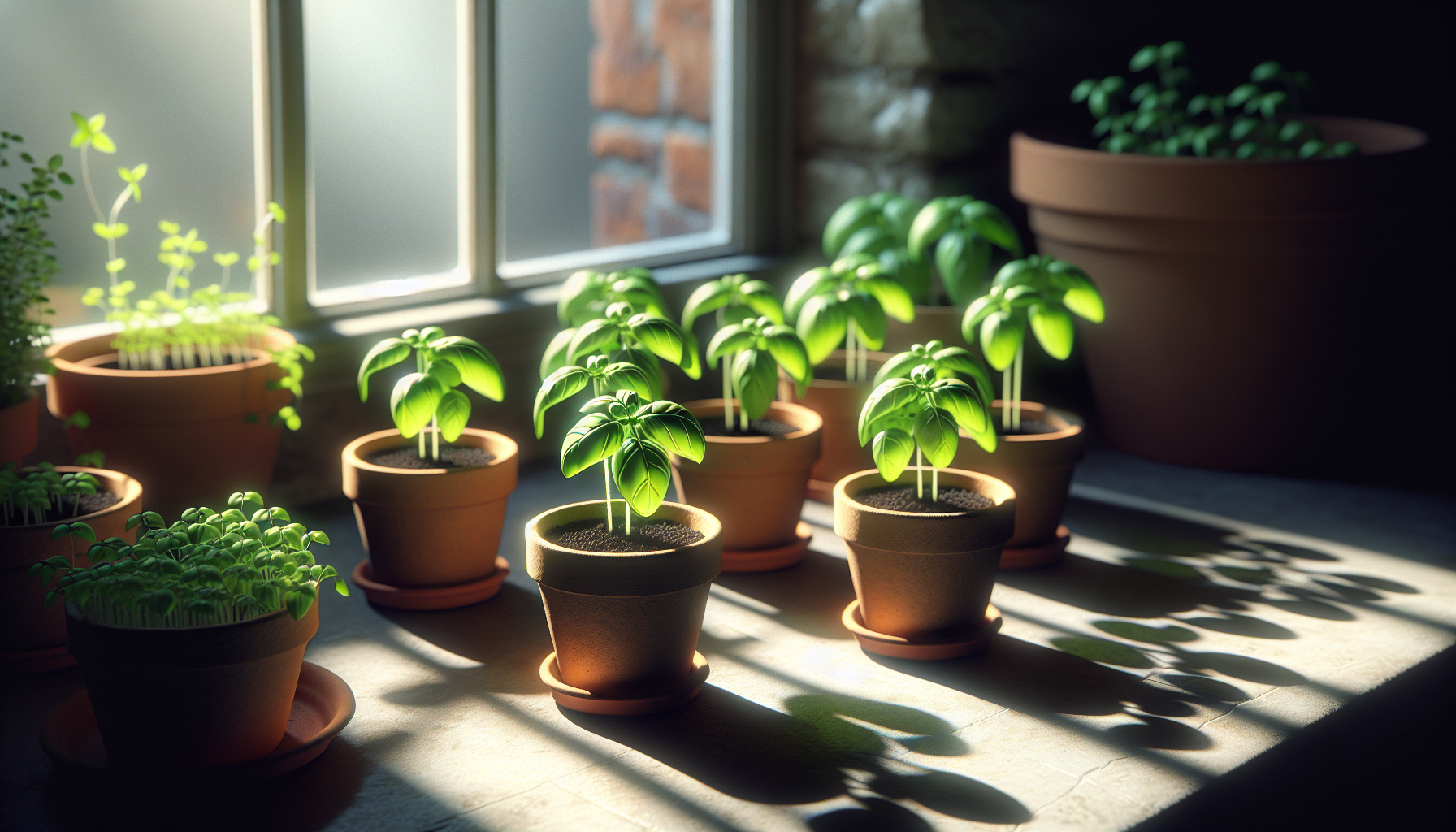
Basil is one of the most rewarding herbs you can grow at home, and starting from seed gives you access to far more varieties than any garden centre stocks. Whether you have a sunny windowsill, a greenhouse, or a sheltered patio, this guide walks you through every stage from sowing to harvest — tailored specifically for UK growing conditions.
Quick Answer: Sow basil seeds indoors from late March to early May in the UK. Surface-sow onto moist compost at 15–20°C, keep in bright light, and expect germination in 7–14 days. Transplant outdoors after the last frost (typically late May to early June). Basil is rated RHS hardiness H1c — it will not survive frost and needs warmth to thrive.
Why Grow Basil from Seed
A packet of basil seeds costs around £1–£3 and contains hundreds of seeds. Compare that with £1.50–£2 for a single supermarket pot plant (which often collapses within a week because it has been grown fast under artificial light and overcrowded into a tiny pot).
Starting from seed also gives you variety choice. Most garden centres stock generic sweet basil and perhaps one purple variety. Seed catalogues from UK suppliers like Chiltern Seeds, Kings Seeds and Thompson & Morgan offer dozens of cultivars — lemon basil, Thai basil, Greek bush basil, cinnamon basil, and more.
Finally, growing from seed puts you in control of timing. You can sow successionally from March through to June for a continuous supply, rather than depending on whenever the garden centre happens to have stock.
Best Basil Varieties for UK Growers
All basil cultivars carry an RHS hardiness rating of H1c (heated greenhouse, minimum 5–10°C). None are frost-hardy. Here are the best types to try:
Sweet Basil (Genovese type)
The classic Italian basil with large, glossy leaves and strong clove-anise aroma. ‘Genovese’ is the benchmark cultivar for pesto. ‘Aroma 2’ holds an RHS Award of Garden Merit (AGM) and offers excellent disease resistance — a reliable first choice for UK beginners. ‘Salvo’ (also AGM) is another dependable performer that handles our cooler summers well.
Greek / Bush Basil
Compact, bushy plants with tiny leaves and a neat, dome-shaped habit. Ideal for containers and windowsills. ‘Pluto’ carries an RHS AGM and stays particularly tidy at around 20–25cm tall. Greek basil is naturally more branching, so it needs less pinching out than tall sweet basil types.
Purple / Red Basil
Red-leaved basil has received an RHS AGM, and cultivars like ‘Dark Opal’ and ‘Purple Ruffles’ add striking colour to salads and herb beds. The flavour is slightly more peppery than sweet basil. Purple basil can be slightly slower to germinate, so give it a little extra warmth.
Lemon Basil
Bright citrus aroma, wonderful in Thai and Vietnamese dishes or steeped in cold water. ‘Lemonade’ and ‘Mrs Burns’ Lemon’ both carry RHS AGM status. They grow slightly taller than sweet basil and benefit from regular pinching.
Thai Basil
Distinctive anise-liquorice flavour with attractive purple stems and flower spikes. More heat-tolerant than sweet basil but equally tender. Good for stir-fries and curries. Grow in the warmest, most sheltered spot you have.
Cinnamon Basil
Warm, spicy scent with purple-tinged stems. An interesting addition to fruit salads and baking. Grows well alongside sweet basil with the same care requirements.
Month-by-Month UK Growing Calendar
| Month | Activity | Notes |
|---|---|---|
| January | — | Too early. Plan varieties and order seeds. |
| February | — | Order seeds if not done. Clean pots and trays. |
| March | Sow indoors | Late March, on a warm windowsill or in a heated propagator at 15–20°C. |
| April | Sow indoors | Main sowing window. Prick out seedlings from March sowings. |
| May | Sow indoors / Harden off | Last indoor sowings. Begin hardening off earlier batches from mid-May. |
| June | Transplant outdoors / Sow direct (south only) | Plant out after last frost. In the south, try a direct outdoor sowing in a sheltered spot. |
| July | Harvest | Regular picking encourages bushy growth. Pinch out flower buds. |
| August | Harvest | Peak harvest month. Make pesto and freeze in ice-cube trays. |
| September | Harvest / Bring indoors | Move pots inside before night temperatures drop below 10°C. |
| October | Indoor plants only | Windowsill plants continue if kept warm and bright. |
| November | Indoor plants only | Growth slows significantly. Reduce watering. |
| December | — | Plants rarely survive low winter light. Start fresh in spring. |
How to Sow Basil Seeds Step by Step
- Fill a seed tray or small pots with fine-grade seed compost. Water the compost before sowing so the surface is evenly moist but not waterlogged. A good peat-free seed compost works well.
- Surface-sow the seeds. Basil seeds need light to germinate, so scatter them thinly on the compost surface and press them gently in with your palm or the bottom of a pot. Do not cover them with compost.
- Cover with cling film or a clear propagator lid to hold in humidity. Remove or vent daily to prevent mould.
- Provide warmth. Basil germinates best at 15–20°C. A warm windowsill above a radiator works, or use a heated propagator. Below 12°C, germination is patchy and slow.
- Ensure bright light. Place on the brightest windowsill you have (south-facing is ideal). Seedlings that stretch towards the light become leggy and weak.
- Wait 7–14 days. Germination typically takes one to two weeks at the right temperature. Remove the cover as soon as most seedlings emerge.
Tip: Sow a small batch every three to four weeks from March to May. This gives you young, productive plants throughout the summer rather than one batch that bolts in August.
Growing On and Transplanting
Pricking Out
When seedlings develop their first pair of true leaves (the second set of leaves, after the rounded seed leaves), carefully transplant them into individual 7–9cm pots filled with multipurpose compost. Handle seedlings by their leaves, never the stem — a damaged stem is fatal, but a plant can grow a new leaf.
Hardening Off
From mid-May, begin moving plants outdoors for a few hours each day, gradually increasing the time over seven to ten days. Bring them in each evening. This acclimatises them to outdoor temperatures, wind and direct sunlight.
Planting Out
Transplant into final positions after the last frost — typically late May to early June in most of England and Wales, and mid-June in Scotland and northern areas. Choose a warm, sheltered spot in full sun. Space plants 20–30cm apart.
If you are growing basil in containers (which most UK growers do for flexibility), see the next section for specific advice on growing basil in pots.
Container Growing
Basil is one of the best herbs for container growing, and for most UK gardeners a pot on a sunny patio or windowsill is the most practical approach.
- Pot size: Minimum 15cm diameter for a single plant. A 20–25cm pot is better and gives the roots more room to develop. For a bushy display, plant three seedlings in a 30cm pot. See our guide to choosing the right pots.
- Compost: Use a quality peat-free multipurpose compost mixed with a handful of perlite or horticultural grit for drainage. Basil hates sitting in soggy compost.
- Drainage: Every pot must have drainage holes. Stand pots on feet or gravel so water flows freely. Empty saucers after heavy rain.
- Windowsill growing: A bright, south-facing windowsill works year-round (though growth slows dramatically in winter). Rotate the pot a quarter-turn every few days so the plant does not lean towards the light.
Container-grown basil dries out faster than plants in beds, so check the compost daily in hot weather. For more herb container ideas, read our guide to the best herbs to grow in containers.
Ongoing Care — Watering, Feeding and Pinching Out
Watering
Water basil in the morning so the foliage dries before evening — persistently wet leaves invite fungal diseases. Keep the compost consistently moist but never waterlogged. In hot spells, container plants may need watering twice a day.
Feeding
Basil is not a heavy feeder. A dilute liquid feed (half-strength general-purpose or tomato feed) every two to three weeks from June onwards is sufficient. Over-feeding produces lush growth with less aromatic flavour.
Pinching Out
This is the single most important care task. Once a stem has three pairs of leaves, pinch or snip the growing tip just above the second pair. This forces two new side shoots to develop, creating a bushier, more productive plant. Repeat whenever stems reach three pairs of leaves.
Remove flower buds as soon as they appear. Once basil flowers, the leaves turn bitter and the plant channels energy into seed production rather than leaf growth. If you want to save seed, let one or two stems flower at the end of the season.
Harvesting and Storing Basil
Start harvesting once plants are about 15cm tall and have several sets of leaves. Always harvest from the top down — this is the same as pinching out and keeps the plant producing.
Fresh Use
Pick leaves or stem tips as needed. Basil is best used fresh, added at the end of cooking to preserve its volatile oils.
Freezing (Best Preservation Method)
Blend leaves with a splash of olive oil and freeze in ice-cube trays. These basil cubes drop straight into soups, pasta sauces and stews. Alternatively, lay whole leaves flat on a baking tray, freeze until solid, then transfer to a freezer bag.
Drying
Dried basil loses much of its flavour compared with fresh or frozen, but it works in slow-cooked dishes. Hang small bunches upside down in a warm, airy place for one to two weeks, then crumble into jars.
Pesto
The classic way to preserve a glut. Blend fresh basil with pine nuts, Parmesan, garlic and olive oil. Pesto freezes well in small containers or ice-cube trays for up to six months.
Common Problems and Pests
Damping Off
Seedlings collapse at soil level, often overnight. Caused by fungal pathogens in cool, wet, poorly ventilated conditions. Prevention: Use clean pots, fresh compost, water from below, provide good air circulation and avoid overwatering. There is no cure once it strikes — discard affected seedlings and start again.
Cold Damage
Basil blackens and wilts at temperatures below about 5°C. Even a single cool night can set plants back significantly. Keep an eye on weather forecasts in May and June and be ready to bring pots indoors or cover outdoor plants with fleece if a late cold snap is forecast.
Aphids
Greenfly cluster on soft shoot tips. A strong jet of water dislodges them, or use a soft-soap spray. Encourage natural predators like ladybirds and lacewings.
Slugs and Snails
Mainly a problem for young plants at ground level. Container growing largely avoids this. Copper tape around pots, organic slug pellets (ferric phosphate) and evening patrols are all effective.
Basil Downy Mildew
Yellow patches on leaf tops with grey-purple fuzz underneath. Increasingly common in the UK. Prevention: Space plants well for airflow, water at the base (not overhead), and remove affected leaves immediately. Resistant varieties like ‘Aroma 2’ (AGM) offer some protection. Severely affected plants should be destroyed, not composted.
Companion Planting
Basil and tomatoes are the classic companion pairing — both in the garden and on the plate. There is some evidence that basil’s strong scent can confuse or deter whitefly, a common tomato pest, although the effect is modest. More practically, the two plants share identical growing requirements: full sun, warm temperatures, consistent moisture and rich soil. Growing them side by side in a greenhouse or sunny patio makes efficient use of your best growing spots.
Peppers, aubergines and courgettes are similarly good neighbours. Basil also grows well alongside other Mediterranean herbs, though rosemary and thyme prefer drier conditions, so keep them in separate pots rather than the same container.
Avoid planting basil near sage or rue, which are traditionally considered poor companions, and keep it away from mint — not because they clash, but because mint will overwhelm everything in its path.
Frequently Asked Questions
- When should I sow basil seeds in the UK?
- Sow indoors from late March to early May. The compost temperature needs to be at least 15°C for reliable germination. Direct outdoor sowing is only realistic from early June in sheltered, southern gardens.
- Can I grow basil outside in the UK?
- Yes, but only during summer. Basil is rated RHS hardiness H1c and will not tolerate frost. Plant out after the last frost (late May to early June) in a warm, sheltered, sunny spot. Most UK growers keep basil in pots so it can be moved indoors when temperatures drop.
- Why are my basil seedlings leggy and thin?
- Insufficient light. Basil needs bright light from the moment it germinates. Move seedlings to your brightest windowsill or use a grow light. Sowing too thickly also forces seedlings to compete for light — thin them early.
- How long does basil take to grow from seed to harvest?
- Approximately six to eight weeks from sowing to first harvest. This varies with temperature and light — plants grown in a warm greenhouse will be ready sooner than those on a cool windowsill.
- Can I save seed from my basil plants?
- Yes. Let one or two stems flower and set seed at the end of the season. Once the flower spikes turn brown and dry, cut them off, shake the seeds into a paper bag, and store in a cool, dry place. They remain viable for about three to five years.
What Next
Now that you have basil covered, explore more herb-growing guides:
- How to Grow Basil in a Pot (UK Guide) — detailed container care and troubleshooting
- How to Grow Mint in Pots — easy, productive, and best kept contained
- How to Grow Rosemary in Containers — a drought-tolerant Mediterranean favourite
- Best Herbs to Grow in Containers — our full roundup of container-friendly herbs
- How to Grow Tomatoes from Seed (UK Guide) — basil’s perfect companion
- Plant Care Hub — browse all our growing guides
Affiliate Disclosure: plantsandgardening.com is a participant in various affiliate programmes. Some links in this article may be affiliate links, meaning we earn a small commission if you make a purchase through them — at no extra cost to you. This helps us keep producing free gardening guides. We only recommend products we genuinely believe are useful for UK gardeners.