Quick Answer Box
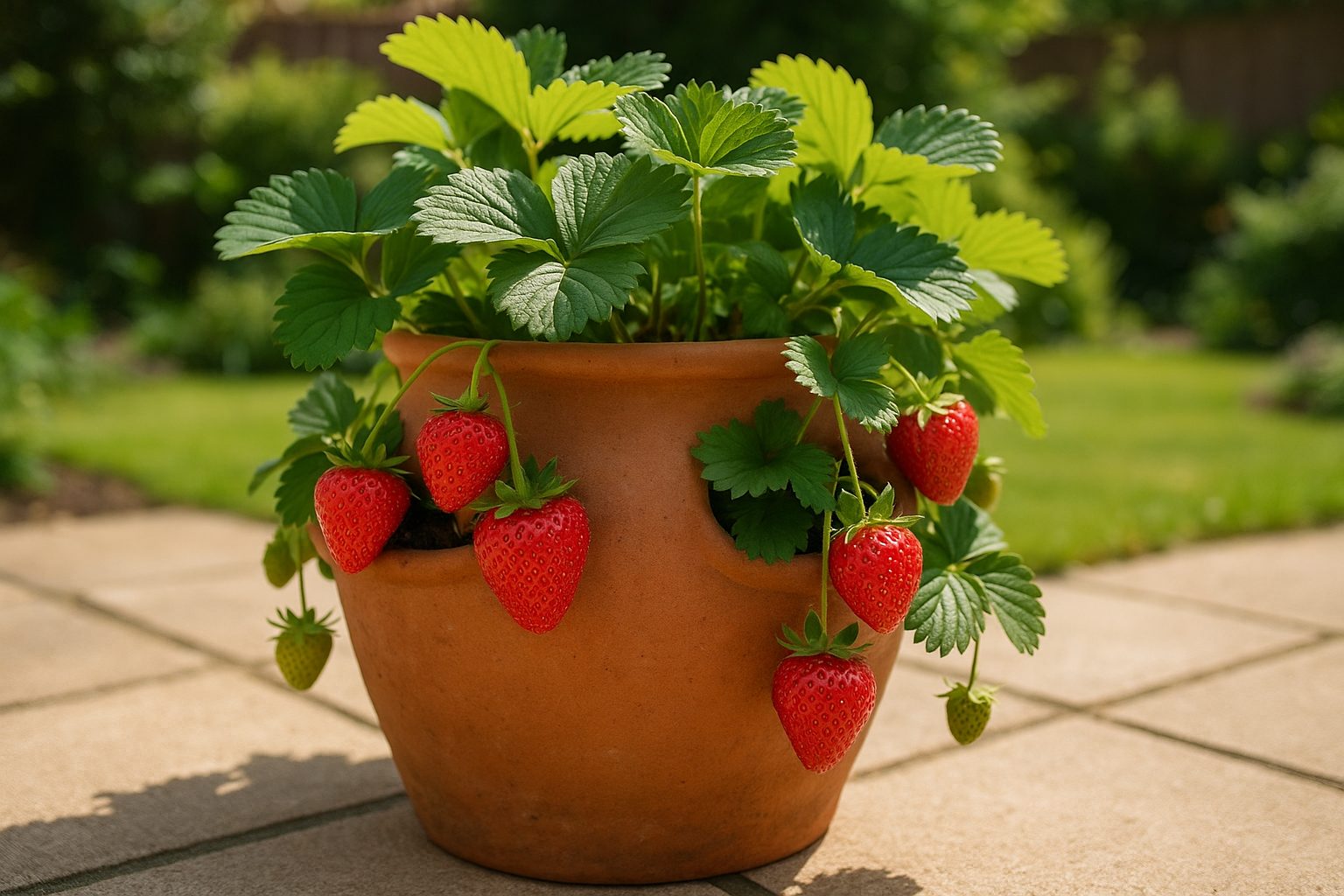
Plant strawberries in a pot at least 30 cm wide filled with peat-free multi-purpose compost. Choose an RHS AGM variety like Cambridge Favourite or Finesse. Plant in March–May or August–September, position in full sun, and feed fortnightly with tomato feed once flowers appear. Expect your first harvest within 8–12 weeks of spring planting.
Introduction
Strawberries thrive in containers and are among the most rewarding fruits to grow in pots across the UK. Whether you have a small balcony, a sunny doorstep, or a compact patio, you can harvest fresh, sweet berries from just one or two pots. You don’t need a garden bed — a single 30 cm pot can produce up to 500 grams of fruit per season. This guide covers everything you need to know to grow strawberries successfully in containers, based on expert advice from the Royal Horticultural Society (RHS). You’ll learn which varieties perform best, how to choose the right pot, when to plant, and how to manage pests and feeding. With the right approach, your strawberries will fruit reliably and deliciously, even in the smallest urban spaces.
If you’re new to growing in pots, start with our guide to the best containers and pots for beginners.
Best Strawberry Varieties for Pots (UK)
Choosing the right variety is the first step to success when growing strawberries in pots. For a fuller rundown of cultivars and where to buy them, see our guide to the best strawberry plants for UK gardens. The Royal Horticultural Society (RHS) awards the Award of Garden Merit (AGM) to plants that perform well in UK gardens. Stick to AGM-listed varieties for reliability, disease resistance, and consistent yields. Below is a comparison of the top eight varieties, selected for their performance in containers.
| Variety | AGM | Season | Notes |
|---|---|---|---|
| Cambridge Favourite | Yes | Mid-season | Reliable, sweet, heavy cropper with excellent disease resistance. Ideal for beginners and containers. |
| Finesse | Yes | Perpetual (June–October) | Produces multiple harvests of sweet, firm berries. One of the best everbearing varieties for pots. |
| Flamenco | No | Perpetual | Consistent yields with good flavour. Thrives in containers and tolerates variable weather. |
| Honeoye | Yes | Early (June) | Large, firm berries with excellent flavour. One of the best early summer varieties for containers. |
| Florence | Yes | Late (July–August) | Heavy crop of firm, well-flavoured fruit. Excellent disease resistance and container-friendly. |
| Mara des Bois | No | Perpetual | Rich, aromatic berries with a wild strawberry flavour. Larger than most alpines. |
| Elvira | No | Summer | Compact habit, ideal for hanging baskets. Produces heavy crops of sweet, glossy berries. |
| Alexandria | No | Perpetual | Alpine variety with small, intensely flavoured berries. Everbearing and shade-tolerant. |
For beginners, Cambridge Favourite AGM is the top choice — it’s forgiving, prolific, and resistant to common diseases. If you want fruit over a longer season, Finesse AGM delivers multiple harvests from early summer to autumn. For a unique flavour, try Mara des Bois, which offers a complex, aromatic taste. Alpine varieties like Alexandria are perfect for north-facing balconies or shaded corners, where larger strawberries struggle.
Always buy certified virus-free stock to avoid poor growth and low yields. The RHS warns that strawberry viruses can severely reduce productivity and are often invisible until symptoms appear. When selecting plants, look for those labelled ‘certified virus-free’ from reputable suppliers. Thompson & Morgan, Crocus, and Dobies all offer certified virus-free strawberry plants online. You can also find healthy bare-root runners at B&Q and garden centres from March onwards. See the RHS AGM fruit list for recommended varieties.
Choosing the Right Pot
The pot you choose directly affects your strawberry’s health and yield. The RHS recommends wide, shallow containers over traditional strawberry pots with side holes — the latter can dry out quickly and make root management difficult. A pot of at least 30 cm in diameter gives enough space for roots to develop and supports a healthy plant.
| Container Type | Minimum Size | Plants per Container | Notes |
|---|---|---|---|
| Standard round pot | 30 cm diameter, 20 cm deep | 3–4 plants | Best all-round option for most gardeners. Easy to manage and widely available. |
| Hanging basket | 40 cm diameter | 4–6 plants | Keeps fruit off the ground, reducing slug damage. Requires frequent watering. |
| Window box | 60 cm x 15 cm x 18 cm | 4 plants | Ideal for sunny windowsills and small balconies. Easy to place and maintain. |
| Growing bag | 95 cm x 35 cm | 6 plants | Cost-effective and pre-fertilised. Contains slow-release feed for up to six weeks. |
| Strawberry planter (pocketed) | 35 cm x 35 cm | 8 plants | Maximises space but pockets dry out fast. Requires daily checks. |
| Terracotta pot | 25 cm x 25 cm | 3 plants | Attractive but dries out quickly. Best suited for shaded or sheltered spots. |
For beginners, a 30 cm round pot filled with quality compost is the most reliable choice. Avoid plastic pots that are too shallow — they dry out fast and restrict root growth. If you’re growing in a windy location, secure your pots with bricks or stakes to prevent tipping. Consider using a pot with a built-in saucer to catch excess water and prevent soil erosion.
Check out our guide to the best containers and pots for beginners for more detailed recommendations on materials, drainage, and design.
Compost and Soil
Use peat-free multi-purpose compost or soil-based compost for growing strawberries in pots. The RHS advises against using standard potting composts, which can dry out too quickly and lack essential nutrients. Multi-purpose composts are formulated to hold moisture and provide balanced nutrition for container plants. You can find quality peat-free composts from brands like SylvaGrow, Dalefoot, and Melcourt at most UK garden centres, B&Q, or online from Crocus.
Choose a compost that is certified peat-free. Peat extraction damages fragile ecosystems, and many UK gardeners now opt for sustainable alternatives like coir, wood fibre, or composted green waste. Look for brands with the Soil Association or Peat Free Standard certification.
Avoid garden soil — it’s too dense for containers and can introduce pests and diseases. Also steer clear of composts with added slow-release fertilisers unless they’re specifically designed for fruiting plants. These can lead to over-fertilisation, especially in pots where nutrients leach out quickly.
For best results, mix in a handful of slow-release fertiliser (such as a 12-12-12 formula) at planting time. This gives your strawberries a steady nutrient supply for the first few months. If you’re using a growing bag, check the feeding schedule — many come pre-fertilised for six weeks.
For more on choosing compost for container gardening, see our guide to the best compost for container gardening.
When to Plant Strawberries in Pots (UK Calendar)
Plant strawberries in pots during two key windows in the UK: mid-spring (March–May) and late summer/early autumn (August–September). Planting in these periods allows your plants to establish strong roots before fruiting or winter.
Planting in August–September gives the best results for a bumper crop the following year. The cooler soil and reduced competition from pests allow roots to develop before winter. The RHS recommends planting no later than the first week of September in northern regions and the second week in southern areas.
| Month | Recommended Action | Notes |
|---|---|---|
| January | Check pots for damage. Prepare compost and containers. | Protect pots from frost. No planting yet. |
| February | Inspect plants. Prune dead foliage. Prepare for spring planting. | Start composting if not already done. |
| March | Begin planting if weather permits. Use early varieties like Honeoye. | Ensure soil is frost-free and moist. |
| April | Continue planting. Water regularly. Feed with general-purpose liquid feed. | Watch for aphids and slugs. |
| May | Final planting window. Monitor for runners and pests. | First fruits may appear by late June. |
| June | Harvest early crops. Deadhead spent flowers. Begin feeding with tomato feed. | Keep soil moist. Watch for grey mould. |
| July | Continue harvesting. Encourage runner growth for next year. | Apply mulch to retain moisture. |
| August | Plant late-season varieties. Take cuttings of healthy runners. | Best time for new plantings. |
| September | Final planting window. Cut back old leaves after harvest. | Apply nematodes for vine weevil control if needed. |
| October | Overwintering prep. Move pots to sheltered spot if needed. | Check for pests and winter damage. |
| November | Protect plants from frost. Avoid overwatering. | Keep pots dry but not bone-dry. |
| December | Minimal care. Check for damage. Prepare for spring. | Do not fertilise. |
Planting in spring gives you fruit within 8–12 weeks, while autumn planting leads to a stronger crop the following year. Always plant with the crown level with the soil surface — burying it too deep causes rot, while exposing it invites drying out.
How to Plant Strawberries in Pots
Follow these steps to plant strawberries in pots successfully:
1. Choose a pot at least 30 cm in diameter with good drainage holes. Rinse it with water to remove dust or residue.
2. Fill the pot with peat-free multi-purpose compost, leaving about 2 cm of space below the rim.
3. Remove any dead or damaged leaves from your strawberry plant. Trim long roots slightly to encourage new growth.
4. Position the plant so the crown (where the leaves meet the roots) sits level with the soil surface. Do not bury it.
5. Gently firm the compost around the base, ensuring no air pockets remain.
6. Water thoroughly until excess drains from the bottom. Avoid wetting the crown or leaves to prevent fungal disease.
7. Place the pot in full sun — strawberries need at least 6 hours of direct sunlight daily.
8. Label your pot with the variety name and planting date.
After planting, avoid feeding for the first two weeks. This allows roots to settle. Once new growth appears, begin a fortnightly feeding schedule with a general-purpose liquid fertiliser.
For more on starting a vegetable garden, see our beginner’s guide to starting a vegetable garden in the UK.
Watering, Feeding, and Care
Water your strawberries in pots every 2–3 days during hot weather, or when the top 2 cm of compost feels dry. Water in the morning to allow leaves to dry before nightfall, reducing the risk of grey mould (botrytis). Avoid wetting the crown or fruit — this is a major cause of disease.
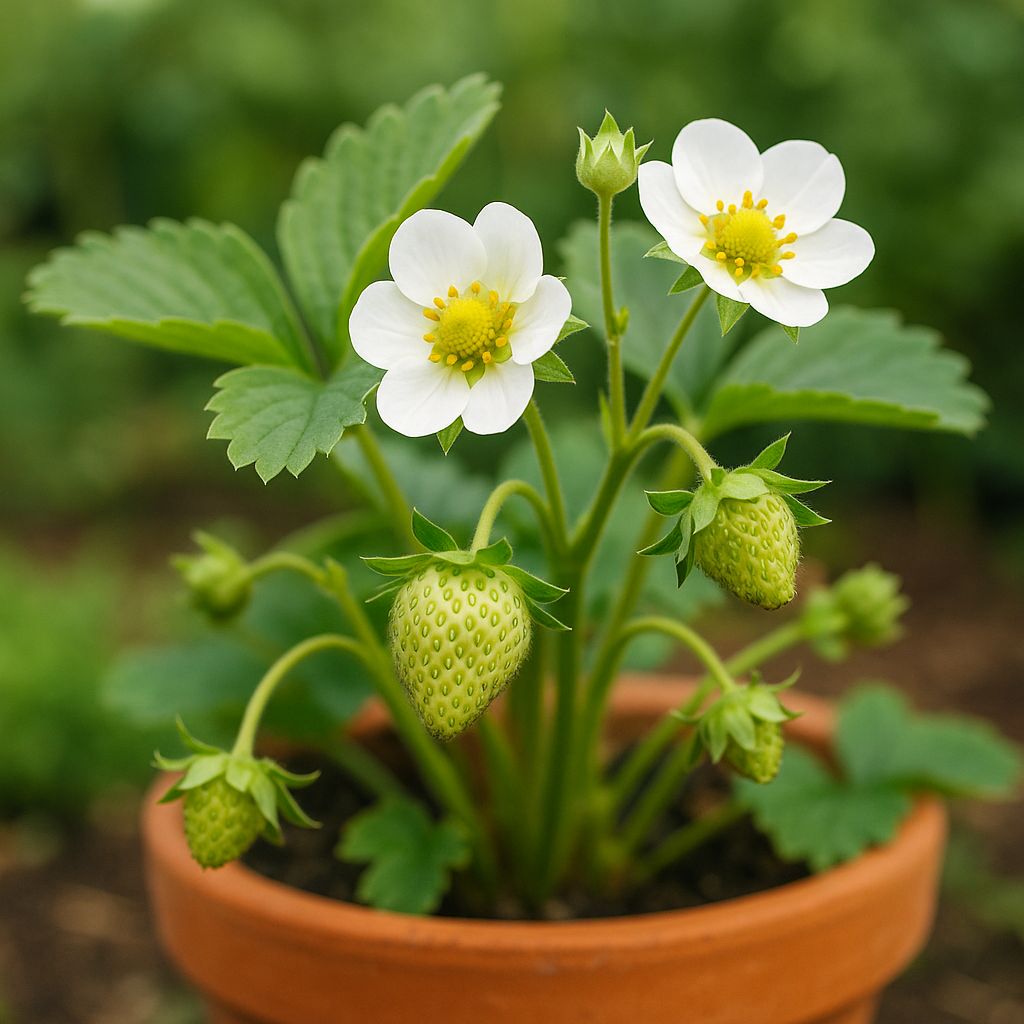
Feed your plants fortnightly with a general-purpose liquid fertiliser from planting until flower bud formation. Once flower buds appear, switch to a high-potassium fertiliser, such as tomato feed. This encourages fruit development and improves flavour.
Runners — the horizontal stems that grow from the base — can be left to grow to produce more plants, or removed to focus energy on fruiting. For a larger harvest, remove all runners in summer-fruiting varieties like Cambridge Favourite. For perpetual types like Finesse, allow 1–2 runners to grow to extend the cropping season.
Deadhead spent flowers to encourage new blooms. After harvesting, cut back old leaves 10 cm above the crown for summer-fruiting varieties. Perpetual types only need dead or diseased leaves removed.
For best results, use a balanced feeding schedule. Over-fertilising can lead to lush foliage but poor fruiting. Always follow the dilution instructions on the fertiliser label.
Common Problems and Pests
Strawberries in pots are vulnerable to several pests and diseases. The RHS warns that vine weevil is particularly damaging to container-grown plants.
Vine weevil: These pests have black adults (9 mm) and white, legless larvae (up to 10 mm). Adults feed at night, creating irregular notches on leaves. Grubs attack roots, causing wilting and plant death. Control with nematodes (Steinernema or Heterorhabditis spp.) applied between August and early September when soil temperatures are between 5–20°C. The RHS recommends biological control methods over chemical treatments.
Botrytis (grey mould): Appears as a fuzzy grey coating on fruit and leaves, especially in humid, wet conditions. Prevent by avoiding wetting the crown and fruit, improving air circulation, and removing infected plant material promptly. If you must use a fungicide, choose one approved for edible crops — always check the HSE-approved label and follow the application instructions exactly. Prevention through good air circulation and watering practices is always preferable to chemical treatment.
Slugs and snails: These pests eat holes in leaves and fruit. Use copper tape around the pot, or place beer traps nearby. Encourage natural predators like hedgehogs and birds.
Aphids: Tiny green or black insects that cluster on new growth. Spray with a jet of water or use a natural insecticidal soap. Encourage ladybirds and lacewings.
Regular inspection is key. Check under leaves and around the crown weekly. Early detection makes treatment far more effective.
Harvesting and Storing
Harvest strawberries when they are bright red all over. The best time is during the warmest part of the day — usually mid-morning. Gently twist the fruit off the stem, leaving a small piece of stalk attached. Avoid pulling, as this can damage the plant.
For immediate eating, store berries in a single layer in the fridge for up to 3 days. Do not wash before storing — moisture encourages mould. For longer storage, freeze whole or halve the berries and place on a tray before transferring to a freezer bag.
For jam-making, harvest when berries are fully ripe but not overripe. Overripe fruit can make jam too soft. Process immediately to preserve flavour and colour.
Harvesting regularly encourages more fruit. If you leave ripe berries on the plant too long, they can attract pests and spoil.
Hanging baskets and growing more plants from runners
Strawberries are ideal for hanging baskets and tall planters: lifting the fruit off the ground keeps it cleaner and away from slugs, and the trailing habit looks attractive. Line baskets with a moisture-retentive compost, plant three or four plants per 30 cm basket, and water daily in warm weather, as baskets dry out fast.
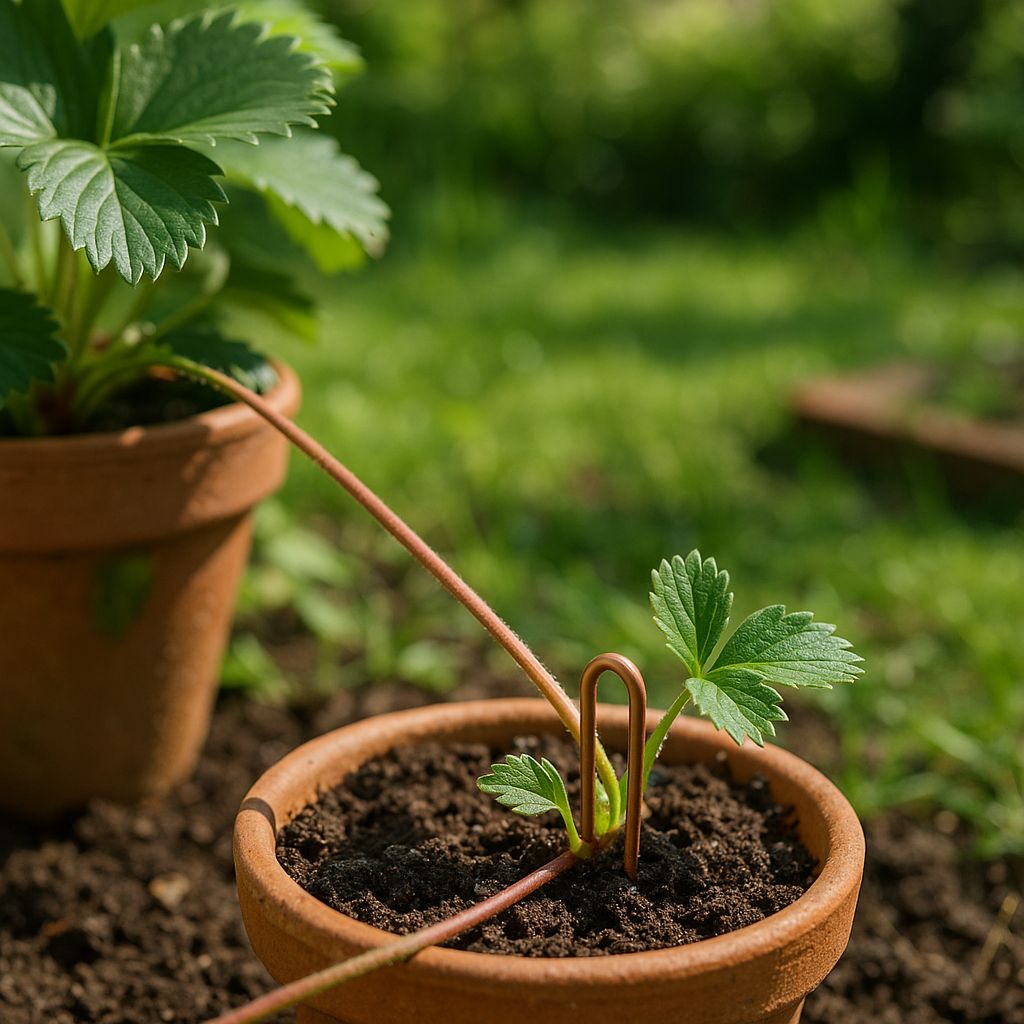
Established plants throw out long runners — thin stems with baby plantlets at the tips. To raise free new plants, peg a plantlet into a small pot of compost beside the parent (a hairpin or bent wire works well), keep it watered, and once it has rooted after a few weeks, snip it free from the runner. Renewing your pot-grown stock this way every three years keeps cropping strong, as older crowns gradually become less productive.
Overwintering Strawberries in Pots
Overwintering strawberries in pots requires careful preparation. Move pots to a sheltered, frost-free location such as a greenhouse, cold frame, or garage if you live in a cold part of the UK. In milder regions, you can leave them outside but protect them with horticultural fleece or bubble wrap.
Reduce watering in autumn and winter. Let the compost dry slightly between waterings, but never let it become bone-dry. Overwatering in winter leads to root rot.
After the last harvest, cut back old leaves 10 cm above the crown for summer-fruiting varieties. For perpetual types, remove only dead or diseased leaves. Do not fertilise in winter.
Check pots monthly for pests, especially vine weevil. If you spot signs of infestation, treat with nematodes as soon as soil temperatures rise above 5°C.
Replant your strawberries every 3–4 years to avoid replant disorder — a condition where soil-borne diseases build up and reduce yields. Always rotate your pots to a different location each year if possible.
Frequently Asked Questions
- Can I grow strawberries in a hanging basket? Yes, but choose a basket at least 40 cm in diameter. Use a variety like Elvira or Finesse for best results. Water daily in summer.
- Why aren’t my strawberries fruiting? Common causes include poor pollination, lack of sunlight, over-fertilising, or planting too deep. Ensure the crown is level with the soil and that plants get full sun.
- How many strawberries can I grow in one pot? A 30 cm pot can hold 3–4 plants. More than that leads to competition for nutrients and reduced yields.
- Do I need to use tomato feed? Yes, once flower buds form. Switch from general-purpose feed to high-potassium tomato feed to boost fruit development.
- Can I grow strawberries from seed? Yes, especially alpine varieties like Alexandria and Mignonette. Sow indoors in February–March, then transplant to pots after the last frost.
- Are alpine strawberries worth growing? Yes, especially if you have a shaded spot. They produce intense flavour in small berries and are easy to grow from seed.
- How do I prevent grey mould? Avoid wetting the crown and fruit. Water in the morning. Remove infected fruit immediately and improve air circulation.
- Can I grow strawberries indoors? Yes, but only with a grow light and a sunny windowsill. Use a perpetual variety like Finesse for best results.
What Next?
Now you know how to grow strawberries in pots like a pro. Share your progress in the comments below — we love seeing your harvests. If you’re growing other fruits or vegetables in containers, check out our guides to the best vegetables to grow in containers, growing tomatoes in containers, and the best herbs to grow in containers. For more on building a successful container garden, visit our guide to the best compost for container gardening.