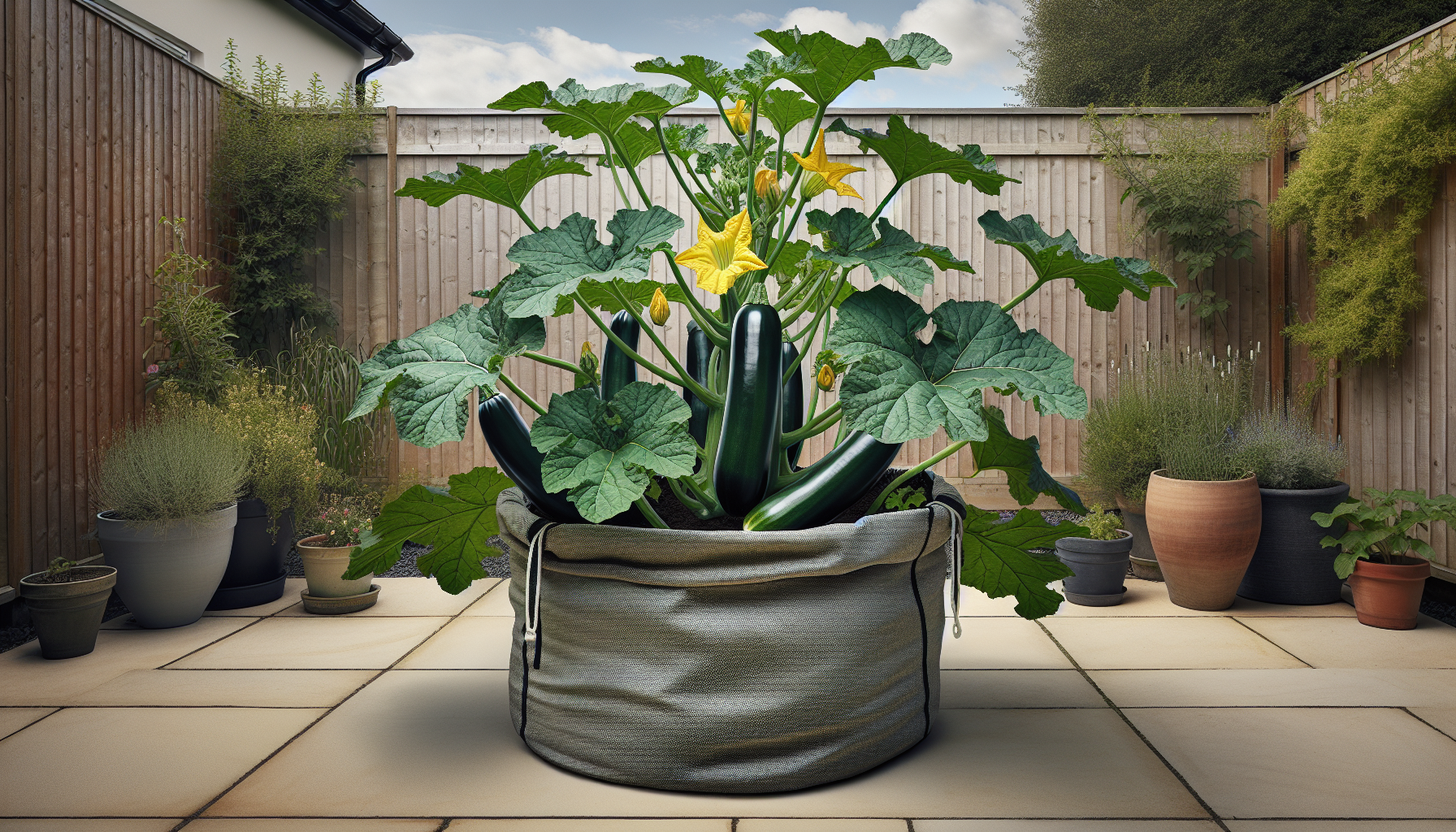
Quick Answer
- Container size: Minimum 40 litres per plant
- Best varieties: ‘Defender’ AGM, ‘Astia’ AGM, ‘Patio Star’ AGM
- Sow indoors: April — on their sides, 2 cm deep
- Plant out: Late May, after the last frost
- Harvest: July to October
- Expected yield: 10–20 courgettes per plant through the season
Table of Contents
Why Grow Courgettes in Containers
Courgettes are one of the most productive vegetables you can grow in a pot. A single plant in a 40-litre container on a sunny patio can produce 10 to 20 fruits over a season — more than enough for a household of two. They grow fast, crop heavily from July to October, and need no complicated support structures.
Container growing suits courgettes particularly well for several reasons:
- Space-saving: Modern compact cultivars stay bushy rather than trailing, making them ideal for patios, balconies, and small courtyards.
- Better drainage control: Courgettes hate waterlogged roots. Pots with drainage holes let you manage moisture far more precisely than open ground.
- Warmth: Containers warm up faster than garden soil in spring, giving courgettes the heat they need to establish quickly.
- Pest avoidance: Raising plants off the ground reduces slug damage, and you can position pots away from problem areas.
The RHS rates courgettes as straightforward to grow, placing them in the “easy” category for beginners. If you have a sunny spot and a large enough pot, you already have everything you need to get started.
Best Container Varieties
Compact, bush-type varieties perform best in containers. Trailing types need too much space and tend to topple pots. These five cultivars all hold the RHS Award of Garden Merit (AGM), meaning they have been trialled and proven to perform reliably in UK conditions:
‘Defender’ AGM
The most widely recommended variety for UK growers. ‘Defender’ has a compact, upright habit and strong resistance to cucumber mosaic virus — the most common virus affecting courgettes. It produces dark green, uniform fruits consistently from July onwards. An excellent all-rounder for containers.
‘Astia’ AGM
Specifically bred for container growing. ‘Astia’ has a particularly compact growth habit with shorter internodes, meaning the plant stays tidy in a pot rather than sprawling outward. Fruits are mid-green with a smooth skin. If you only have room for one pot, this is a strong choice.
‘Patio Star’ AGM
As the name suggests, this cultivar was developed for patio containers. It produces a steady crop of classic green courgettes on a notably compact plant. The smaller leaf canopy also improves airflow around the base, which helps reduce powdery mildew.
‘Firenze’ AGM
An Italian-style courgette producing glossy, dark green fruits with excellent flavour. ‘Firenze’ has an open plant habit that makes harvesting straightforward — you can see and reach developing fruits easily. Particularly good eaten young at 10 cm.
‘El Greco’ AGM
A distinctive pale green variety with a slightly nutty flavour when cooked. ‘El Greco’ is vigorous and prolific, producing a reliable crop through the summer months. It adds visual variety if you are growing alongside a standard dark green cultivar.
Choosing Containers
A minimum 40-litre pot is essential — courgettes are large, hungry plants with extensive root systems. Anything smaller restricts root growth and leads to poor fruiting.
Pot requirements
- Volume: 40 litres minimum; 50–60 litres is better for vigorous varieties.
- Drainage: At least three drainage holes in the base. Courgettes need consistent moisture but will rot in standing water.
- Material: Plastic pots retain moisture longer than terracotta, reducing how often you need to water. Terracotta looks attractive but dries out fast in summer heat.
- Colour: Light-coloured pots absorb less heat. Dark pots in full sun can overheat roots on hot days.
Can you use grow bags?
Standard grow bags (around 35–40 litres) can work, but the shallow depth means you will need to water twice daily in hot weather. If using grow bags, cut a large opening in the top rather than small planting holes — this gives the courgette room to develop its broad leaf canopy. Limit to one plant per grow bag.
Positioning
Place containers in the sunniest spot you have. Courgettes need a minimum of six hours of direct sunlight daily for good fruiting. A south-facing or west-facing patio is ideal. Shelter from strong wind helps too, as courgette leaves are large and can suffer wind damage.
Compost and Feeding
Rich, moisture-retentive compost is the foundation of productive container courgettes. These are greedy plants that exhaust nutrients fast in the confined space of a pot.
Compost mix
Fill your container with a 70/30 blend of multi-purpose compost and garden compost (or well-rotted manure). The garden compost adds nutrients and improves water retention. If you do not have garden compost, mix in a handful of slow-release fertiliser granules at planting time.
Add a layer of crocks, gravel, or broken polystyrene at the base of the pot to prevent drainage holes from clogging. Leave a 3 cm gap between the compost surface and the rim — this makes watering far easier without overflow.
Feeding schedule
- At planting: The compost mix provides enough nutrients for the first 4–6 weeks.
- Once flowers appear: Begin feeding with a high-potassium liquid tomato feed (such as Tomorite) every 7 days. Potassium drives fruit production.
- Fortnightly boost: Alternate the tomato feed with a liquid seaweed feed every other week. Seaweed provides trace minerals and encourages strong root development.
- Mid-season top-up: By August, nutrients in the compost will be depleted. Top-dress with a 2 cm layer of fresh compost or well-rotted manure to sustain the plant through to autumn.
When and How to Sow
Sow indoors in April, plant out in late May. Courgette seeds germinate quickly — often within five to seven days — and seedlings grow fast, so resist the temptation to start too early.
Indoor sowing (April)
- Fill 9 cm pots with seed compost and water thoroughly.
- Place one seed per pot, on its side, pushed 2 cm deep. Sowing on the side prevents water pooling on the flat seed surface, which can cause rot.
- Cover with a thin layer of vermiculite or compost.
- Place on a warm windowsill or in a propagator at 18–21 °C.
- Seeds germinate in 5–7 days. Once the first true leaves appear, move to a bright, slightly cooler spot to prevent leggy growth.
Hardening off (mid-May)
From mid-May, move seedlings outdoors during the day and bring them back inside at night. Do this for 7–10 days. This acclimatises the plant to outdoor temperatures and wind before permanent planting.
Planting out (late May onwards)
Wait until all risk of frost has passed — typically late May in most of England, early June in Scotland and northern England. Night temperatures should be consistently above 10 °C.
Plant one courgette per container. These are large plants and need all the root space, water, and nutrients in the pot for themselves. Planting two per pot is a common mistake that results in poor cropping from both plants.
Direct outdoor sowing
If you prefer to skip indoor sowing, you can sow directly into your container from late May. Push one seed 2 cm deep on its side, water well, and cover the pot with a cloche or clear plastic bag until the seedling emerges. Direct-sown plants crop 2–3 weeks later than transplants.
Growing Care
Consistent watering is the single most important factor for container courgettes. Everything else — feeding, pollination, pruning — is secondary to keeping the compost evenly moist.
Watering
Courgettes are heavy drinkers. In summer, a container plant may need watering every single day — sometimes twice in very hot weather. Water at the base of the plant rather than over the leaves to reduce the risk of powdery mildew. Early morning watering is ideal.
Check moisture by pushing your finger 3 cm into the compost. If it feels dry at that depth, water thoroughly until liquid runs from the drainage holes. Mulching the compost surface with a 3 cm layer of bark chips or straw helps retain moisture and keep roots cool.
Feeding
Follow the schedule in the Compost and Feeding section above: weekly tomato feed once flowering begins, alternating with a fortnightly seaweed feed.
Hand pollination
Courgettes produce separate male and female flowers on the same plant. Outdoors, bees usually handle pollination, but in sheltered urban spaces or during cool, wet spells, pollination can be poor. The symptom is small fruits that turn yellow and rot before developing.
To hand-pollinate:
- Identify a male flower (thin stem, no swelling at the base) and a female flower (small swelling — the immature fruit — behind the petals).
- Pick the male flower, peel back its petals to expose the pollen-covered stamen.
- Gently dab the stamen into the centre of the female flower, transferring pollen onto the stigma.
- Do this in the morning when flowers are fully open.
Removing lower leaves
As the plant matures, remove the lowest two or three leaves to improve airflow around the base. This reduces humidity at soil level and helps prevent powdery mildew. Use clean secateurs and cut close to the main stem.
Common Problems
Powdery mildew
White, powdery patches on leaves are the most common problem with courgettes, especially from mid-summer. It rarely kills the plant but weakens it and reduces cropping. Improve airflow by removing lower leaves, avoid watering over the foliage, and keep the plant well-fed to maintain vigour. Badly affected leaves can be removed entirely. Fungicide sprays based on potassium bicarbonate offer some control.
Poor pollination and fruit rot
Small fruits that yellow, soften, and rot before reaching usable size indicate failed pollination. Early in the season, plants often produce male flowers first with a delay before female flowers appear — this is normal. Once both flower types are present, hand-pollinate if bees are not visiting. See the hand pollination guide above.
Slugs and snails
Young courgette seedlings are vulnerable to slug damage, particularly in the first week after planting out. Container growing gives you an advantage — apply copper tape around the pot rim or use organic slug pellets (ferric phosphate) on the compost surface. Check plants at dusk when slugs are active.
Cucumber mosaic virus
Symptoms include mottled, distorted leaves and stunted, bumpy fruits. There is no cure — infected plants must be removed and binned (not composted). Prevent it by growing virus-resistant varieties such as ‘Defender’ AGM, controlling aphids (which spread the virus), and washing hands and tools between plants.
Harvesting
Pick courgettes at 10–15 cm long for the best flavour and texture. At this size, the skin is tender, the seeds are tiny, and the flesh is firm. Larger courgettes become watery and seedy — they are still edible but less pleasant to eat.
How to harvest
Use a sharp knife or secateurs to cut the stem 2–3 cm above the fruit. Twisting or pulling can damage the main plant stem. Harvest in the morning when fruits are cool and firm.
Why regular picking matters
Courgette plants channel energy into maturing existing fruits. If you leave a courgette on the plant to grow into a marrow, the plant slows down or stops producing new flowers. Regular picking — every two to three days during peak season — signals the plant to keep flowering and fruiting. A well-picked plant will crop for 8–10 weeks.
Dealing with a glut
Even one productive plant can overwhelm you with courgettes in August. Put the surplus to good use:
- Courgette cake: Grated courgette keeps sponge cakes incredibly moist. It works as a direct substitute in carrot cake recipes.
- Soup: Courgette and mint soup freezes well and makes a quick lunch through autumn and winter.
- Spiralised or ribboned: Use a peeler to create thin ribbons for salads or a spiraliser for a low-carb pasta alternative.
- Share with neighbours: A time-honoured tradition among allotment holders and container gardeners alike.
Storing and Using
Fridge storage
Fresh courgettes keep for about one week in the salad drawer of the fridge. Do not wash them before storing — moisture on the skin accelerates spoilage. Place in a loose paper bag or wrap in a clean tea towel.
Freezing
Courgettes freeze well when prepared correctly:
- Wash and slice into 1 cm rounds or dice into cubes.
- Blanch in boiling water for 1 minute, then plunge immediately into ice water.
- Drain thoroughly and pat dry with kitchen paper.
- Spread on a baking tray in a single layer and freeze for 2 hours (open freezing prevents pieces sticking together).
- Transfer to labelled freezer bags. Use within 3 months for best quality.
Frozen courgettes work best in cooked dishes — soups, stews, pasta sauces, and ratatouille. They lose their firm texture once thawed, so they are not suitable for salads after freezing.
Month-by-Month Calendar
| Month | What to Do |
|---|---|
| March | Prepare containers: clean pots, buy compost, order seeds. Choose your varieties. |
| April | Sow seeds indoors on their sides, 2 cm deep, in 9 cm pots. Keep at 18–21 °C. |
| May | Harden off seedlings from mid-month. Plant out into containers in late May once frost risk has passed. Direct-sow outdoors from late May if preferred. |
| June | Water regularly as plants establish. First flowers appear — usually male flowers first. Begin feeding with tomato fertiliser once female flowers open. |
| July | Harvest begins. Pick fruits at 10–15 cm. Water daily in warm spells. Continue weekly feeding. Hand-pollinate if fruit set is poor. |
| August | Peak cropping — harvest every 2–3 days. Watch for powdery mildew and remove affected lower leaves. Top-dress with fresh compost. Manage the glut. |
| September | Cropping slows as temperatures drop. Continue harvesting. Reduce watering slightly as growth slows. Last feeds of the season. |
| October | Final harvests before the first frosts. Clear spent plants, empty and clean containers. Compost the plant debris (unless diseased). |
Frequently Asked Questions
How many courgette plants do I need?
One or two plants are enough for most households. A single well-tended container courgette produces 10–20 fruits over the season. Two plants provide a generous surplus for sharing and preserving.
Can I grow courgettes in a 30-litre pot?
A 30-litre pot is below the recommended minimum. The restricted root space leads to smaller plants, reduced fruiting, and faster compost drying. Stick to 40 litres or larger for reliable results.
Do courgettes need a support or stake?
Bush varieties grown in containers do not need staking. The compact habit keeps them self-supporting. In very exposed or windy positions, a single bamboo cane pushed into the compost beside the main stem provides extra stability.
Why are my courgettes turning yellow and falling off?
This is almost always poor pollination. The fruit begins to develop but without fertilisation it aborts, turning yellow and soft. Hand-pollinate female flowers using a male flower as described in the Growing Care section.
Can I grow courgettes on a north-facing balcony?
Courgettes need a minimum of six hours of direct sunlight daily. A north-facing balcony in the UK typically receives insufficient light for fruiting crops. You would be better suited to leafy crops like lettuce, spinach, or herbs in that position.
When should I stop harvesting?
Harvest until the first autumn frosts, usually in October. Courgette foliage is frost-tender and plants will collapse after a hard frost. Pick all remaining fruits before this happens, regardless of size.
What Next
Now that you have a plan for container courgettes, explore more of our growing guides to make the most of your space:
- Best Vegetables to Grow in Containers — expand your patio harvest with more productive crops.
- Best Compost for Container Gardening — get the growing medium right for every pot.
- Best Containers and Pots for Beginners — choose the right size and material for each crop.
- What to Plant in June UK — time your planting-out to perfection.
If you are growing courgettes for the first time this year, start with ‘Defender’ AGM in a 45-litre pot, follow the watering and feeding schedule above, and you will be picking your first fruits by mid-July.