This article contains affiliate links. If you buy through these links, we may earn a small commission at no extra cost to you.
A few square metres of soil, a free weekend, and seven packets of seeds — that’s genuinely all you need to start growing your own vegetables in the UK. You don’t need an allotment, a greenhouse, or a decade of experience. Thousands of first-time growers start every spring with nothing more than a raised bed on a patio or a cleared patch of lawn.
This guide walks you through everything: where to put your veg patch, how to prepare the soil, which crops typically produce a harvest in your first year, and exactly when to plant them. Every recommendation is UK-specific — the right sowing dates for our climate, varieties tested in British conditions, and tools you can pick up at B&Q, The Range, or your local garden centre this weekend.
If you’re looking for more beginner gardening resources, our beginner gardening hub has guides on everything from tools to containers.
Choose the Right Spot
Most vegetables need at least six hours of direct sunlight per day. South-facing or west-facing spots are ideal in the UK, though east-facing works for salad crops and leafy greens that tolerate some shade. The RHS beginner’s guide to vegetables confirms that sun exposure is the single most important factor in choosing a site.
Pick a spot that’s:
- Sunny — six hours minimum, more is better for fruiting crops like tomatoes and courgettes
- Sheltered from wind — a fence, wall, or hedge nearby helps protect young plants
- Close to a water source — you’ll water frequently in summer, so a nearby tap or water butt saves time
- Reasonably level — sloped ground drains too quickly and makes raised beds awkward
No garden at all? You can grow a surprising amount in containers on a patio, balcony, or doorstep. Our guide to the best vegetables to grow in containers covers exactly what works in pots.
Decide How to Grow — Raised Beds, In-Ground, or Containers
There are three main options, and each suits different situations.
Raised Beds (Best for Most Beginners)
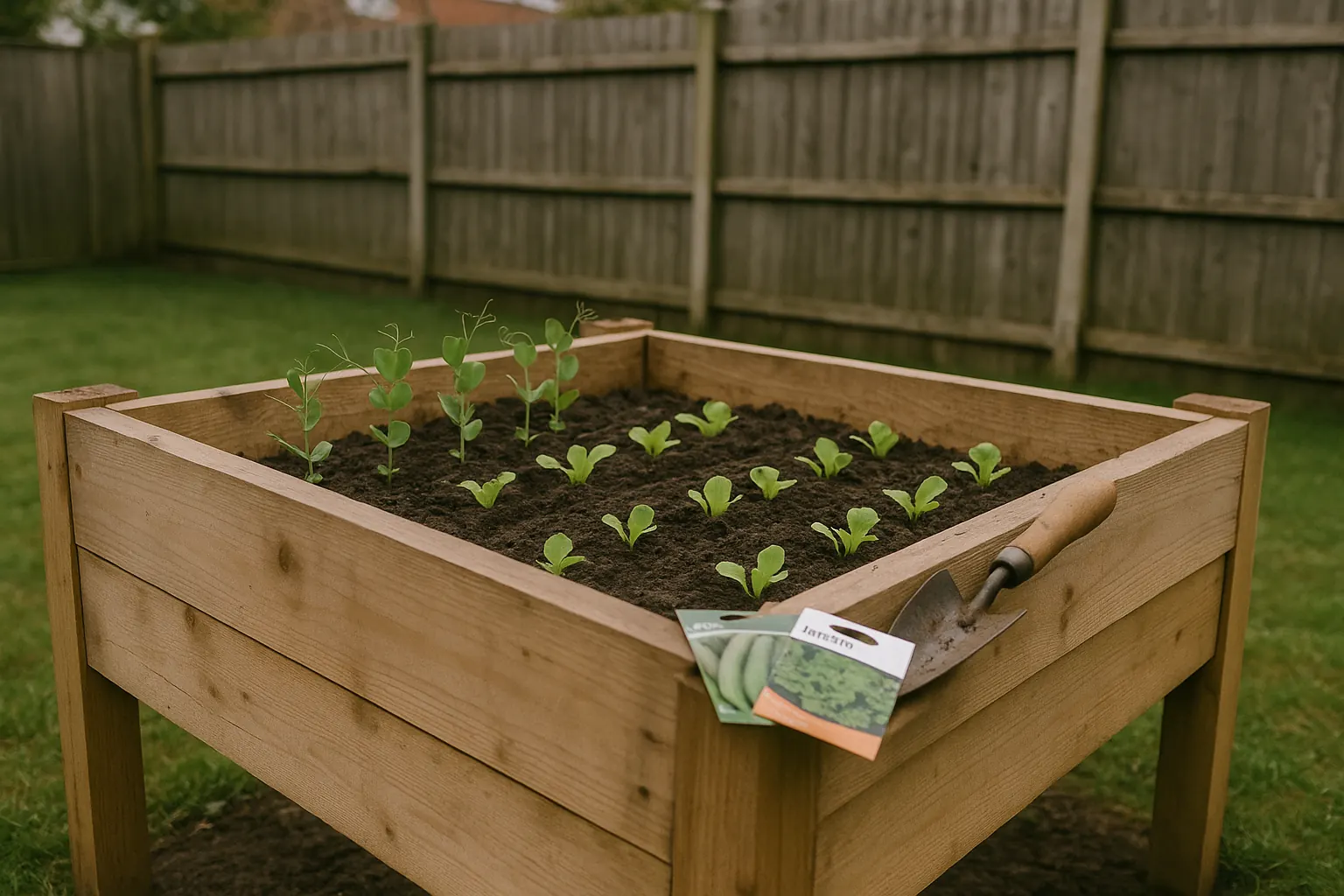
Raised beds are the most popular choice for first-time vegetable growers, and for good reason. You control the soil quality, they drain well, and you don’t need to dig into potentially poor ground underneath.
The RHS recommends a maximum width of 1.2 metres (4 feet) so you can reach the centre from either side without stepping on the soil. A 1.2m × 2.4m bed (4ft × 8ft) gives you plenty of space for a first crop. Height of 15–30cm is enough for most vegetables — go deeper (45cm+) if you want to grow root crops like carrots and parsnips.
Fill raised beds with a mix of topsoil, garden compost, and composted bark. Timber, galvanised steel, or recycled plastic edging all work — timber is cheapest and widely available at B&Q and garden centres.
In-Ground (Cheapest Option)
If you already have reasonable soil, you can dig a veg patch directly into the lawn or a border. Clear the turf, remove weeds, fork the soil over, and add compost. This costs almost nothing but requires decent existing soil.
Containers (No Garden Needed)
Large pots, grow bags, and even old compost bags work for many vegetables. Potatoes, tomatoes, salad leaves, and herbs all thrive in containers. You’ll need to water more frequently — typically daily in summer. See our guide to compost for container gardening for what to fill them with.
Prepare Your Soil
Good soil is the single biggest factor in a successful vegetable garden. Spend an hour preparing it properly and everything else becomes easier.
- Clear weeds thoroughly. Dig out perennial weeds like couch grass, bindweed, and dandelion roots. Leave the soil for two to three weeks, then hoe off any new seedlings that appear.
- Test your pH. Most vegetables prefer neutral soil (pH 6.5–7.0). Simple test kits cost a few pounds at garden centres. If your soil is very acidic, add garden lime; if alkaline, add sulphur chips.
- Add organic matter. Spread a 5–10cm layer of garden compost or well-rotted manure over the surface and fork it in. This improves drainage in clay soil and moisture retention in sandy soil.
- Feed your soil. If you’re working with poor or newly cleared ground, rake in a general-purpose fertiliser such as Growmore (about £4 for 1.5kg at B&Q) before planting. For established beds, a top-dressing of compost each spring is usually enough — the RHS recommends this as the simplest way to maintain fertility year on year.
- Rake level. A smooth, level surface makes sowing seeds in straight rows much easier.
Clay soil tip: Clay is slow to warm in spring. Cover your bed with a cloche or clear polythene for two weeks before sowing to raise the soil temperature — BBC Gardeners’ World recommends this for earlier harvests.
What to Grow — 7 Easy Vegetables for Your First Year
These seven crops are the most reliable choices for UK beginners. Every one has earned the RHS Award of Garden Merit (AGM), meaning it’s been trialled at RHS gardens and proven to perform well in British conditions.
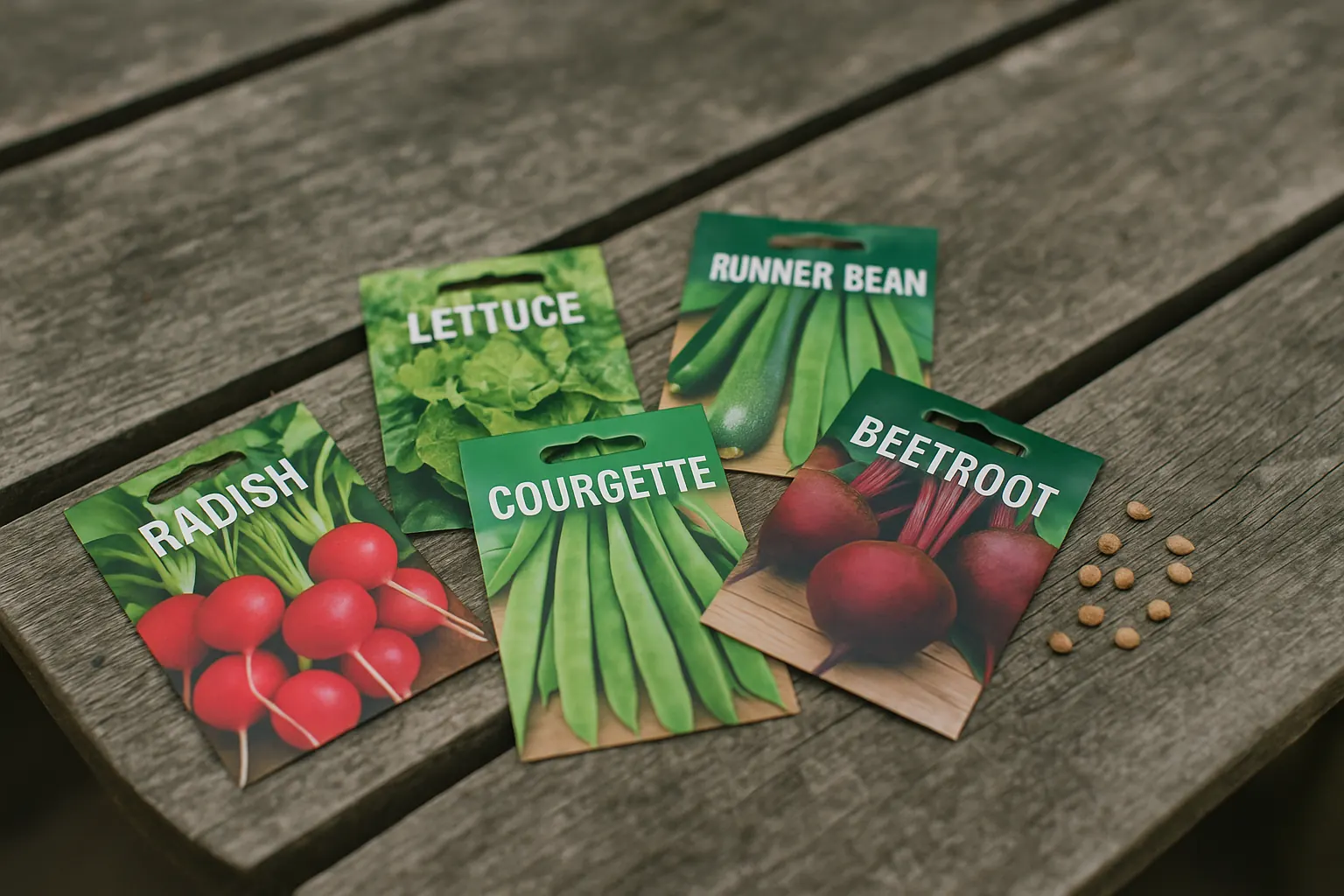
| Vegetable | Recommended Cultivar (AGM) | Sow | Harvest | Notes |
|---|---|---|---|---|
| Radishes | ‘French Breakfast’ | March–September (outdoors) | 3–4 weeks after sowing | Fastest crop. Sow a short row every 2 weeks for continuous harvests. |
| Salad leaves | ‘Little Gem’ (lettuce) | March–September (outdoors) | 6–10 weeks | Cut-and-come-again — harvest outer leaves and the plant keeps growing. |
| Courgettes | ‘Defender’ F1 | April indoors, plant out late May | July–October | Hugely productive. One or two plants is enough for most families. |
| Runner beans | ‘Lady Di’ | May (outdoors, after last frost) | July–October | Grow up a wigwam of canes. Long cropping season, pick regularly. |
| Potatoes | ‘Charlotte’ (second early) | Plant tubers March–April | June–July | Grow in the ground or in bags. Earth up when shoots reach 15cm. |
| Beetroot | ‘Boltardy’ | March–July (outdoors) | 11–12 weeks after sowing | Bolt-resistant, pest-resistant, and tolerates cool weather. |
| Peas | ‘Kelvedon Wonder’ | March–June (outdoors) | 12–14 weeks | Sow direct. Support with sticks, twigs, or pea netting. |
All of these cultivars are widely available from Thompson & Morgan, Wilko, and most UK garden centres. A packet of seeds typically costs £1.50–£3.00.
Already keen on tomatoes? Our detailed guide to growing tomatoes from seed in the UK covers everything from sowing to harvest.
What NOT to Grow (Yet)
Some vegetables look tempting in the seed catalogue but are genuinely difficult for beginners. Save these for your second or third year once you’ve built confidence.
- Brassicas (cabbage, cauliflower, Brussels sprouts) — slow to mature, magnets for caterpillars, pigeons, and clubroot. They need netting and typically occupy the ground for six months or more.
- Sweetcorn — needs block planting (not rows) for pollination, takes up significant space, and cropping is unreliable in cooler UK summers.
- Celery — fussy about consistent moisture, prone to bolting in fluctuating temperatures, and slug-prone.
- Asparagus — you’ll wait two to three years before your first harvest. Rewarding eventually, but not a beginner crop.
- Aubergines — need sustained warmth that’s difficult to provide outdoors in most of the UK.
None of these are impossible, but they’ll frustrate a first-time grower. Stick with the seven reliable crops above for Year 1.
Your First-Year Planting Calendar
This calendar covers what to sow and plant each month in your first year. Dates are based on average conditions in England and Wales — if you’re in Scotland or northern England, shift outdoor sowing by two to three weeks later. For a more detailed month-by-month breakdown, see our what to plant this month guide.
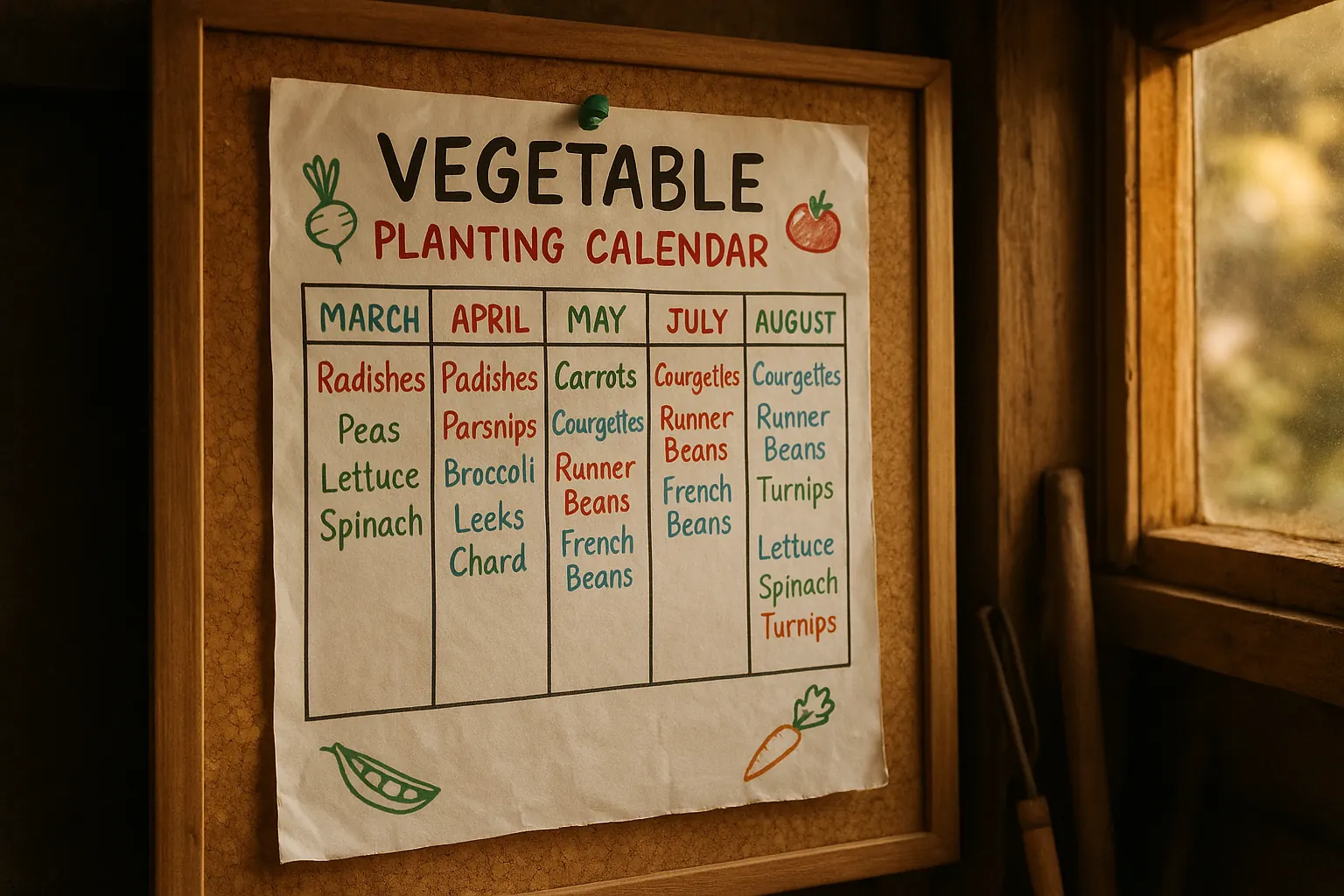
| Month | Sow Indoors | Sow/Plant Outdoors | Other Tasks |
|---|---|---|---|
| March | Courgettes (late March) | Radishes, peas, lettuce, beetroot, broad beans | Prepare beds, add compost, chit seed potatoes |
| April | Courgettes, runner beans (late April) | Radishes, peas, lettuce, beetroot. Plant potatoes. | Harden off indoor-sown seedlings gradually |
| May | — | Runner beans (after last frost, mid-May). Continue radishes, lettuce, beetroot. | Plant out courgettes after last frost. Water regularly. |
| June | — | Radishes, lettuce, beetroot (successional sowing) | Harvest first radishes and lettuce. Earth up potatoes. |
| July | — | Radishes, lettuce (last sowings) | Harvest potatoes, early beetroot, peas. Pick courgettes and beans regularly. |
| August | — | — | Main harvest month. Keep picking beans and courgettes to encourage more. |
| September | — | — | Final harvests. Clear spent crops. Add compost to empty beds for next year. |
Key date: The last frost in most of England and Wales falls in mid-May. Don’t plant tender crops (courgettes, runner beans) outdoors before this date. Check your local last frost date — northern areas and higher ground may need to wait until late May or even early June.
Essential Tools and What They Cost
You don’t need a shed full of equipment. These basics are enough to get started, and you can pick them all up at B&Q, Wilko, or your local garden centre.
| Tool | What It’s For | Approximate Cost |
|---|---|---|
| Digging spade | Turning soil, digging beds | £12–£20 |
| Garden fork | Breaking up compacted soil, mixing in compost | £12–£20 |
| Hand trowel | Planting seedlings, weeding | £3–£8 |
| Watering can (10L) | Watering beds and pots | £5–£8 |
| Seed trays (3-pack) | Starting seeds indoors | £2–£4 |
| Seeds (7 packets) | Your first crops | £10–£20 |
Budget total: £44–£80. The lower end is achievable if you buy B&Q’s own-brand Verve range or Wilko basics. You can cut costs further by borrowing a spade and fork, using yoghurt pots instead of seed trays, and buying seeds from supermarkets (Aldi and Lidl sell packets for as little as 50p in spring).
For more detailed recommendations, see our best gardening tools for beginners guide.
5 Common Beginner Mistakes
- Planting too much at once. Start with three to five crops, not fifteen. You’ll learn more from growing a few things well than failing at many.
- Ignoring the last frost date. Planting tender crops outdoors before mid-May in most of England risks losing everything to a late frost. Check your local date and be patient.
- Watering inconsistently. Vegetables need steady moisture, especially in containers. A deep soak every two to three days is better than a light sprinkle daily. Water at the base of plants, not over the leaves.
- Skipping soil preparation. Twenty minutes of weeding and adding compost before you plant saves hours of problems later. Poor soil produces poor crops — it’s that simple.
- Sowing seeds too deep. Most vegetable seeds need to be sown at twice their own depth — no more. Tiny seeds like lettuce and carrots barely need covering. Check the packet instructions.
Your First Weekend Action Plan
Ready to start? Here’s exactly what to do this weekend.
Saturday morning:
- Choose your sunny spot and measure it.
- Go to B&Q, Wilko, or your local garden centre. Buy: a bag of multi-purpose compost (around £5–£7), seed packets for radishes, lettuce, and one other crop from the table above, and a hand trowel if you don’t own one.
- If using a raised bed, buy or build one. A basic 1.2m × 2.4m timber kit costs £20–£40.
Saturday afternoon:
- Clear the area. Remove weeds, stones, and debris.
- If growing in-ground, fork over the soil and mix in compost. If using a raised bed, fill it with your soil/compost mix.
- Rake the surface level.
Sunday morning:
- Sow your first seeds. Follow the packet spacing. Water gently with a fine rose on your watering can.
- Label your rows — you will forget what you planted where.
- Take a photo. In four weeks, when your first radishes are ready to pull, you’ll want to see how far you’ve come.
Three crops, one weekend, under £50. That’s all it takes to start your first vegetable garden. Pick your spot, get your hands in the soil, and grow something you can eat.
We’d love to hear what you’re growing this year — let us know in the comments below.
What Next?
- What to Plant in April — A month-by-month sowing guide to get your garden started this spring.
- What to Plant This Month — a detailed month-by-month sowing guide updated for the current season
- Best Vegetables to Grow in Containers — perfect if you’re working with a patio, balcony, or small space
- How to Grow Tomatoes from Seed in the UK — once you’re ready to level up to the nation’s favourite crop
For more beginner guides, visit our beginner gardening section.