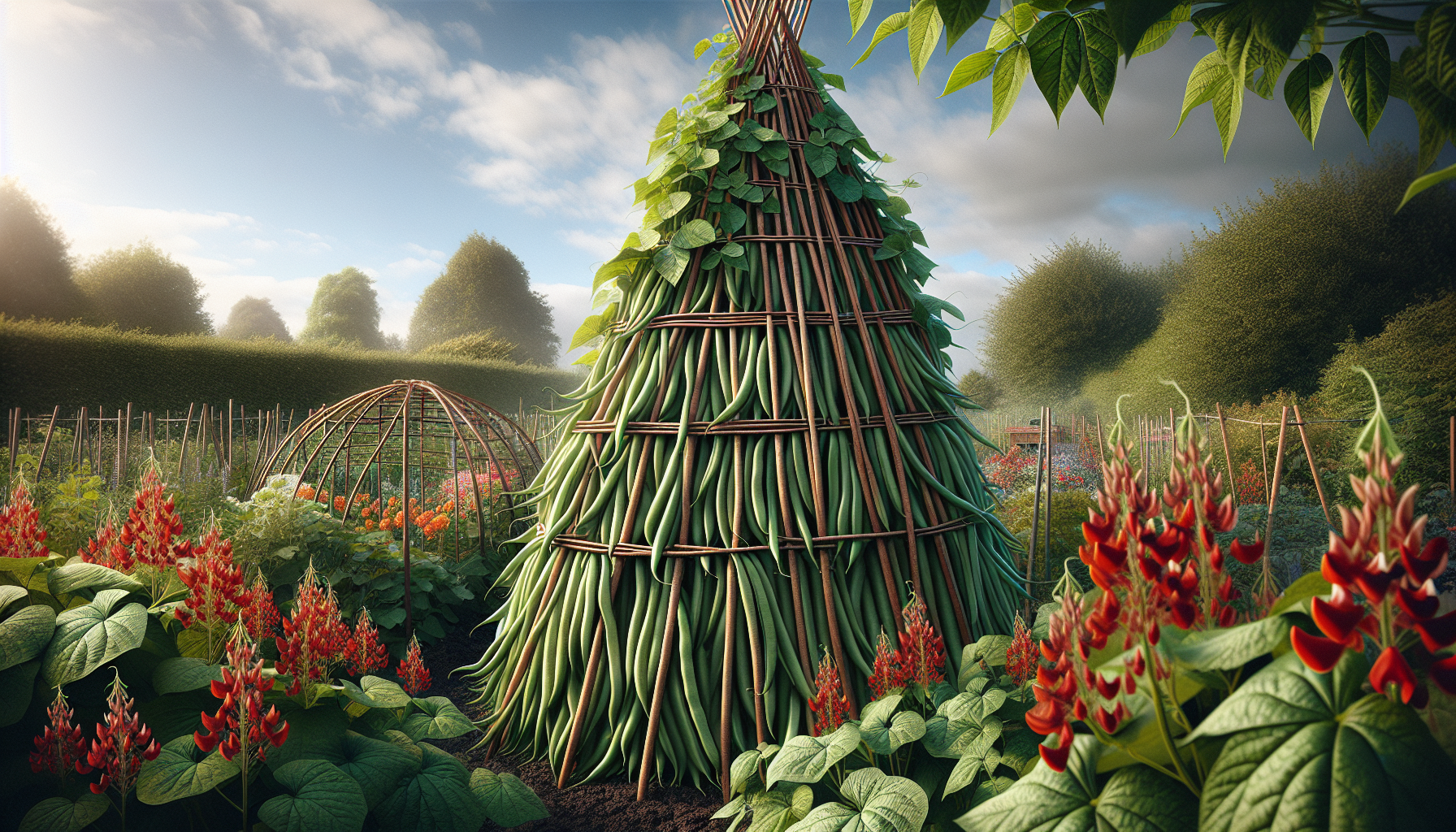
Quick Answer: Growing Runner Beans in the UK
- Best varieties: ‘Enorma’ (Enorma Elite), ‘White Lady’, ‘Achievement’, ‘Firestorm’, ‘Moonlight’, ‘Liberty’ — all RHS AGM holders
- Sow indoors: Late April to May
- Sow outdoors: Late May to early June (after last frost)
- Spacing: 15 cm apart, rows 60 cm apart
- Support height: 2.4 m (8 ft) minimum
- Harvest period: July to October
- Expected yield: Up to 2 kg per plant in a good season
Runner beans (Phaseolus coccineus) are one of the most productive and rewarding crops you can grow in a UK garden. A single row of plants will produce kilograms of tender pods from midsummer well into autumn, the scarlet or white flowers attract pollinators, and the climbing habit means you get a huge harvest from a small footprint. Here is everything you need to know to grow them successfully, from seed selection through to storing your surplus.
Why Grow Runner Beans
Runner beans deliver one of the highest yields per square metre of any UK vegetable. A well-tended row of ten plants can produce 15–20 kg of pods across the season. Beyond sheer productivity, there are several compelling reasons to give them space:
- Beginner-friendly. Large seeds are easy to handle and germinate reliably in warm soil. There is very little that can go wrong at the sowing stage.
- Decorative value. The vivid scarlet, white, or bicolour flowers make runner beans attractive enough for a front garden or mixed border. They were originally introduced to Britain as ornamental plants in the 17th century.
- Soil improver. Like all legumes, runner beans fix atmospheric nitrogen through root nodules. After harvest, cut the stems at ground level and leave the roots in place to release nitrogen for the following crop.
- Long harvest window. Regular picking keeps plants productive from July right through to the first frosts in October, giving you fresh beans for three months or more.
- Cost saving. A £2 packet of seed replaces dozens of supermarket packs across the season.
Best Varieties for UK Gardens
Choose an RHS Award of Garden Merit (AGM) variety for tested reliability in UK growing conditions. The following six varieties all hold current AGM status:
‘Enorma’ AGM (sold as Enorma Elite)
The classic heavy cropper. ‘Enorma’ produces long, straight, smooth pods up to 35 cm and sets reliably even in cooler summers. It is the go-to choice for allotment growers who want maximum yield from every plant. Scarlet flowers.
‘White Lady’ AGM
A stringless variety with white flowers that set more readily in hot weather than red-flowered types. The pods stay tender even when slightly larger, making ‘White Lady’ forgiving if you miss a picking session. An excellent choice for beginners.
‘Achievement’ AGM
The exhibition grower’s favourite. ‘Achievement’ produces exceptionally long, straight pods with a fine flavour. If you want to enter produce at your local show, this is the variety to grow. Scarlet flowers.
‘Firestorm’ AGM
Bred specifically for reliable pod set, even during heatwaves. ‘Firestorm’ performs consistently across variable British summers. Red flowers. A strong choice if you have a south-facing, sun-baked plot.
‘Moonlight’ AGM
Another white-flowered variety with superb pod set in warm conditions. ‘Moonlight’ produces tender, well-flavoured beans on vigorous plants. Its white flowers make it a good partner for cottage-garden planting schemes.
‘Liberty’ AGM
A dependable all-rounder that crops heavily over a long season. ‘Liberty’ is well suited to the typical UK garden and performs consistently across different regions.
Tip: White-flowered varieties (‘White Lady’, ‘Moonlight’) tend to set pods more reliably during hot, dry spells because their flowers are more attractive to pollinators in high temperatures.
When to Sow Runner Beans
Sow indoors from late April, or direct into the ground from late May once the risk of frost has passed. Runner beans are frost-tender and will not survive temperatures below 0°C.
Indoor Sowing (Late April – May)
Starting seeds indoors gives you a head start of two to three weeks. Sow one seed per 9 cm pot, 5 cm deep, in multipurpose compost. Place on a warm windowsill or in an unheated greenhouse at 12–18°C. Seeds germinate in 7–14 days. Harden off plants for a week before planting out after the last expected frost.
Outdoor Direct Sowing (Late May – Early June)
Direct sowing is simpler and avoids transplant shock. Wait until soil temperature is consistently above 12°C. In most of England and Wales, this means late May; in Scotland and northern England, early June is safer.
Regional Timing
| Region | Sow Indoors | Plant Out / Direct Sow |
|---|---|---|
| South-east England | Mid–late April | Mid May onwards |
| Midlands & South-west | Late April | Late May |
| Northern England & Wales | Early May | Late May – early June |
| Scotland | Mid May | Early–mid June |
How to Build a Bean Support
Runner beans climb to 2.4–3 m, so sturdy support is essential. Build your structure before sowing or planting so the supports are ready when the plants need them.
Wigwam (Tepee) Method
Push 6–8 bamboo canes (2.4 m / 8 ft length) into the ground in a circle roughly 60 cm across. Angle each cane inward and tie them together at the top with strong garden twine. Sow or plant one bean at the base of each cane. Wigwams fit neatly into borders and make an attractive garden feature.
A-Frame (Row) Method
For maximum yield, set up a double row. Push pairs of 2.4 m canes into the ground 30 cm apart, angling each pair toward each other and crossing them about 15 cm from the top. Lay a horizontal cane along the V-shaped junction and lash everything together with twine. Space each pair of canes 30 cm apart along the row. Sow one bean at the base of each cane.
Materials
- Bamboo canes: 2.4 m (8 ft) is the standard length. Thicker canes (16–18 mm diameter) are more stable in wind.
- Garden twine: Natural jute or synthetic — either works. Tie firmly at the top and add horizontal strings at 30 cm intervals to help young plants find the canes.
- Alternatives: Hazel poles, bean netting on a frame, or a permanent metal obelisk all work well.
Sowing and Planting
Sow seeds 5 cm deep and 15 cm apart, with rows spaced 60 cm apart. These spacings apply whether you are sowing directly or planting out indoor-raised seedlings.
Direct Sowing Steps
- Prepare the ground by digging in well-rotted manure or garden compost to a spade’s depth. Runner beans are hungry plants and perform best in rich, moisture-retentive soil.
- Sow two seeds at the base of each cane, 5 cm deep. Once seedlings emerge, thin to one per station by removing the weaker plant.
- Water the drill well before sowing if the soil is dry.
- Cover with cloches or fleece if a late cold snap is forecast.
Planting Out Indoor-Raised Seedlings
- Begin hardening off when seedlings have two true leaves, approximately two weeks before the planned planting date.
- Place pots outside during the day, bringing them in at night, for 7–10 days.
- Plant out at the same depth as the pot. Firm the soil gently around each stem and water well.
- Loosely tie the stem to the cane with soft twine. The plants will begin to climb within a few days.
Growing Care
Consistent watering once flowering begins is the single most important factor in getting a good crop. Beyond that, runner beans need little intervention.
Watering
Water deeply and regularly once flowers appear. A thorough soak every two to three days is better than a light sprinkle every evening. Dry conditions at flowering cause the most common problem growers face: flower drop without pod set. Aim for at least 10 litres per metre of row at each watering. Mulching around the base retains soil moisture and reduces watering frequency.
Feeding
Apply a high-potash liquid feed (tomato feed is ideal) once a fortnight from the start of flowering. The potassium encourages flower and pod development. There is no need to add nitrogen feed — the plants fix their own through root nodules.
Pinching Out
When plants reach the top of their support, pinch out the growing tips. This redirects energy into pod production rather than upward growth and prevents the top of the wigwam or row becoming a tangled mass.
Mulching
Apply a 5–8 cm layer of garden compost, well-rotted manure, or straw around the base of the plants once they are established. This conserves moisture, suppresses weeds, and feeds the soil as it decomposes.
Common Problems and Solutions
Flower Drop (No Pods Forming)
The most frequent complaint. Runner bean flowers drop without setting pods when the plants are too dry or temperatures are too high. Water consistently and heavily during flowering. White-flowered varieties (‘White Lady’, ‘Moonlight’) are less affected by heat-related flower drop. Misting the flowers with water on hot afternoons can also help.
Black Bean Aphid
Dense colonies of black aphids cluster on shoot tips and the undersides of young leaves, stunting growth and distorting pods. Pinch out heavily infested shoot tips and dispose of them. Encourage natural predators — ladybirds, hoverfly larvae, and lacewings. For severe infestations, spray with a soap-based insecticide approved for edible crops.
Slugs and Snails
Young plants are most vulnerable. Protect seedlings with copper tape around pots, organic slug pellets (ferric phosphate), or beer traps. Transplanting sturdy, well-hardened plants rather than relying on direct sowing reduces slug damage significantly.
Halo Blight
A bacterial disease causing water-soaked spots on leaves surrounded by a yellow halo. Infected pods develop greasy-looking patches. There is no chemical treatment. Remove and destroy affected plants promptly. Avoid overhead watering, rotate bean crops on a three- to four-year cycle, and buy certified disease-free seed.
Harvesting Runner Beans
Pick pods when they are 15–20 cm long, before the seeds inside become visible as bumps along the pod. At this stage, the beans are tender, stringless, and at their best for eating.
- Frequency: Harvest every two to three days during peak production. Leaving mature pods on the plant signals it to stop producing new flowers.
- Technique: Hold the stem with one hand and pull the pod downward with the other to avoid snapping the brittle stems.
- Extending the harvest: Regular picking is the single best way to prolong cropping. A well-picked row will produce from July through to the first autumn frosts in October.
- Overgrown pods: If any pods grow past 25 cm and become stringy, remove them. Shell out the beans inside for drying, or add them to stews — but remove these pods promptly so the plant keeps cropping.
Container Growing
Runner beans grow well in large containers provided you give them adequate root volume, water, and support.
- Container size: Use a pot or trough with a minimum capacity of 40 litres. Larger is better — a half-barrel or 60-litre planter gives the roots more space and dries out less quickly.
- Compost: Fill with a good-quality multipurpose or peat-free compost mixed with 20% perlite for drainage.
- Support: Insert a wigwam of three to four canes directly into the container, or position the container against a wall-mounted trellis or obelisk.
- Dwarf varieties: If space is tight, look for dwarf runner beans such as ‘Hestia’ (a compact bicolour-flowered variety reaching around 45 cm). Dwarf types do not need canes but produce smaller yields.
- Watering: Containers dry out rapidly in summer. Water daily — sometimes twice daily in hot weather. A saucer beneath the pot helps retain moisture.
- Feeding: Start liquid feeding with tomato feed from flowering, every 7–10 days.
Storing and Preserving
Freezing
Freezing is the best way to preserve a glut of runner beans. Prepare them as you would for cooking: top and tail, remove any strings, and slice into 2–3 cm pieces. Blanch in boiling water for two minutes, plunge into ice water for two minutes, drain thoroughly, then spread on a tray and freeze. Once frozen solid, transfer to labelled freezer bags. Properly blanched and frozen beans keep for up to 12 months.
Saving Seed for Next Year
At the end of the season, leave a few pods on the plant until they turn brown and papery. Shell out the dried beans and store in a paper envelope in a cool, dry place over winter. These seeds are viable for two to three years. Seed saving works reliably with open-pollinated varieties but not with F1 hybrids.
Month-by-Month Calendar
| Month | Tasks |
|---|---|
| April | Sow seeds indoors in 9 cm pots. Prepare the growing site by digging in compost or well-rotted manure. Build supports. |
| May | Continue indoor sowing early in the month. Harden off earlier-sown plants. Direct sow outdoors from late May (southern England). Plant out indoor-raised seedlings after the last frost. |
| June | Direct sow outdoors in northern regions. Tie in young plants to supports. Mulch around the base. Water if dry. |
| July | First flowers appear. Begin regular deep watering. Start fortnightly liquid feeding with tomato feed. Watch for black bean aphid on shoot tips. First pods ready to harvest by late July. |
| August | Peak harvest. Pick every 2–3 days. Continue watering and feeding. Pinch out growing tips that have reached the top of supports. Freeze any surplus. |
| September | Harvest continues. Reduce feeding to once a fortnight. Leave a few pods to mature for seed saving if desired. |
| October | Final harvest before the first frosts. Collect dried seed pods. Cut plants at ground level, leaving roots in the soil to release nitrogen. Compost the top growth. Remove and store canes for next year. |
Frequently Asked Questions
Do runner beans need full sun?
Runner beans crop best in a sheltered spot that receives at least six hours of direct sunlight daily. They tolerate light partial shade but yield and pod quality will be reduced. Avoid exposed, windy sites — the tall plants act as a sail and the brittle stems snap easily.
Can I grow runner beans without supports?
Standard climbing varieties need 2.4 m supports. However, dwarf varieties such as ‘Hestia’ grow as compact bushes to around 45 cm and need no support. Yields are smaller than climbing types, but they are convenient for containers, raised beds, and small gardens.
Why are my runner beans stringy?
Pods become stringy when left on the plant too long. Harvest when pods are 15–20 cm long, before the seeds inside start to swell. If your pods are consistently stringy at a small size, the weather may be too hot or the plants too dry. Try ‘White Lady’, which is naturally stringless.
How many runner bean plants do I need?
For a family of four, 12–20 plants provide a steady supply through summer with enough surplus for freezing. A single wigwam of 8 plants makes a good starting point for a first attempt.
Can I sow runner beans in September for an autumn crop?
No. Runner beans need approximately 12 weeks of warm growing conditions from sowing to harvest. September sowings in the UK will not have enough warmth or daylight to produce a crop before winter. The latest viable sowing date is mid-June in southern England.
Are runner bean flowers edible?
Yes. The scarlet and white flowers are edible and make an attractive garnish for salads. Picking flowers does reduce pod production, so only harvest a few at a time.
What Next?
Ready to expand your vegetable patch? These guides will help:
- Starting a Vegetable Garden: Complete UK Beginner’s Guide
- Best Compost for Container Gardening
- Best Grow Bags for Vegetables
- What to Plant in May (UK Monthly Guide)
Growing runner beans for the first time? Drop a comment below and let us know how you get on — we love seeing your harvests.
Sources: RHS — Grow runner beans; RHS AGM plant listings.