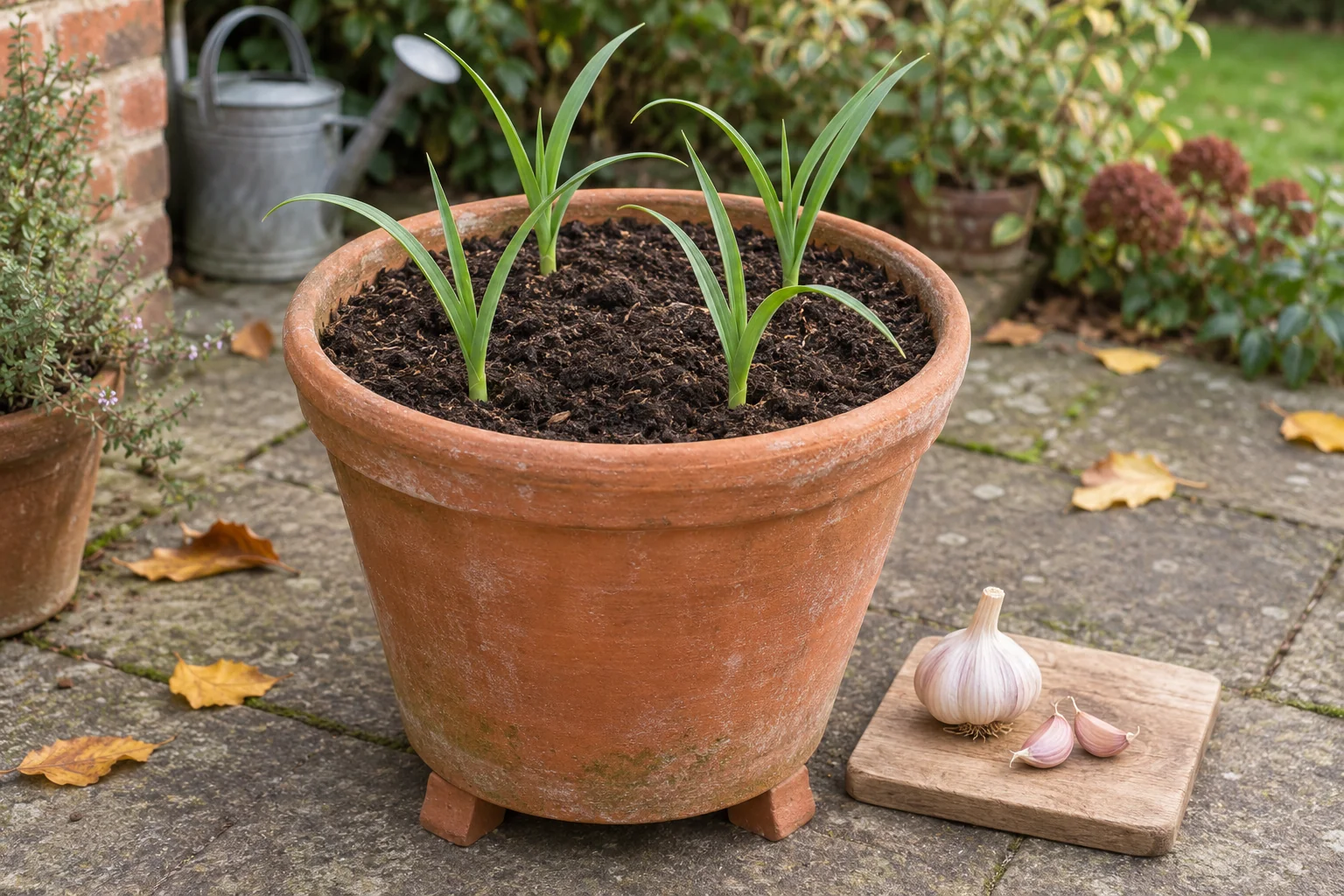
Garlic can grow in a sunny patio pot, even without a vegetable bed. Allow the container to remain occupied until harvest, which may be in late spring or summer for an autumn planting.
Featured image: AI-generated illustration of young garlic growing in a container.
When to plant garlic in pots
Most varieties need a cold period to form divided bulbs, so plant named autumn garlic from mid-autumn to early winter. Spring planting is possible with suitable varieties; follow the supplier’s planting instructions.
Supermarket bulbs may be unsuitable for British conditions and can introduce disease. Softneck garlic generally stores longer, while hardneck types produce a flower stem called a scape.
Choose the pot and mark the spacing
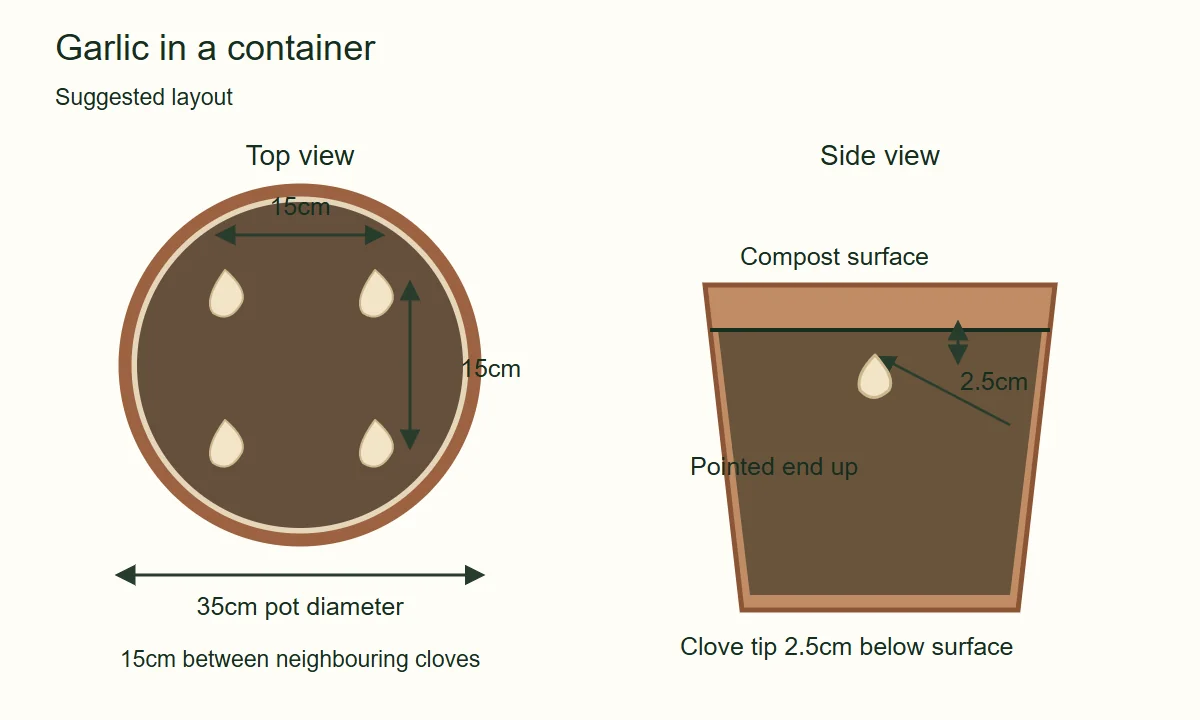
The RHS garlic guide recommends a pot at least 25cm deep, cloves 15cm apart and their tips 2.5cm below the compost surface.
Our starter example uses four cloves in a container roughly 35cm across at compost level and 30cm deep, with drainage holes. Measure the usable inside width rather than the advertised rim, reusing a suitable pot if you already have one.
Four positions in a square give 15cm between neighbouring cloves; choose fewer cloves or a wider container if the arrangement feels cramped.
Plant the cloves
- Fill the pot with fresh peat-free multipurpose compost, leaving a small watering gap below the rim.
- Separate a healthy planting bulb into firm cloves, rejecting soft or damaged ones and keeping the papery coverings.
- Place each clove flat end down and pointed end up, covering its tip by 2.5cm and gently firming the compost.
- Label the variety and date, then put the container in a sunny outdoor position.
If the compost is dry after planting, water it and let the excess drain.
Winter watering and shelter
Raise the pot on a stable support where needed to keep its drainage holes clear, and remove any saucer that collects rainwater. Feel the compost before watering: a sheltered pot may dry out while an exposed one receives ample rain.
During severe cold, move a vulnerable container to a more sheltered outdoor spot to reduce exposure. Routine winter feeding is unnecessary, as explained in the RHS advice on container maintenance.
Spring growth and feeding
As growth picks up, water when the compost is drying and remove weeds by hand to avoid damaging developing bulbs. Check how long the compost’s added feed lasts, then follow the label of a suitable vegetable fertiliser during active growth.
Hardneck scapes can be cut off while young and used in cooking. Once bulbs are large and well formed, stop watering as harvest approaches to reduce the risk of rotting.
Lift, cure and store the harvest
Harvest timing varies with the variety and planting date, so watch for lower leaves browning while some upper leaves remain green, then uncover a sample bulb. Loosen the compost and lift well-developed bulbs gently; waiting until every leaf has died can leave them splitting apart.
Dry the crop with its foliage attached in a dry, airy shed, allowing several weeks for curing. Sound bulbs with dry skins and necks can then be stored somewhere cool, dry and ventilated; keep damaged bulbs out of the storage batch.
These harvest checks follow the University of Minnesota Extension garlic guide; its regional planting dates are not used for this UK method.
When growth does not look right
Delayed shoots call for a check of the planting date, variety and moisture before disturbing cloves simply for inspection. Yellowing leaves need their season and growing conditions assessed, rather than an automatic dose of feed.
Saturated compost needs better drainage, while orange leaf spots, damaged stems or decaying bulbs need closer identification through the RHS garlic problem guide. Avoid spreading suspect compost if roots or bulb bases are rotting, and seek specific advice before planting another allium crop.
Record the usable harvest and any watering difficulties before planning next year’s crop, with our container vegetable guide for other ways to use the space.
Leave a Reply