Quick Answer
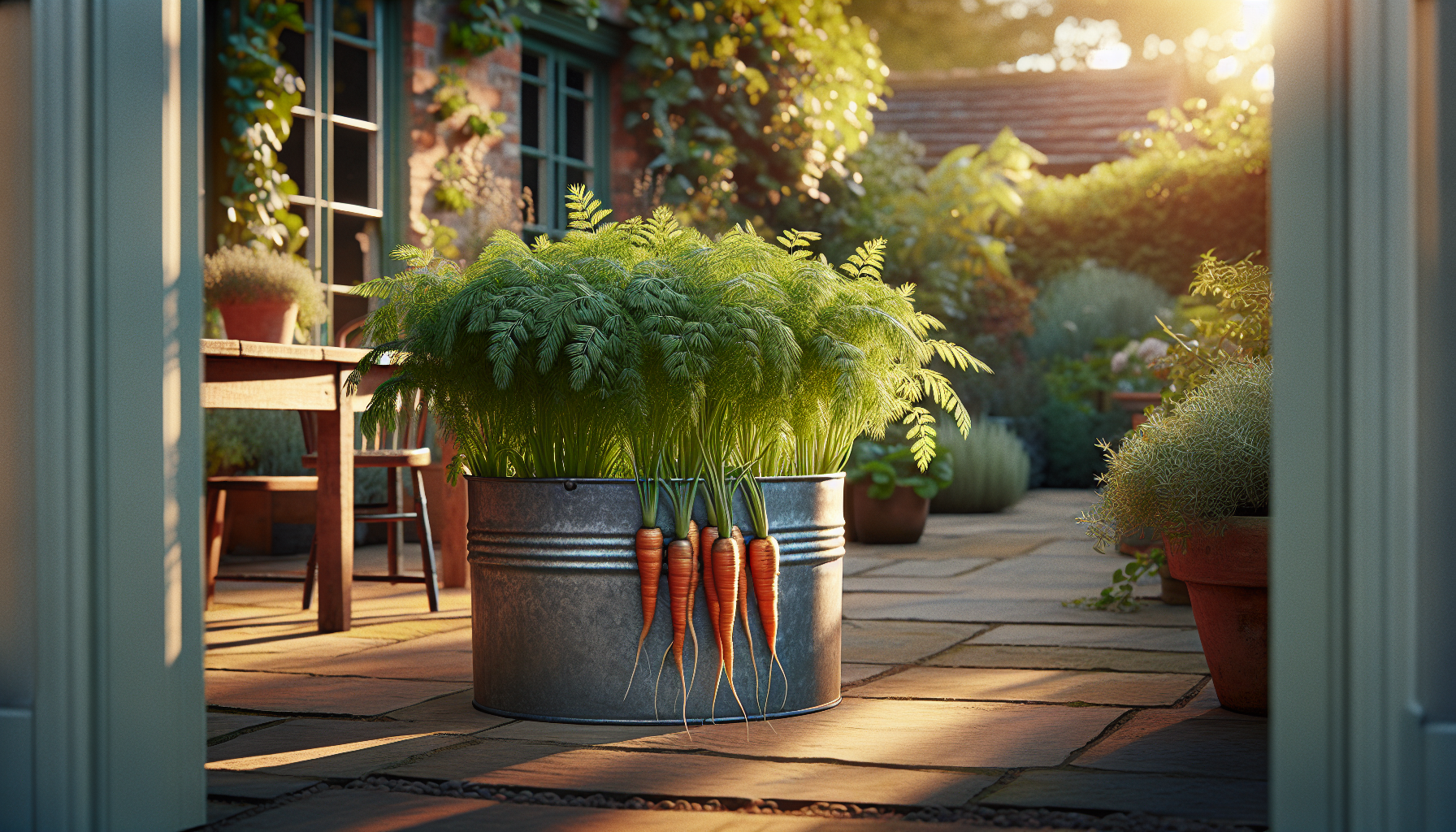
You can absolutely grow carrots in pots in the UK. Use a container at least 30 cm deep (45 cm for maincrop varieties), fill with sieved multipurpose compost mixed with perlite, and sow seed directly from March to July. Short-rooted cultivars such as ‘Amsterdam Forcing 3’ (AGM) and ‘Adelaide’ (AGM) are ideal for containers and ready to harvest in as little as 10–12 weeks.
Why Grow Carrots in Containers
Growing carrots in pots is one of the smartest moves a UK gardener can make, especially if your garden soil is heavy clay or riddled with stones. Here’s why containers work so well:
- Carrot fly defence built in. Carrot fly (Psila rosae) is the number-one pest for UK carrot growers. These low-flying insects rarely rise above 60 cm, so a pot on a table or raised surface puts your crop out of reach without any netting at all.
- No need for stone-free soil. Stones, compacted clay and fresh manure all cause forked, stunted roots. A container filled with sieved compost gives carrots the loose, fine-textured growing medium they need.
- Perfect for small spaces. A single 40 cm pot on a balcony or patio can produce 20–30 carrots per sowing. If you’re starting a vegetable garden as a beginner, carrots in containers are a brilliant first crop.
- Easier succession sowing. With multiple pots, you can sow a fresh batch every three to four weeks from March through July, giving you carrots from June right through to November. For the rest of the month’s sowings, see our July planting guide.
- Move them to follow the sun. Containers can be repositioned throughout the season. Start them in the sunniest spot in spring, then shift to partial shade during a scorching July to prevent the compost drying out too quickly.
- Less weeding. Container compost is largely weed-free compared to open ground, so you spend less time on maintenance and more time watching your carrots grow.
Best Carrot Varieties for Containers UK
Short-rooted and round cultivars are the natural choice for pots because they don’t need deep compost to develop properly. The RHS Award of Garden Merit (AGM) is a reliable indicator of proven performance in UK conditions.
Short-Rooted Varieties (30 cm containers)
- ‘Amsterdam Forcing 3’ (AGM) — A classic early variety, 10–15 cm roots, sweet flavour. Ideal for the earliest sowings under cloches from late February.
- ‘Adelaide’ (AGM) — Quick to mature, smooth cylindrical roots. Excellent for succession sowing in pots.
- ‘Nairobi’ (AGM) — A reliable Nantes-type with good disease resistance and uniform roots around 15 cm long.
- ‘Artemis’ (AGM) — Smooth skin, strong tops for easy pulling, and consistent performance in containers.
Round Varieties (even shallower containers work)
- ‘Romance’ (AGM) — A Paris Market type producing small, round roots perfect for windowsill containers and growing with children.
Maincrop Varieties (45 cm+ containers)
- ‘Bangor’ (AGM) — A long Berlicum type that stores exceptionally well. Needs a deeper container but rewards patience with large, smooth roots.
- ‘Maestro’ (AGM) — Good carrot fly tolerance and vigorous growth. Sow from April for autumn harvest.
- ‘Flyaway’ (AGM) — Bred specifically for carrot fly resistance. A Nantes-type maincrop that performs well in larger pots.
Popular varieties such as ‘Chantenay Red Cored’ and ‘Autumn King’ are perfectly good choices too — they simply haven’t received the AGM designation.
Month-by-Month UK Growing Calendar
Timings below are for most of England and Wales. In Scotland and northern England, shift sowing dates forward by two to three weeks. In mild south-west areas, you may start a fortnight earlier.
| Month | Activity | Notes |
|---|---|---|
| February | Early sowing under cover | Only ‘Amsterdam Forcing 3’ or similar early cultivars, with cloche or fleece protection |
| March–April | Main sowing begins | Sow outdoors once soil temp reaches 7°C. Short-rooted varieties first |
| May–June | Succession sowing + thin earlier sowings | Sow maincrop varieties (‘Bangor’, ‘Maestro’) for autumn harvest |
| July | Final sowing | Quick-maturing varieties only (‘Adelaide’, ‘Amsterdam Forcing 3’) |
| June–August | Harvest early varieties | Pull when roots are finger-thick; baby carrots are sweeter |
| September–November | Harvest maincrop varieties | Lift before hard frosts or protect containers with fleece |
Choosing Containers and Compost
Container Size
Depth matters more than width for carrots. As an absolute minimum:
- Short-rooted varieties: 30 cm deep
- Maincrop varieties: 45 cm deep
- Width: At least 30 cm diameter — wider is better for yield
Traditional terracotta pots, plastic planters, grow bags, and even old buckets with drainage holes drilled in the base all work well. Browse our guide to the best containers and pots for beginners for more options.
Drainage
Carrots sitting in waterlogged compost will rot. Every container must have drainage holes in the base. Add a 2–3 cm layer of crocks, gravel, or broken polystyrene at the bottom to keep holes clear.
Compost Mix
Use sieved multipurpose compost — remove any lumps, twigs or bark pieces that would deflect growing roots and cause forking. Mix in roughly 20% perlite or vermiculite by volume to improve drainage and keep the compost open and airy. Avoid garden soil (too heavy and may harbour pests) and steer clear of fresh manure or high-nitrogen composts, which cause hairy, forked roots. See our guide to the best compost for container gardening for recommended products.
How to Sow Carrot Seeds
Always direct sow. Carrots develop a single taproot and don’t transplant well — disturbing the root causes forking or stunted growth. Sow where they’ll grow.
- Fill your container to within 2 cm of the rim with your prepared compost mix. Firm gently — don’t compact it.
- Water the compost thoroughly before sowing. This settles the surface and means you won’t wash seeds around afterwards.
- Make shallow drills about 1 cm deep. In a round pot, draw drills across the surface spaced 10–15 cm apart. In a rectangular trough, run drills lengthways.
- Sow thinly. Carrot seed is tiny, so tip a small amount into your palm and pinch individual seeds along the drill roughly 1–2 cm apart. Seed tapes are a useful alternative if you find this fiddly.
- Cover with sieved compost or vermiculite to exactly 1 cm depth. Pat down lightly.
- Water gently with a fine rose to avoid disturbing seeds. Keep the compost consistently moist until germination, which typically takes 14–21 days.
Tip: Carrot seed germinates slowly. Sow a few radish seeds alongside as row markers — they’ll emerge in days and show you where your carrot rows are. The radishes will be harvested long before the carrots need the space.
Dealing with slow germination: In cool spring weather, cover the pot with a sheet of glass, clear plastic, or cling film to raise the compost temperature and retain moisture. Remove the cover as soon as the first seedlings appear to prevent them from becoming leggy.
Ongoing Care — Watering, Thinning and Feeding
Watering
Consistent moisture is the single most important factor for smooth, well-shaped carrots. Allow the compost to dry out and the roots crack; overwater and they rot. Aim to keep the compost evenly moist — not sodden. In summer, containers may need watering daily, especially terracotta pots which dry out faster than plastic.
Thinning
Once seedlings reach about 5 cm tall, thin them to 3–5 cm apart. This is essential — overcrowded carrots produce tiny, misshapen roots. Two important tips:
- Thin in the evening when carrot fly is less active. The bruised foliage releases scent that attracts the pest.
- Pinch seedlings off at soil level rather than pulling them out, to minimise root disturbance and scent release.
- Water immediately after thinning to settle the compost around remaining roots.
Feeding
Less is more. Carrots need very little additional feeding — the nutrients in fresh multipurpose compost are sufficient for the entire growing season. If your compost is old or spent, a single application of a balanced liquid feed (such as Maxicrop seaweed extract) at half strength around 6 weeks after sowing is plenty. Avoid high-nitrogen feeds — excess nitrogen produces lush green tops and forked, hairy roots with poor flavour.
Dealing with Carrot Fly
Carrot fly is the most damaging pest for UK carrot growers. The adult flies lay eggs at the base of carrot plants, and the resulting larvae tunnel into roots, leaving brown-black tracks and ruining the crop. There are two main generations per year: May–June and August–September.
Physical Barriers
The RHS recommends covering crops with fine-mesh insect netting (such as Enviromesh) from sowing through to harvest. Carrot fly is a weak, low flier — a vertical barrier of fine fleece or mesh at least 60 cm high around your container is effective. Alternatively, drape netting directly over the pot, secured at the edges.
The Container Advantage
Growing in containers gives you a head start. Place pots on a table, bench, or wall at waist height and the flies simply can’t reach them. This is the single easiest way to grow carrot-fly-free carrots without any barriers at all.
Resistant Varieties
‘Flyaway’ (AGM) and ‘Resistafly’ have been bred with reduced susceptibility to carrot fly. They’re not immune, but combined with container growing and elevation, they give you excellent protection.
Companion Planting
Interplanting with strong-scented alliums (spring onions, chives) can help mask the carrot scent that attracts the fly. More on this below.
Harvesting and Storing Carrots
When to Harvest
Carrots are ready when the top of the root (the “shoulder”) is visible at the compost surface and measures roughly 1.5–2 cm across for short varieties. Early types sown in March can be pulled from June. You can harvest at any size — baby carrots pulled young are tender and sweet.
How to Harvest
Water the container an hour before pulling to soften the compost. Grip the foliage at the crown and pull straight up with a gentle twist. In containers, carrots come out far more easily than from open ground. If you’re growing in a deep pot and the roots resist, tip the whole container on its side and slide the root ball out — then pick out individual carrots by hand.
Don’t worry about harvesting the entire pot at once. Pull the largest roots first and leave smaller ones to continue growing for another week or two. This staggered approach gives you fresh carrots over a longer period rather than a single glut.
Storing
- Short term (2–3 weeks): Remove the green tops (they draw moisture from the root), brush off loose compost, and store unwashed in the fridge in a paper bag.
- Long term (3–4 months): Layer carrots in a box of damp sand in a cool, frost-free shed or garage. Don’t let roots touch each other.
- Freezing: Peel, dice or slice, blanch in boiling water for 3 minutes, plunge into iced water, drain, then freeze in bags. Frozen carrots keep for up to 12 months.
Companion Planting
Choosing the right neighbours for your container carrots can deter pests and make the most of limited space.
Good Companions
- Spring onions — Their scent masks the carrot smell from carrot fly. Sow a ring around the edge of the pot.
- Chives — Same allium-family benefit, plus you get a perennial herb that comes back each year.
- Leeks — Another allium; effective at confusing carrot fly when interplanted closely.
- Mint — Strong scent deters multiple pests. Grow mint in its own pot alongside (see our guide to growing mint in pots) — it’s too vigorous to share a container.
Avoid in the Same Container
- Dill — Can cross-pollinate with carrots (both are umbellifers) and may attract the same pests.
- Parsnips — Also susceptible to carrot fly, so combining them doubles the attraction signal.
- Celeriac and celery — Fellow umbellifers that can share diseases.
Frequently Asked Questions
- How deep should a container be for carrots?
- At least 30 cm for short-rooted varieties like ‘Amsterdam Forcing 3’ and ‘Adelaide’. For maincrop types such as ‘Bangor’, use a container at least 45 cm deep to give the taproot room to develop without hitting the bottom.
- Can I grow carrots in grow bags?
- Yes — standard grow bags work for short-rooted varieties, though most are only 20–25 cm deep. Stand the bag upright and cut the top open for more depth, or choose a deeper fabric pot instead.
- Why are my carrots forked?
- The most common causes are stones or lumps in the compost, fresh manure, too much nitrogen, or root disturbance during transplanting or rough thinning. Use sieved, lump-free compost and always direct sow.
- Do I need to feed carrots in pots?
- Rarely. Fresh multipurpose compost provides enough nutrients for the full growing season. A single half-strength liquid seaweed feed at six weeks is the most you should apply. Excess nitrogen causes lush tops and poor roots.
- Can I sow carrots in autumn for a winter harvest?
- A late July sowing of a quick-maturing variety such as ‘Adelaide’ (AGM) can produce a small harvest in October–November. True autumn sowing (September onwards) rarely works outdoors in the UK — temperatures are too low for reliable germination. A cold frame or unheated greenhouse extends the season somewhat.
What Next
Now that you know how to grow carrots in pots, here are some logical next steps:
- Expand your container veg garden: See our full list of the best vegetables to grow in containers.
- Get your compost right: Our guide to compost for containers covers peat-free options, mixing ratios, and what to avoid.
- Learn general plant care: Visit our plant care hub for watering schedules, feeding guides, and pest identification.
- Start from the beginning: If you’re brand new to growing food, our complete beginner’s guide to starting a vegetable garden in the UK walks you through everything step by step.
Affiliate disclosure: Some links in this article are affiliate links. If you buy through them, we may earn a small commission at no extra cost to you. This helps us keep plantsandgardening.com running. We only recommend products we genuinely believe are useful for UK gardeners. See our full disclosure policy for details.