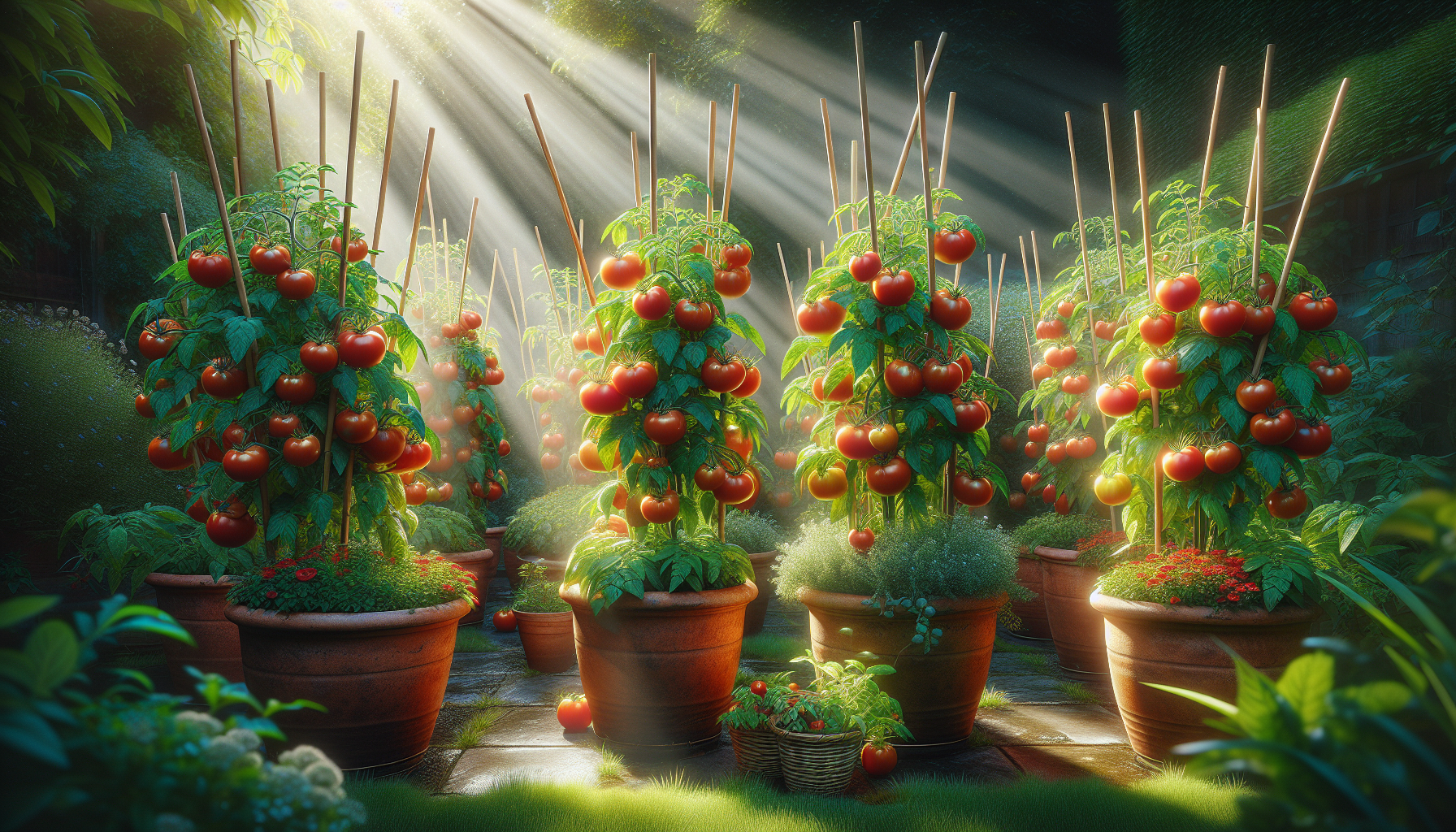
Quick answer: You can grow tomatoes in containers in any UK garden, balcony or patio. Use a pot at least 30 cm wide (10 litres) for bush varieties or 40 cm+ for cordons, fill with peat-free multi-purpose compost mixed with perlite, sow indoors from late February, plant outside after the last frost in late May or June, and feed weekly with a high-potash tomato fertiliser once the first truss sets. Most container tomatoes crop from July through October.
Growing tomatoes in containers is one of the most rewarding things you can do as a UK gardener — even if your “garden” is a south-facing doorstep. Pots give you total control over compost quality, drainage and warmth, which means healthier plants and earlier harvests compared with open ground in our sometimes reluctant summers.
This guide covers everything: the best varieties for pots, a month-by-month calendar, container choices, planting, feeding, troubleshooting and harvesting. Whether you are a complete beginner or an experienced grower switching to containers, you will find practical, RHS-backed advice below.
Why Grow Tomatoes in Containers
Containers are not a compromise — for tomatoes in the UK climate, they often outperform open ground. Here is why.
- Warmth control. Dark-coloured pots on a sunny patio absorb heat and warm the root zone faster than border soil. Tomatoes are warm-season crops native to Central and South America, so every extra degree counts in a British summer.
- Space efficiency. A single 40 cm pot on a balcony can produce 4–5 kg of cherry tomatoes over a season. You do not need an allotment.
- Mobility. You can wheel pots into a greenhouse, porch or against a south-facing wall when night temperatures drop. This extends the cropping season by two to three weeks at each end.
- Soil control. Container compost drains freely, holds consistent moisture and carries no soil-borne diseases. If you have had blight or verticillium wilt in your borders, pots give you a clean start each year.
- Perfect for beginners. Fewer variables make container growing more predictable. If you are starting a vegetable garden for the first time, tomatoes in pots are one of the best entry points.
Best Tomato Varieties for Containers UK
Tomato varieties fall into two growth habits, and container success depends on matching the right habit to the right pot.
Bush (Determinate) Varieties — Best for Smaller Pots
Bush tomatoes stop growing at a set height, need no staking and produce their crop in a concentrated flush. They are ideal for pots from 30 cm wide, hanging baskets and windowboxes.
- ‘Tumbling Tom Red’ — a trailing cherry variety bred for hanging baskets and the edges of raised beds. Heavy cropper with sweet, bite-sized fruits.
- ‘Totem’ — very compact (30–40 cm tall), bred specifically for patio containers. Produces good-sized salad tomatoes on a dwarf plant.
- ‘Gold Nugget’ (RHS AGM) — early, reliable bush cherry with golden-yellow fruits. One of the earliest to ripen outdoors in the UK, which is valuable in shorter growing seasons.
- ‘Roma’ — a determinate plum type for sauces and passata. Meaty, low-moisture flesh.
Cordon (Indeterminate) Varieties — Best for Larger Containers
Cordons keep growing upward all season and need a cane or stake for support, plus regular side-shoot removal. They crop over a longer period and generally produce more fruit per plant — but they need a pot of at least 40 cm and a sturdy support.
- ‘Sungold’ (RHS AGM) — widely regarded as the best-tasting cherry tomato. Intensely sweet orange fruits. Vigorous grower; give it a tall cane and plenty of feed.
- ‘Shirley’ (RHS AGM) — a classic medium-sized cordon with excellent disease resistance. Reliable in cooler UK summers and a strong choice for unheated greenhouses or sheltered patios.
- ‘Gardener’s Delight’ — one of the UK’s most popular cherry tomatoes for flavour. Produces long trusses of small, tangy-sweet red fruits throughout summer.
- ‘Moneymaker’ — a heritage variety still widely grown. Medium-sized, reliably productive fruits. Not the most flavoursome modern option, but forgiving for beginners.
- ‘Tigerella’ (RHS AGM) — distinctive red-and-yellow striped fruits with a tangy flavour. A reliable cropper and a talking point at the table.
- ‘Sweet Aperitif’ (RHS AGM) — exceptionally sweet red cherry, often topping RHS taste trials. Vigorous cordon that crops heavily in a good summer.
- ‘Marmande’ (RHS AGM) — a beefsteak type producing large, ribbed fruits perfect for slicing. Needs a large container (45 cm+) and a warm, sheltered spot.
- ‘Floridity’ (RHS AGM) — a productive plum tomato with firm, flavourful fruits. Excellent for roasting and sauces.
For a full guide to starting your own plants, see our tomato seed-sowing guide.
Month-by-Month Growing Calendar
This calendar assumes an average UK location (roughly RHS hardiness rating H3–H4 areas). Northern Scotland and exposed highland gardens should shift everything about two weeks later.
| Month | Task |
|---|---|
| February | Sow seeds indoors on a warm windowsill or in a heated propagator at 18–21 °C. Use small pots or module trays filled with seed compost. Cover lightly and keep moist. |
| March | Seedlings emerge in 7–14 days. Move to the brightest windowsill or a grow light. When the first true leaves appear, prick out into individual 9 cm pots. |
| April | Pot on into 12–15 cm pots as roots fill the smaller ones. Begin hardening off in a cold frame or sheltered outdoor spot during the day if temperatures exceed 10 °C. |
| May | Continue hardening off. In southern England, plant out into final containers from mid-May under fleece. Further north, wait until late May or early June. Have fleece ready for late frosts. |
| June | Plant out into final containers if not done in May. Insert canes or supports for cordon types. Begin pinching out sideshoots on cordons. Water regularly. |
| July | First trusses set fruit. Start weekly liquid feeding with a high-potash tomato fertiliser (e.g., Tomorite). Water daily in warm weather — sometimes twice on hot days. First cherry tomatoes may ripen by late July. |
| August | Peak harvest month. Pick fruits as they fully colour. Remove any yellowing lower leaves to improve airflow. “Stop” cordon plants by pinching out the growing tip after 4–5 trusses to redirect energy into ripening. |
| September | Continue harvesting. Remove any leaves shading ripening trusses. Move pots to the warmest, most sheltered spot (against a south-facing wall). Reduce watering slightly as growth slows. |
| October | Final harvest. Pick any remaining green tomatoes and ripen indoors in a paper bag with a banana (the ethylene gas speeds ripening). Clear spent plants and compost the foliage unless blight was present. |
Choosing Containers and Compost
Container Size
This is the single most common mistake. Too-small pots dry out in hours, restrict roots and slash yields. The RHS recommends a minimum of 23 cm (9 in) pots for tomatoes, but for container growing outdoors you should go bigger.
- Bush varieties: minimum 30 cm diameter / 10 litres. A 15-litre pot is better.
- Cordon varieties: minimum 40 cm diameter / 20 litres. Larger is always better — a 30–40 litre pot gives the most consistent results.
- Grow bags: a standard grow bag (35–40 litres) supports two cordon plants or three bush plants. Stand the bag in a tray to catch runoff and cut drainage slits in the bottom corners.
Dark-coloured pots absorb more heat, which tomatoes appreciate. Fabric grow bags (available from Amazon and Wilko) are lightweight and provide excellent drainage and air-pruning of roots. Terracotta looks beautiful but dries out faster than plastic — line the inside with a piece of bin liner (with drainage holes at the bottom) to slow moisture loss.
For a full comparison of pots and planters, see our guide to the best containers for beginners.
Drainage
Every container must have drainage holes. If your decorative pot lacks them, drill or punch at least four 10 mm holes in the base. Stand pots on “pot feet” or a couple of bricks to ensure water escapes freely — waterlogged roots are a death sentence for tomatoes.
Compost
Use a good-quality peat-free multi-purpose compost mixed with roughly 20% perlite or horticultural grit for drainage. Avoid garden soil — it compacts in containers, drains poorly and may harbour diseases.
Some growers add a slow-release fertiliser (such as Osmocote) at planting time to supplement liquid feeds later. This is optional but helpful if you occasionally forget a weekly feed.
How to Plant Tomatoes in Containers
When to Plant Out
Tomatoes are frost-tender — a single night below 0 °C will kill an unprotected plant. In most of England and Wales, the last frost date falls between mid-May and early June. In Scotland and northern England, early to mid-June is safer.
The RHS advises not to plant tomatoes outdoors until night temperatures are reliably above 10 °C. If in doubt, keep plants in their intermediate pots for another week rather than risk a late frost.
How to Plant
- Fill your container with compost to about 5 cm below the rim (this gap prevents water overflowing when you irrigate).
- Bury the stem deep. Tomatoes root along buried stems, which produces a stronger root system. Remove the lowest pair of leaves and plant the seedling up to the next leaf node — roughly 5–8 cm deeper than it sat in the previous pot.
- Water in thoroughly until water runs from the drainage holes. This settles the compost around the roots and eliminates air pockets.
- Insert a cane or support immediately for cordon varieties. Pushing a cane in later risks damaging established roots. A 1.5 m bamboo cane is usually sufficient for outdoor cordons.
- Mulch the surface with a 2–3 cm layer of bark chips or straw. This conserves moisture, suppresses weeds and keeps the compost surface cooler on hot days.
Ongoing Care — Watering, Feeding and Training
Watering
Inconsistent watering is the number-one cause of problems in container tomatoes. The compost should stay evenly moist — never bone-dry, never waterlogged.
- In warm weather (above 20 °C), water once or twice daily. Early morning is best; a second watering in the evening if the compost has dried out.
- Water at the base of the plant, not over the foliage. Wet leaves encourage fungal diseases.
- Erratic watering — a dry spell followed by a flood — causes blossom end rot (a calcium-uptake problem, not a calcium deficiency in the compost) and fruit splitting. Consistency matters more than volume.
Feeding
Once the first truss of flowers sets small green fruits, begin feeding weekly with a high-potash liquid tomato fertiliser. Potassium drives fruit production and flavour.
- Tomorite (Levington) and Chempak Tomato Food are widely available at garden centres, B&Q, Wilko and online.
- Dilute according to the label — overfeeding causes lush leaf growth at the expense of fruit.
- Some growers switch to feeding twice weekly in peak cropping (August). Watch the plant: if lower leaves yellow while the plant is fruiting heavily, it may need more feed.
Training Cordon Varieties
- Pinch out sideshoots — these are the small shoots that appear in the “V” between the main stem and each leaf branch. Remove them when they are 2–3 cm long by snapping sideways with your fingers. This directs the plant’s energy into fruit rather than foliage.
- Tie the main stem loosely to the cane with soft string or tomato clips as it grows. Check ties weekly to avoid constriction.
- Stop the plant in August by pinching out the growing tip two leaves above the highest truss you expect to ripen. In most UK outdoor conditions, 4–5 trusses per plant is realistic.
Bush varieties need none of this — let them grow naturally and support branches with a low cage or stakes if they flop under the weight of fruit.
Harvesting and Ripening
Pick tomatoes when they are fully coloured and come away from the truss with a gentle twist. Cherry varieties often ripen unevenly on the truss — pick individual fruits as they colour rather than waiting for the whole truss.
For the best flavour, eat tomatoes at room temperature, not fridge-cold. The RHS notes that refrigeration suppresses volatile compounds responsible for “tomato taste.”
Ripening Green Tomatoes at the End of the Season
In October, when night temperatures drop and ripening stalls outdoors, harvest remaining green tomatoes and ripen them indoors:
- Place green tomatoes in a paper bag or cardboard box with a ripe banana. The banana releases ethylene gas, which triggers ripening.
- Store at room temperature (18–21 °C) in a dark spot. Check every few days.
- Most green tomatoes will colour up within one to three weeks.
- Alternatively, uproot the entire plant and hang it upside down in a frost-free garage or shed — the fruits will continue to ripen on the vine.
Common Problems
Blossom End Rot
A dark, sunken patch at the base of the fruit. Caused by irregular watering disrupting calcium uptake — not a lack of calcium in the compost. The fix is consistent, even watering. Affected fruits are safe to eat if you cut off the damaged area.
Tomato Blight (Phytophthora infestans)
Brown patches on leaves and stems, often in wet summers from mid-July onward. Container plants on a patio have lower risk than those in open ground because air circulation is better and foliage stays drier. Choose resistant varieties (look for “blight tolerant” on the label) and avoid overhead watering. Remove and destroy affected foliage immediately — do not compost it.
Aphids (Greenfly and Blackfly)
Cluster on soft shoot tips and undersides of leaves. Squash small infestations by hand. Encourage ladybirds, lacewings and hoverflies. A strong jet of water dislodges them. Organic sprays (fatty acid or neem-based) work as a last resort.
Glasshouse Whitefly
Tiny white-winged insects that fly up in clouds when the plant is disturbed. More common under glass than outdoors. Yellow sticky traps reduce populations. The biological control Encarsia formosa is effective in greenhouses.
Fruit Splitting
Caused by a sudden intake of water after a dry spell — the fruit swells faster than the skin can stretch. The prevention is the same as for blossom end rot: water consistently. Split fruits are perfectly edible but use them quickly as they spoil faster.
Leaf Curl
Upward curling of lower leaves without any discolouration is usually a physiological response to temperature swings or heavy fruit set. It is not a disease. If leaves are curling and also yellowing or developing spots, investigate for viral or nutritional issues.
Companion Planting
Growing certain plants alongside tomatoes in the same container or in neighbouring pots can benefit your crop. Some of these relationships are well-established in traditional gardening, while others have varying degrees of scientific backing.
- Basil — the classic tomato companion. Gardening tradition holds that basil improves tomato flavour, though this is not scientifically proven. What is established is that basil’s strong scent can confuse some pest insects, and both plants enjoy the same warm, sunny conditions and similar watering needs — making them practical pot-mates.
- French marigolds (Tagetes patula) — research published by the RHS and others confirms that French marigolds deter glasshouse whitefly. Their roots also release compounds that suppress root-knot nematodes in the soil, though this is more relevant to border planting than containers with fresh compost each year. At the very least, they attract hoverflies whose larvae consume aphids.
- Chives — their strong allium scent is thought to deter aphids. Chives are low-growing and fit neatly around the base of a tomato pot without competing for light.
Avoid planting tomatoes near brassicas (cabbage family) or fennel, both of which are traditionally considered poor neighbours — fennel in particular can inhibit the growth of many nearby plants.
Frequently Asked Questions
- How many tomato plants can I put in one pot?
- One plant per pot for cordon varieties. For bush varieties, one plant per 30 cm pot or two to three per standard grow bag. Overcrowding reduces airflow and encourages disease.
- Can I reuse tomato compost next year?
- Not for tomatoes or other members of the Solanaceae family (peppers, aubergines, potatoes) — disease and nutrient depletion make it risky. You can reuse it for unrelated crops like salad leaves or flowers, refreshed with a handful of slow-release fertiliser.
- Do container tomatoes need a greenhouse?
- No. Many varieties crop well outdoors in a sheltered, south-facing spot. A greenhouse or cold frame extends the season and reduces blight risk, but it is not essential — especially with the hardier bush varieties.
- When should I start feeding my tomato plants?
- Once the first truss of flowers has set small green fruits. Before that point, the plant is growing roots and foliage and does not need the extra potash. A balanced multi-purpose compost provides everything the plant needs in the early weeks.
- Why are my tomato flowers dropping off without setting fruit?
- Usually caused by temperatures that are too low (below 13 °C at night) or too high (above 35 °C), dry air, or poor pollination. Outdoors in the UK, low night temperatures in early summer are the most common cause. Move pots to a warmer spot, and try gently tapping or shaking the plant at midday to help release pollen — tomatoes are self-pollinating but benefit from vibration.
What Next
Once you have your tomato containers planted up, you might like to explore:
- How to Grow Tomatoes from Seed (UK Guide) — if you want to raise your own seedlings next year for a wider choice of varieties.
- Best Vegetables to Grow in Containers — tomatoes are just the start; discover peppers, courgettes, salad leaves and more for your patio garden.
- How to Grow Strawberries in Pots — put the same container know-how to fruit for a summer crop.
- What to Plant in June (UK) — June is prime planting-out time; line up the rest of the month’s jobs alongside your tomatoes.
- Best Grow Bags for Vegetables — a comparison of grow bags available from UK retailers.
- Best Compost for Container Gardening — detailed compost recommendations and mixing ratios.
- Plant Care Hub — our full library of growing guides and care advice.
Affiliate disclosure: Some links in this article are affiliate links. If you buy a product through one of these links, plantsandgardening.com may earn a small commission at no extra cost to you. We only recommend products we genuinely believe in. This does not influence our editorial content. See our full affiliate disclosure for details.