As an Amazon Associate I earn from qualifying purchases.
Grow bags revolutionised vegetable gardening. What started as a space-saving solution for patio tomatoes has become essential for potatoes, salads, and even root crops. The right grow bag turns any sunny spot into productive growing space.
This guide covers everything UK gardeners need to choose grow bags — from understanding litre capacity to selecting materials that survive British weather.
—
Quick Comparison: Top Vegetable Grow Bags
| Grow Bag | Size | Material | Best For | Durability |
|---|---|---|---|---|
| Hozelock grow bag Hozelock 35L | 35 litres | Reinforced plastic | Tomatoes, peppers | 3+ seasons |
| Vigoroot grow bag Vigoroot 20L | 20 litres | Air-pruning fabric | Potatoes, carrots | 2 seasons |
| Levington peat-free grow bag Levington Peat-Free | 33 litres | Compost-filled | Beginners, tomatoes | Single season |
| Smart Pot fabric container Smart Pot 15-gal | 57 litres | Geotextile fabric | Large tomatoes, squash | 5+ seasons |
| Budget grow bag multipack Budget 5-Pack | 20 litres | Standard plastic | Salad crops, annuals | 1–2 seasons |
—
Why Grow Bags Beat Traditional Pots
Root health: Grow bags encourage better root development through air-pruning. When roots reach the bag edge, they stop rather than circling. This creates a dense, fibrous root ball that absorbs water and nutrients efficiently.
Temperature regulation: Black plastic warms quickly in spring, giving tomatoes and peppers the heat they crave. Fabric bags breathe, preventing overheating in summer.
Drainage: Excess water escapes through fabric or drainage holes, preventing waterlogging that kills container vegetables.
Space efficiency: Empty bags fold flat for winter storage. Stack filled bags on patios, balconies, or paths without permanent beds.
Cost: Grow bags cost 30– than equivalent ceramic or terracotta pots.
—
Understanding Grow Bag Sizes
Capacity in Litres
| Size | Dimensions (approx) | Best For |
|---|---|---|
| 10–15L | 25×25×20cm | Single salad plant, herbs |
| 20–25L | 30×30×25cm | 2× tomato plants, potatoes |
| 30–40L | 35×35×30cm | Large tomatoes, peppers, aubergines |
| 50L+ | 40×40×35cm | Potatoes, squash, multiple plants |
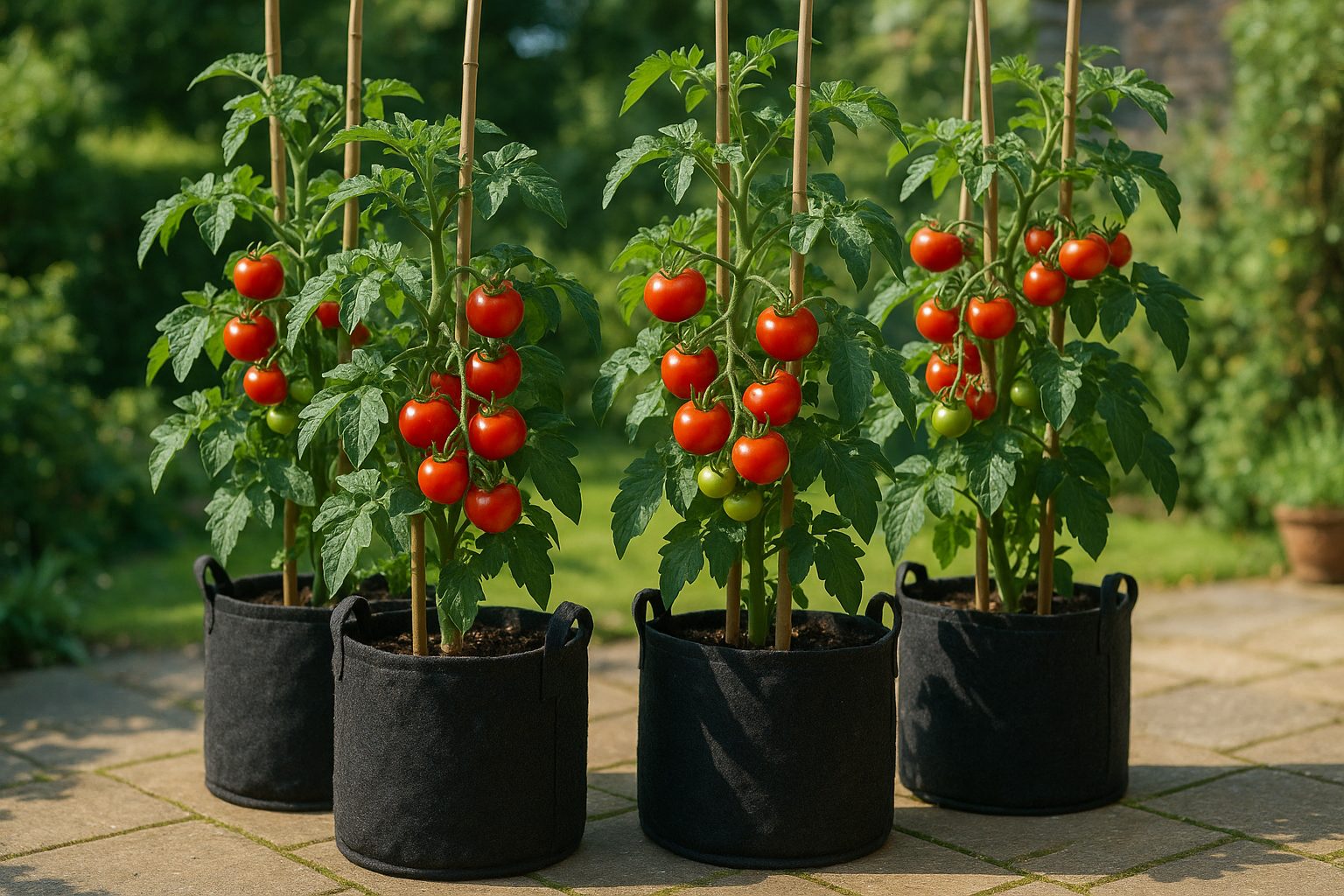
The tomato rule: One tomato plant needs minimum 20L, ideally 30–40L for cordon varieties.
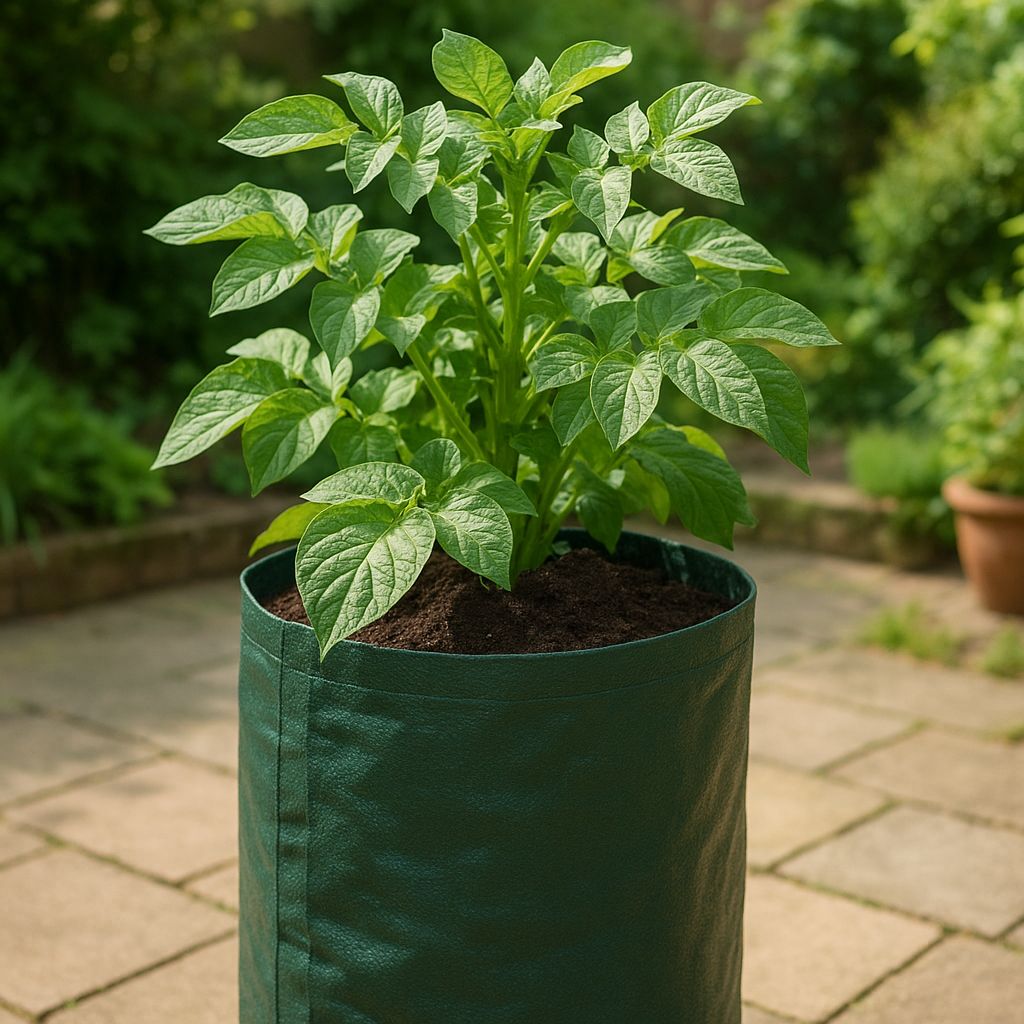
The potato rule: Early potatoes need 30L, maincrop need 40L+ per bag.
Shape Matters
Traditional rectangular: Stack neatly, stable against walls
Tall cylindrical: Better for deep-rooted crops (potatoes, carrots)
Wide shallow: Ideal for salads, shallow-rooted crops
With handles: Easier to move when filled
—
Product Deep Dives
Hozelock 35L Grow Bag
Best for: Reliable tomatoes season after season
Specifications:
– Capacity: 35 litres
– Material: Reinforced UV-stabilised plastic
– Dimensions: 35×35×30cm
– Features: Reinforced handles, drainage holes
Why it works: The reinforced plastic withstands three seasons of British weather without splitting. Handles make repositioning for maximum sun easy — essential as the season progresses.
The durability test: Hozelock bags survive winter storage without cracking. Cheaper alternatives often split at the seams after one season.
Best setup: Fill with Miracle-Gro compost multi-purpose compost mixed 50:50 with horticultural grit horticultural grit. Plant two bush tomatoes or one cordon variety.
—
Vigoroot 20L Air-Pruning Fabric Bag
Best for: Potatoes, carrots, root crops
Specifications:
– Capacity: 20 litres (multiple sizes available)
– Material: Non-woven geotextile fabric
– Technology: Air-pruning fabric
– Breathable: Yes
Why it works: The fabric sides allow air penetration. When roots reach the edge, they stop growing (air-pruning) rather than circling. This creates a dense, efficient root system.
The potato advantage: Traditional potato bags need hilling (adding soil as plants grow). Vigoroot bags eliminate this — plant at the bottom, roots fill the bag naturally.
The carrot test: Long-rooted carrots grow straight in fabric bags. Plastic often causes forking as roots hit solid sides.
Care: Wash and dry thoroughly between seasons. Stores flat.
—
Levington Peat-Free Tomato Grow Bag
Best for: Beginners, single-season convenience
Specifications:
– Capacity: 33 litres pre-filled
– Compost: Peat-free multi-purpose
– Nutrients: 6-week feed included
– Ready to use: Yes
Why it works: No compost purchase needed — cut the bag, plant directly. The peat-free compost quality has improved dramatically and now matches peat performance.
The beginner advantage: Everything included. No mixing, no adding drainage materials. Cut three holes, plant, water.
Limitations: Single season use. Compost exhausted after 6 weeks — start feeding with liquid tomato feed tomato fertiliser from July.
Best for: First-time tomato growers, temporary setups, gifts
—
Smart Pot 15-Gallon Fabric Container
Best for: Serious growers, large plants, long-term investment
Specifications:
– Capacity: 57 litres (15 US gallons)
– Material: Dense geotextile fabric
– Durability: 5+ seasons
– Handles: Yes
Why it works: The original fabric pot company. Dense fabric creates optimal root environment — air-pruning without drying out too quickly.
The large plant solution: Cordon tomatoes, squash, even dwarf fruit trees thrive in this volume. The 57L capacity matches a 40cm ceramic pot at one-third the cost and weight.
Temperature regulation: Black fabric absorbs heat for warmth-loving crops, but breathes to prevent overheating. Plants establish faster than in plastic.
Investment value: At –20, cost-per-season beats replacing cheap plastic bags annually.
—
Budget 5-Pack 20L Grow Bags
Best for: Salad crops, trying grow bags without commitment
Specifications:
– Capacity: 20 litres each
– Quantity: 5 bags
– Material: Standard plastic
– Colour: Black
Why it works: At under per bag, experiment without financial risk. Perfect for lettuces, spring onions, radishes — crops that finish in one season.
The salad solution: Plant one lettuce per bag. Harvest outer leaves for weeks. When plants bolt in summer, compost the whole bag contents — no cleaning.
Realistic expectations: Expect 1–2 seasons before seams split. Not for long-term perennials or heavy-feeding tomatoes.
Best for: Beginners testing grow bags, seasonal salads, children’s gardening projects
—
What to Fill Grow Bags With
Never Use Garden Soil
Garden soil compacts in bags, drains poorly, and introduces pests. Always use container compost.
Best Mix for Vegetables
Base: Multi-purpose compost 70%
Drainage: horticultural grit Horticultural grit 20%
Moisture: coconut coir Coconut coir 10%
Alternative: John Innes No.3 50% + multi-purpose 50% for long-season crops
Filling Technique
1. Place bag where it will grow — difficult to move when filled
2. Fill to 5cm from top — allows watering reservoir
3. Shake and firm — settles compost without compacting
4. Water thoroughly before planting — saturates compost fully
5. Let drain 2–3 hours — prevents waterlogging new plants
—
Planting Guide by Crop
Tomatoes in Grow Bags
Bag size: 30–40L minimum
Plants per bag: 2 bush tomatoes OR 1 cordon (indeterminate)
Planting depth: Deep — bury 10cm of stem for extra rooting
Support: tomato cage Tomato cage or bamboo canes essential
Feeding: Weekly liquid tomato feed tomato feed from first flowers
Potatoes in Grow Bags
Bag size: 30L for early, 40L+ for maincrop
Seed potatoes: 3 per 30L bag
Method: Place seed potatoes on 15cm compost, cover with 10cm more
Earthing up: Add compost as shoots emerge (traditional) OR plant deeply once (Vigoroot fabric bags)
Harvest: Tip bag out when flowers fade
Carrots in Grow Bags
Bag size: 20–30L
Depth: 25cm minimum for long varieties, 15cm for stump-rooted
Compost: 50% sand or grit mixed in for drainage
Thinning: Essential — crowded carrots fork and twist
Protection: carrot fly mesh Carrot fly mesh essential
Salads in Grow Bags
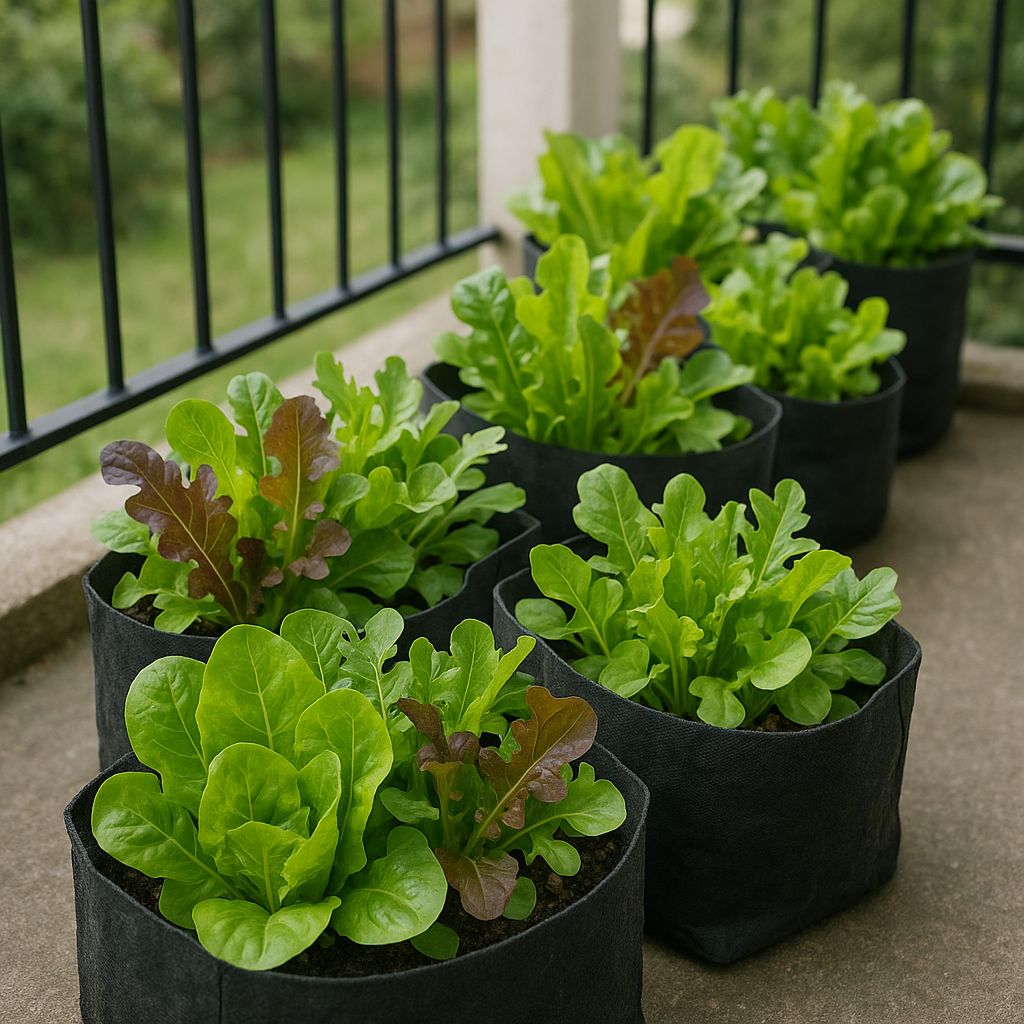
Bag size: 10–20L per plant
Succession: Sow new bags every 2 weeks
Harvest: Cut-and-come-again or full head
Advantage: Move bags to shade in heat — prevents bolting
—
Grow Bag Care Through the Season
Watering
Grow bags dry faster than garden soil.
Summer schedule: Daily in heat, morning preferred
Check method: Stick finger 5cm deep — dry at this depth means water
Technique: Slow soak until water drains from bottom — ensures full saturation
Feeding
Bag compost exhausts nutrients by midsummer.
Liquid feed: Weekly from June for fruiting crops
Slow-release: Top-dress with slow-release fertiliser granules in July
Mulch: 5cm organic straw mulch straw mulch reduces watering 30%
Moving Bags
Why move: Follow sun as season progresses, shelter from wind, protect from frost
When: Only when compost is slightly dry — wet bags weigh 15kg+
How: Two people, lift by base not handles (handles tear on heavy bags)
—
Winter Storage and Reuse
Plastic Bags
1. Empty compost onto garden beds or compost bin
2. Brush out debris
3. Wash with garden hose
4. Dry thoroughly (prevents mould)
5. Store flat in shed
Lifespan: 2–3 seasons for quality bags, 1 season for budget
Fabric Bags
1. Empty and brush out
2. Machine wash or hose thoroughly
3. Air dry completely
4. Store dry
Lifespan: 3–5 seasons depending on fabric weight
Compost Disposal
Annual vegetables: Spread on borders as mulch — nutrients depleted but organic matter valuable
Diseased plants: Hot compost or dispose — don’t spread blight or virus
—
Troubleshooting Grow Bag Problems
Problem: Plants wilt despite watering
Cause: Compost dried and became hydrophobic (repels water)
Solution: Stand bag in tray of water for 30 minutes to rehydrate fully. Prevent with water-retaining gel water-retaining gel additive.
Problem: Compost goes green with algae
Cause: Overwatering and surface compaction
Solution: Reduce watering frequency. Add 2cm horticultural grit grit mulch to surface. Improve drainage.
Problem: Bags split at seams
Cause: Cheap plastic degrades in UV or overfilled
Solution: Buy reinforced bags (Hozelock, Smart Pot). Don’t overfill — leave 5cm headroom.
Problem: Roots grow through drainage holes
Cause: Plants becoming pot-bound
Solution: Normal for vigorous plants. Trim roots or transplant to larger container if mid-season.
—
Cost Comparison: Grow Bags vs Pots
| Container | 30L Capacity | Lifespan | Cost/Year |
|---|---|---|---|
| Budget grow bag | 1 season | ||
| Quality grow bag | 3 seasons | ||
| Fabric Smart Pot | 5 seasons | ||
| Plastic pot | 10+ seasons | ||
| Terracotta pot | 20+ seasons |
Value winner: Quality plastic grow bags for seasonal vegetables. Terracotta for long-term perennials.
—
Frequently Asked Questions
Q: How many tomato plants per grow bag?
A: Bush (determinate) varieties: 2 plants per 35L bag. Cordon (indeterminate): 1 plant per 35L+ bag.
Q: Can I reuse grow bag compost?
A: For annual vegetables, no — nutrients exhausted and potential disease. Mix into borders as soil improver, not for containers.
Q: Why are my grow bag tomatoes small?
A: Likely underwatering or nutrient deficiency. Grow bags need daily water in summer and weekly feeding once fruiting.
Q: Do grow bags need drainage holes?
A: Plastic bags should have pre-punched holes — add more if water pools. Fabric bags drain naturally through the material.
Q: Can I grow winter vegetables in grow bags?
A: Yes — overwintering onions, garlic, broad beans. Move bags to sheltered spot and protect from severe frost.
—
Your Grow Bag Buying Checklist
– [ ] Calculate total litres needed (see size guide above)
– [ ] Choose material: Plastic (cheap, warms quickly) or fabric (air-pruning, breathable)
– [ ] Check durability rating for your intended use years
– [ ] Verify handles are reinforced (not just glued)
– [ ] Buy compost: 60–70L per 35L bag (allows for settling)
– [ ] Add drainage: horticultural grit Grit for all bags
– [ ] Plan feeding: Weekly liquid feed from June
—
Ready to grow? See our guides to best vegetables to grow in containers and best compost for container gardening for what to plant and fill with.
—
Sources: RHS Growing in Containers, Which? Grow Bag Reviews, Gardening Which?, Allotment and Leisure Gardener You might also like our guide to other container types for beginners.
Best Crops for Grow Bags
Grow bags suit shallow-rooted and sprawling crops particularly well. The wide, flat shape gives roots room to spread without the depth (and cost) of large pots.
Tomatoes
The classic grow bag crop. Plant 2–3 per standard grow bag. Bush varieties like ‘Tumbling Tom Red’ and ‘Totem’ stay compact and don’t need staking — ideal for patios. For cordon types, ‘Gardener’s Delight’ (RHS Award of Garden Merit) produces heavy trusses of sweet cherry tomatoes and grows well in bags with cane support.
Courgettes
One plant per grow bag — they need the space. ‘Patio Star’ is a compact variety bred specifically for containers. ‘Black Beauty’ is a reliable open-pollinated variety that crops heavily from July to October.
Peppers and Chillies
Two to three plants per bag. ‘Gypsy’ (sweet pepper, RHS AGM) produces thick-walled fruits that ripen reliably outdoors in southern England. For chillies, ‘Apache’ stays compact at 30–40cm and fruits prolifically.
Salad Leaves and Herbs
Cut-and-come-again lettuce mixes, rocket, and spinach thrive in grow bags. Sow directly into the bag surface. ‘Little Gem’ hearts take about 10 weeks from sowing. Basil (‘Genovese’) and parsley (‘Moss Curled’) also do well in the sheltered microclimate of a grow bag on a warm patio.
Potatoes
First and second earlies work best. ‘Charlotte’ (waxy salad potato, RHS AGM) and ‘Rocket’ (very early, ready in 10–12 weeks) are both well-suited to bags. Plant 3–4 seed potatoes per large grow bag, covering with 10cm of compost and earthing up as shoots emerge.
Where to Buy
Grow bags, seeds, and all the supplies mentioned above are available from these UK retailers.
Grow Bags and Growing Supplies
- Crocus — stocks fabric grow bags, traditional grow bags, and premium composts. Fabric grow bags from £5–£15 depending on size. Also a good source for tomato support frames and plant feeds.
- B&Q and The Range — stock standard grow bags (around £3–£5 each) and multi-purpose compost. Useful for same-day purchases.
Seeds and Plug Plants
- Thompson & Morgan — search for ‘patio’ or ‘container’ varieties to find cultivars bred for grow bag growing. Tomato seed from £2–£3.50 per packet.
- You Garden — strong plug plant range for tomatoes, peppers, and courgettes. Plug plants arrive ready to plant out — no seed-sowing required.
- Suttons — good selection of heritage and modern vegetable seeds. Their vegetable growing collections include varieties well-suited to container and grow bag growing.
Leave a Reply